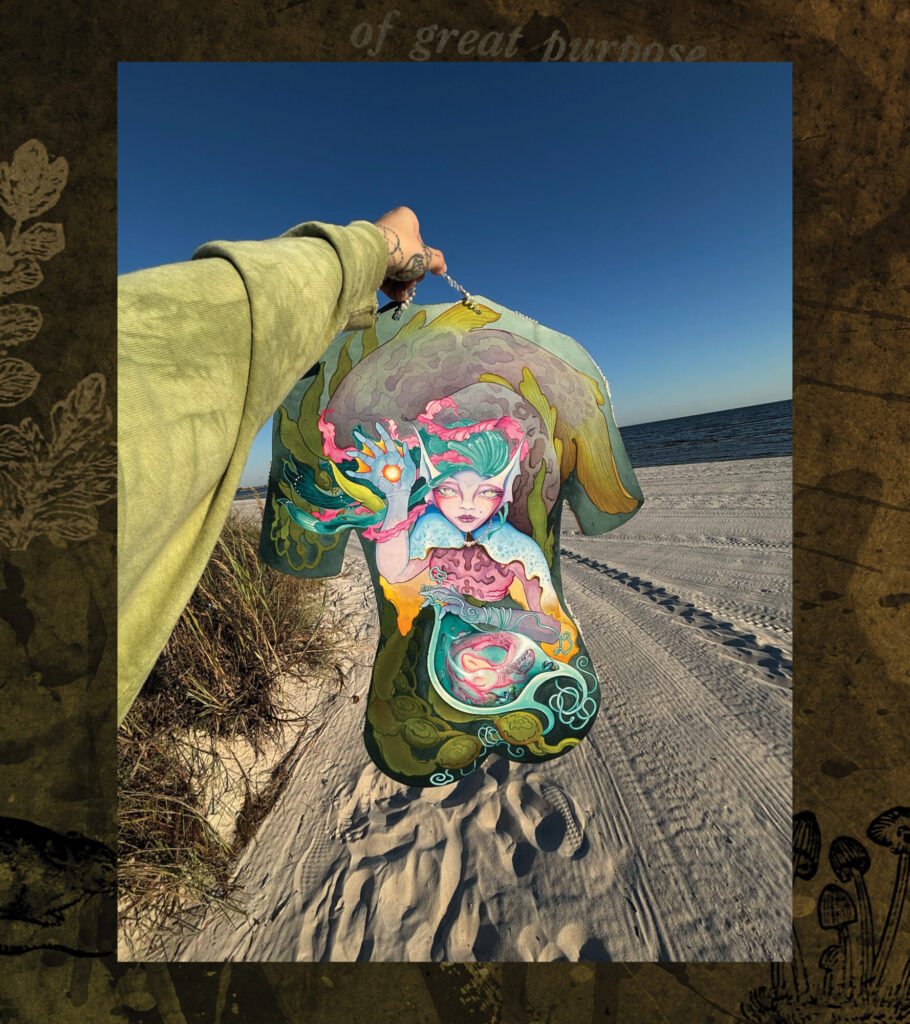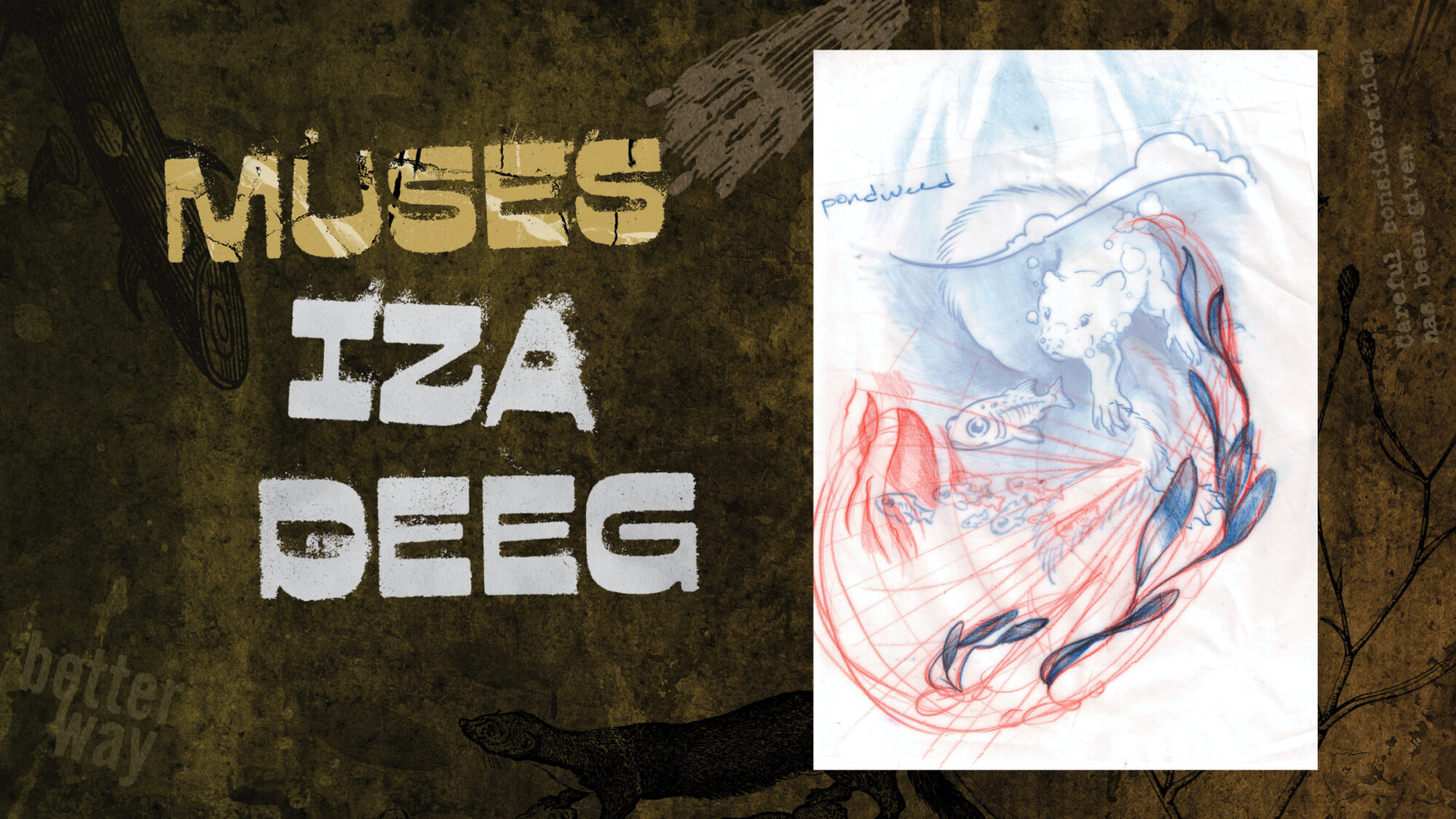
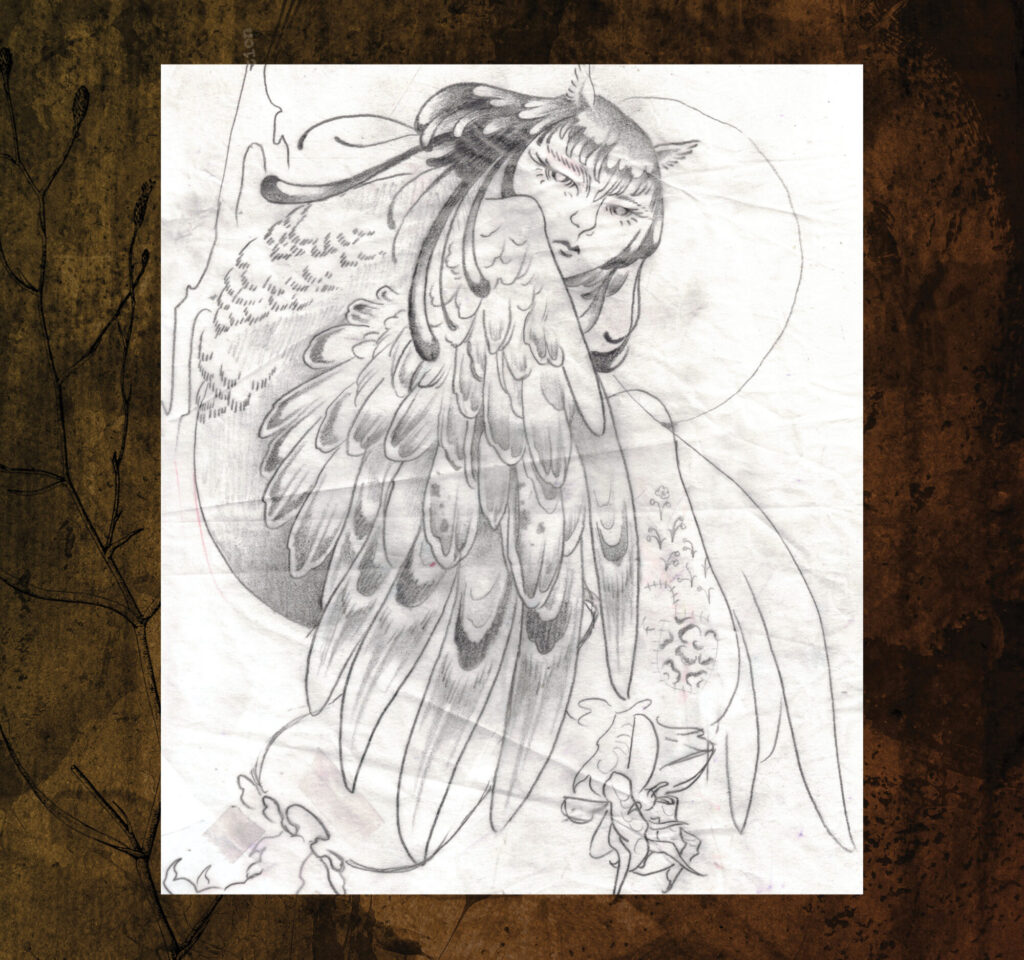
I randomly stumbled onto IZA Deeg’s art page one night and went down a full rabbit hole: swamp sprites, sirens, these feral little ecosystems living on skin. Then I realized we’d been friends on Instagram for years, just under her skate account with a completely different name. Everything in her art has a pulse.
Dude, I saw your art, and I was amazed! What drew you to tattooing specifically, not just drawing? Did you sketch a lot as a kid?
Thank you! I feel like what drew me to tattooing specifically is that it’s working-class art. Most people will never spend thousands of dollars on an oil painting or feature a sculpture in their home, but they might invest in a full sleeve or commission a tattooer to create a piece that’s meaningful to them. I actually didn’t draw a whole lot growing up. I went to school on scholarship for oboe performance and was pretty narrowly focused on music. I only started drawing when I quit music entirely and moved to NYC. The apartment I lived in didn’t really have heat, so I would ride the subway to stay warm and draw people to keep myself busy.
Your art page bio says: “tattoos that tell stories.” Are the stories you’re drawn to more personal or symbolic?
I feel like style descriptors are pretty muddled right now. So many tattooers hit the scene at the same time with different backgrounds and levels of knowledge, as well as people getting tattoos for the first time. I think style descriptors like “neotrad” or “illustrative” used to bring to mind a pretty narrow style, but now those descriptors have been diluted so much. I feel like “tattoos that tell stories” is more descriptive of my style of art. I like to do pieces where something is happening. I grew up in the swamp, building little fairy villages along the streams, only for them to wash away when it would inevitably rain. I think stories that have a bit of whimsy and drama are particularly interesting to me. I’m also particularly interested in the idea of fantasy creatures and how they might interact with the world. I think the word ‘feral’ is interesting here as well and I spent a bit of time thinking about that word. I think the word feral invokes a general sense of something unsettling and maybe a bit wildly violent, uncontrolled in nature. I also think part of it is just wild and unknown. I like the idea that a wild feral creature could be a little innocent fairy trying to claw back their ecosystem. Or maybe a siren luring men to their deaths because they’ve polluted her waters. Maybe feral behavior is just a reaction or a justified response. I’ve already started sketching up some of these ideas.
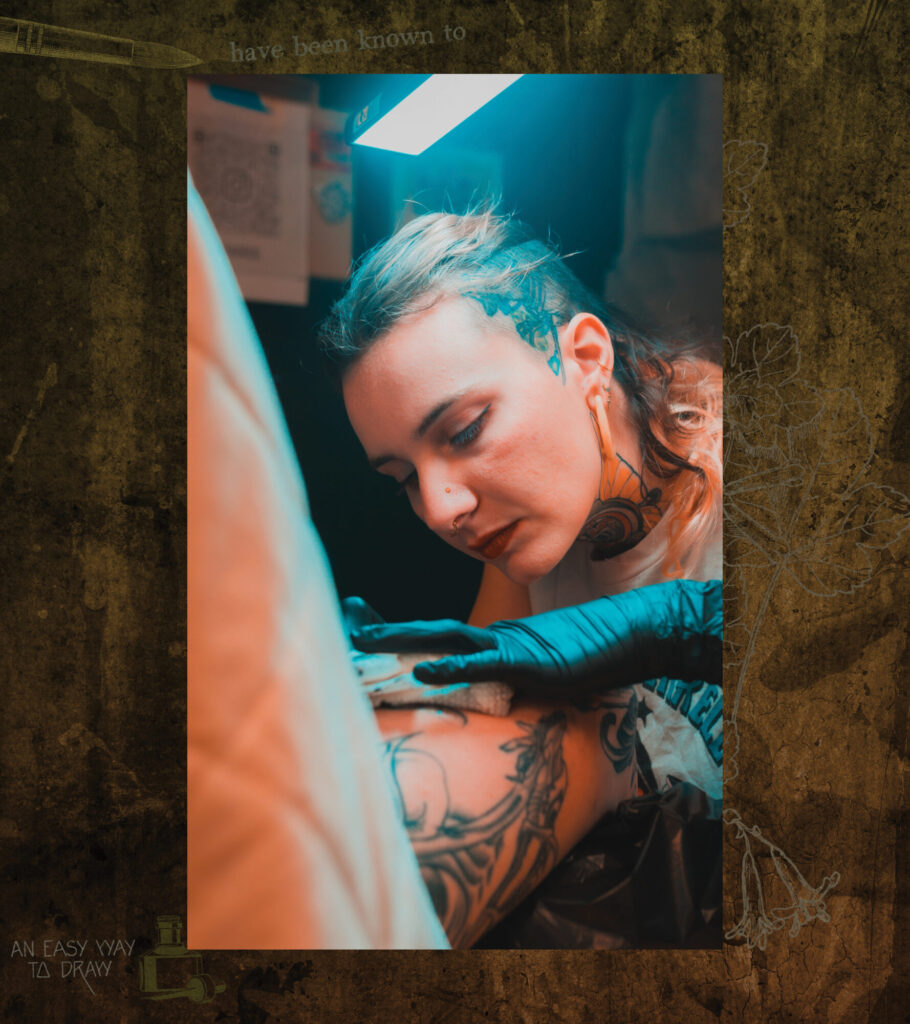
I’m a fan of your work. Did skating and art grow alongside each other, or did one lead you to the other?
I started tattooing in 2018, and my first regular job years before that was actually carhopping for Sonic. Truly, though, my work skates were a size too big, and the stoppers were hard plastic. I didn’t really know how to skate, and I just ran into things to stop myself. I didn’t visit the skatepark until probably 2020-ish. I definitely feel like skating was my oasis for many years. I felt so strong, powerful, and resilient while skating. Tattooing really took a bit of a break while I was doing my best skating. I think I was just pretty burnt out from the tattoo industry and Covid-era crowds, so I threw myself fully into skating. I think ultimately it ended up being exactly what I needed. Taking some time off to fully focus on something completely different really helped. When I came back to tattooing full-time, I felt brand new. Skating definitely introduced me to different types of art that I hadn’t really been exposed to before, which has influenced my work. A lot of skater/punk art is more iconographic and straightforward imagery. I try to use those principles in my work now to create focal points and build structure.
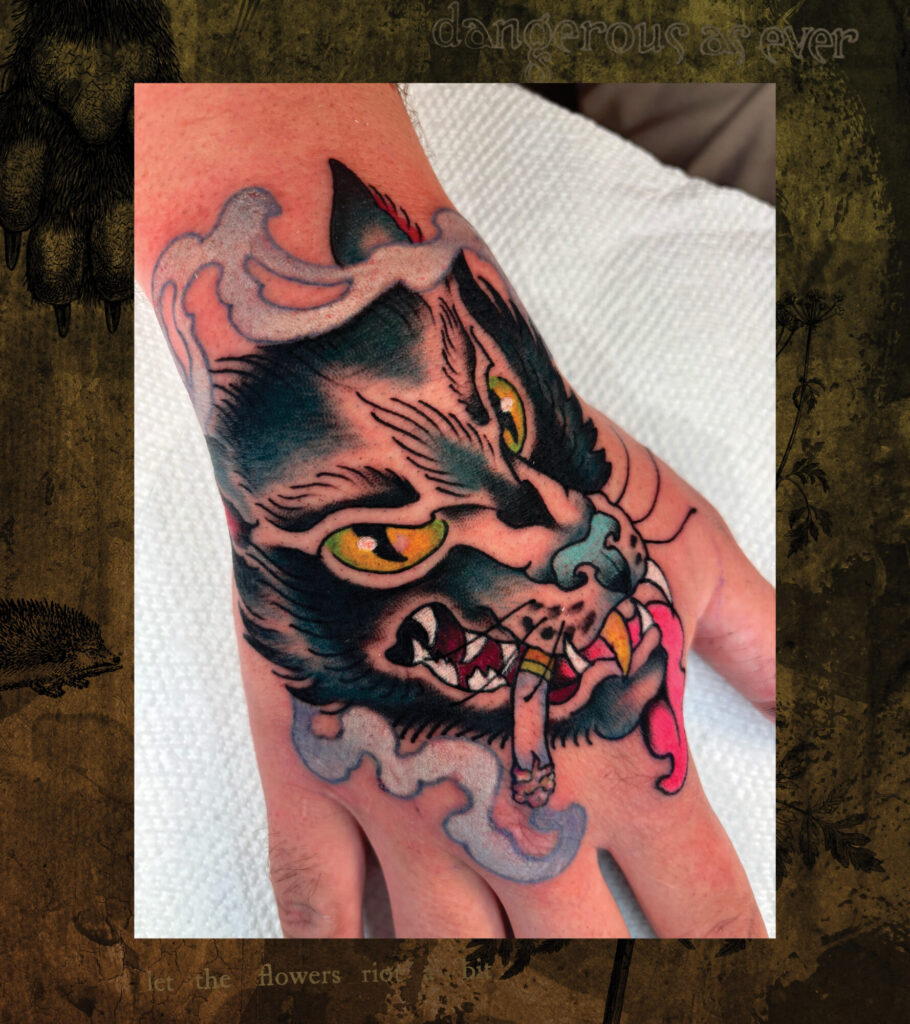
You have a certain art style that’s entirely yours. When did your work start to feel like it had a voice?
I feel like about two years ago, when I jumped back into tattooing full-time. I think these past couple of years, I’ve just had a bit more freedom and comfort to draw, paint, and tattoo the type of work that resonates with me. So much of tattooing is for other people. For years, I was so backlogged with client-specific requests that I had absolutely no time or energy to explore what I might want to draw for myself. So much of that changed just by changing my settings. I got pretty burnt out in 2023 and needed a serious break. It’s hard to give my style a concise descriptor sometimes, as it’s always evolving. I mostly do large-scale illustrative work. I specialize in vibrant, colorful work, but I am pretty well-rounded from working in street shops and definitely utilize those skills in all my work.
How would you describe your visual language right now?
I feel like my visual language is a combination of all the things I’ve collected along the way. My color palette, while always evolving, is definitely a signature part of my work. The way I compose pieces and the flow lines I use time and time again are also something that can be picked out. There are certain shading patterns I’ve adopted that are in everything I do. I’m constantly evolving, changing, and always looking around me at the things that catch my eye. Ultimately, my taste is what has developed my style. I see something I like and ask myself what about it is special. What has stopped me in my tracks? Whatever that is, I file it away and apply it in my next piece.
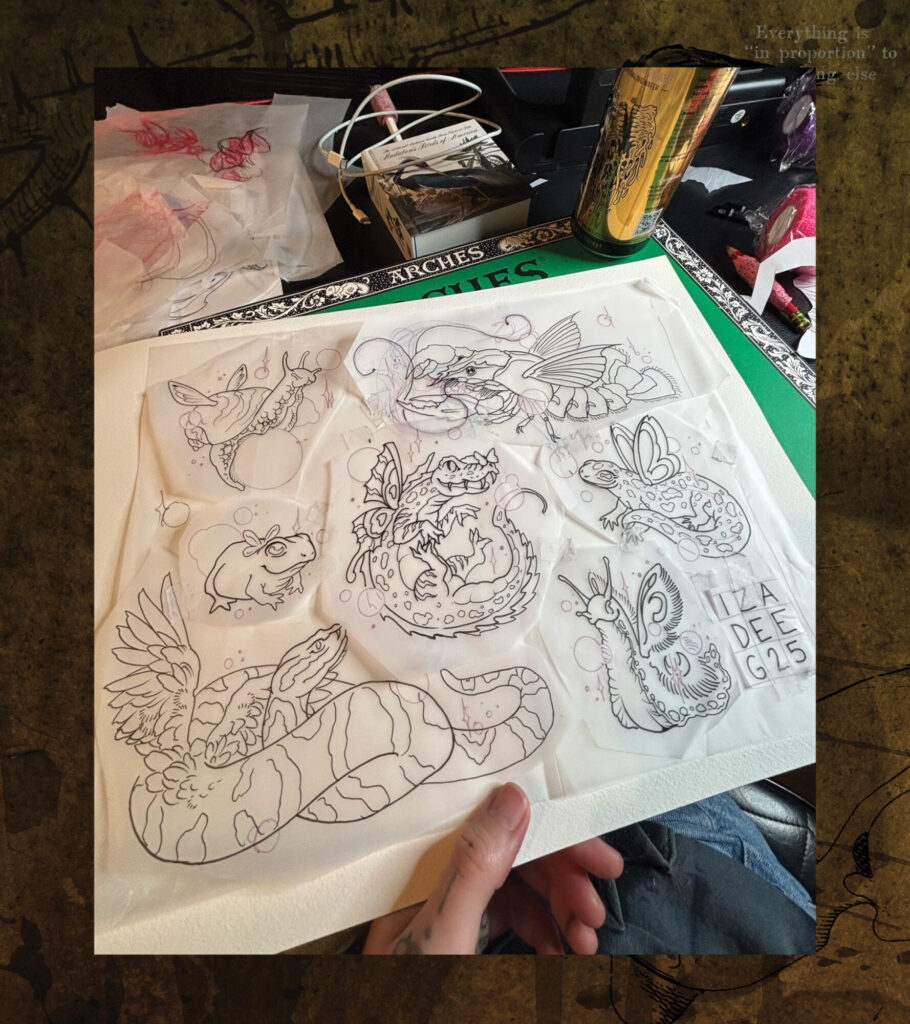
What part of the process still challenges you?
Definitely the people. Oftentimes, it’s like trying to bridge a language barrier, trying to speak into existence a visual thing. Most people will tell you about their dream piece, but what I see in my mind isn’t what they see in theirs. It’s really hard to find each other on a visual plane when you’re communicating verbally. I’m not ChatGPT. I can’t spew out 10 versions of an image in five minutes while consuming a lake of drinking water. I need to be able to meet people where they’re at, create the piece of their dreams, create a safe space for them to ask for changes, and instill confidence in them that I have listened actively and understand their request. It’s the hardest part of the job, and I’m so glad so many people have trusted me through the process.
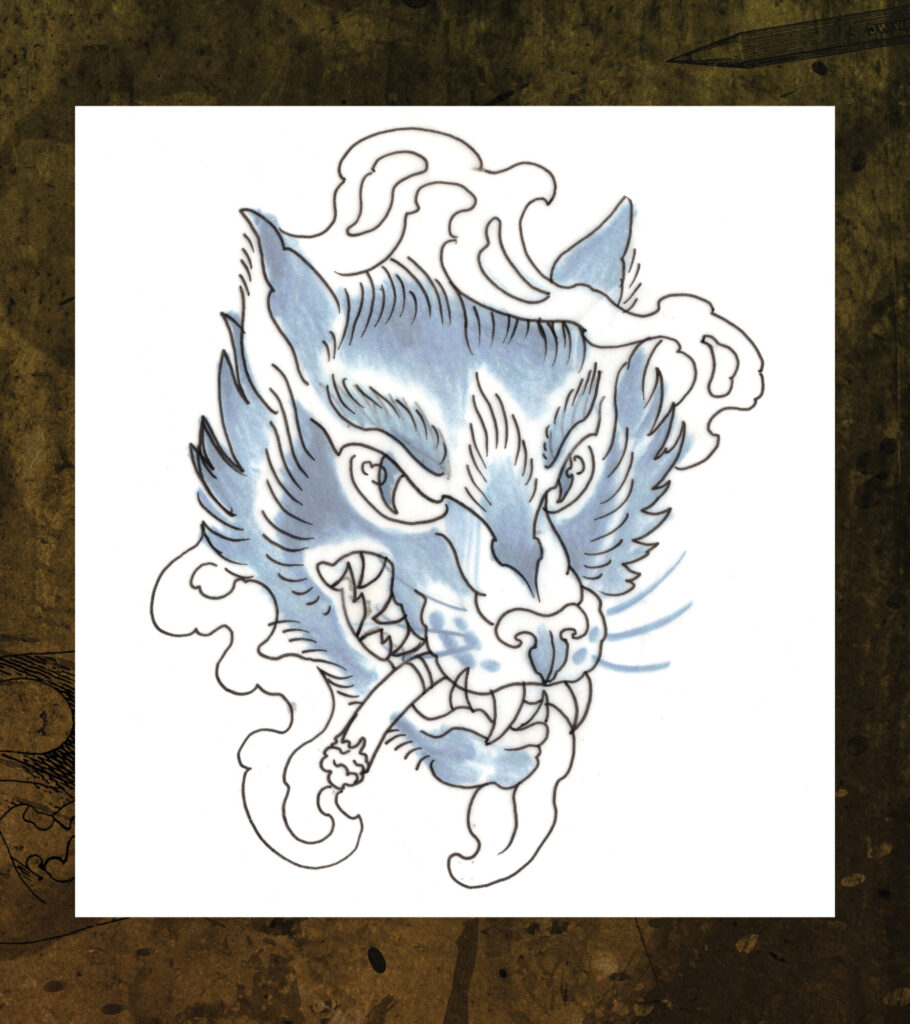
When someone comes to you without a clear plan, how do you approach it?
Usually, if someone comes in without a clear plan, they know what they want but are having a hard time visualizing it. That’s where I come in. I try to ask a few questions to understand what is important to them about the piece. I’ll usually narrow it down to a few main subjects and have my client show me photos of things they like so I can understand their aesthetic style.
I’ll sketch out some big forms and shapes of the piece and see if we’re on the same page, and ask them how much creative freedom they want to give me. Some clients are very hands-off and are down for whatever. I’ve had one client who came to me for a full sleeve, but here’s the kicker—the bottom half is a cover-up. We discussed what she likes and doesn’t like, the types of visuals that resonate with her, and then she let me loose with the piece. I ended up doing several redraws until I liked it, but on the day of her first session, she took one look and said, “Let’s do it.”
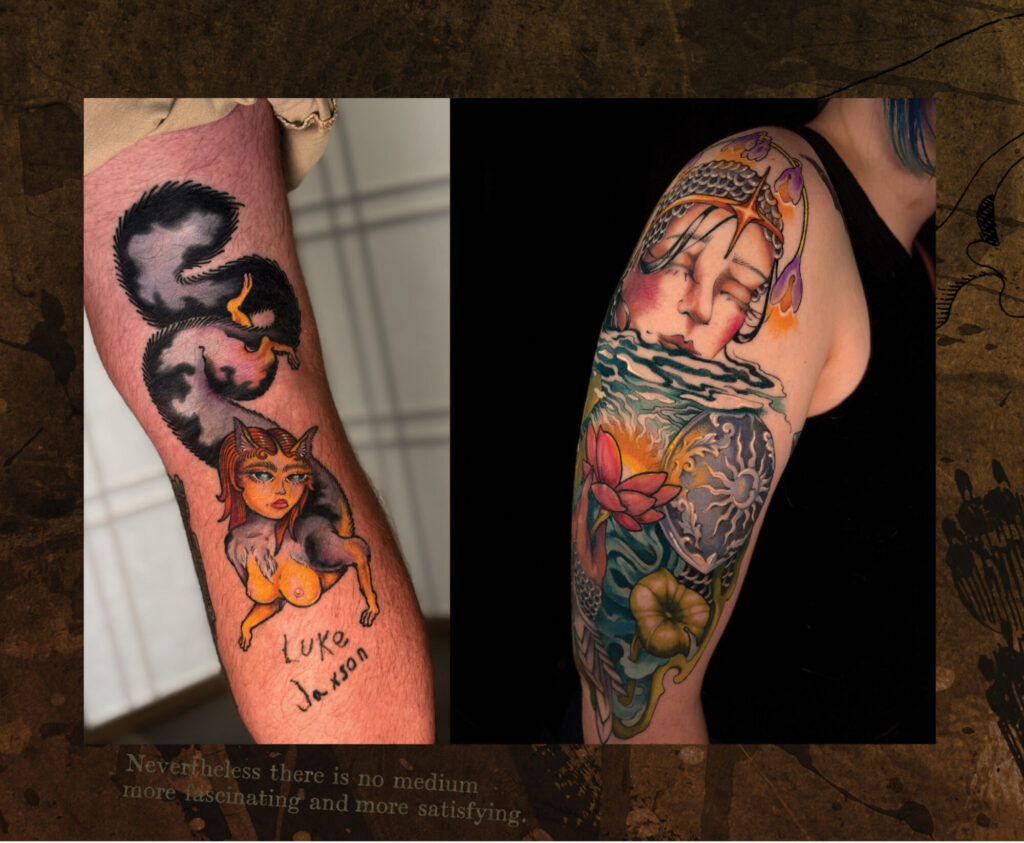
What animal energy does your art carry?
I want to say a swamp sprite. I see my personal art as more of a calm symbiosis with nature. A bit of magic and fly-on-the-wall type observations.
Who in the skate community inspires you?
I love watching super-creative skaters. There’s such a constant influx of talented skaters that I haven’t been able to keep up. I’ve been a huge fan of your skating, Eshna, for some time. I love the way you put together creative combos with fun and surprising manuals and switch-ups. The fun stuff you put into just skating on flat ground leading up to a trick is always so fresh. I love Silvia Kambouridis and her flow so much. Watching them in a bowl or in the street, they make every line feel serpentine, like that’s exactly what that space was built for and nothing else—even if it’s the most random street feature. I love Jaquan Owen’s skating so much. He puts really creative flourishes into his skating that are so unique, and at the same time, he will tackle a vert ramp like it’s a miniramp and do wildly techy tricks. Very inspiring. There are other homies in the scene I look up to locally who are so down to earth. My friend Alex (@tony_cock2000) is a lawyer and is actively fighting for reproductive rights here in the South while absolutely shredding. My friend KT French (@ducttape.skates), who runs the Pensacola CIB chapter, organizes events that help keep our small-but-mighty scene alive. My good friend Jacey (@euphoriccottage) inspires me every session with her flow and bubbly disposition, and she’s involved in our local arts scene. There are so many more, but I’m always thankful to the homies who keep it real.
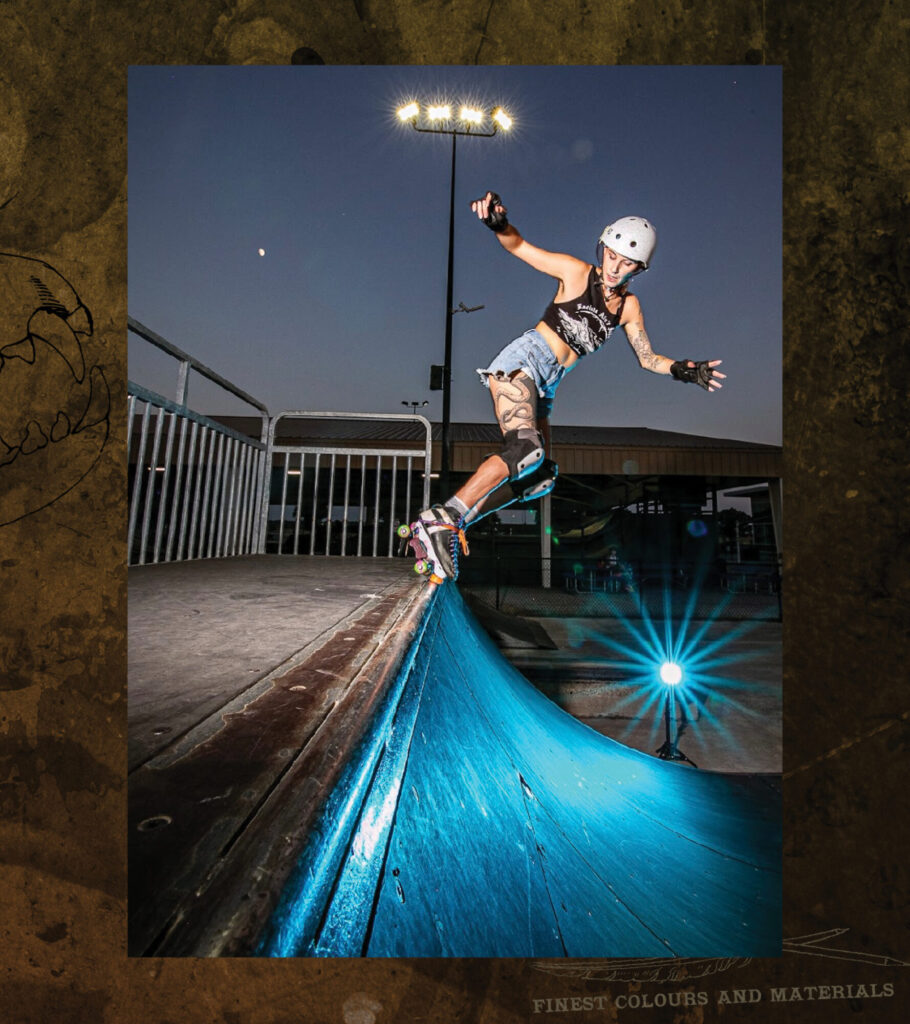
What does skating give you that art doesn’t?
Skating is dangerous. I’m a very afraid person by nature. I’m scared of heights, speed, falling, and getting hurt. Skating is so far outside of my comfort zone risk-wise. I’m also the type of person to stand at the edge of a cliff for half an hour before finally getting over myself and jumping. There’s something about the process of overcoming fear that is super valuable to me. There’s a huge sense of accomplishment in learning a new skill and overcoming the fear of looking stupid, but with skating, there’s also the actual risk of injury. I see it as a bit of a puzzle. It’s truly the only physical thing I’ve ever gotten into. It’s insane to me how something like skating is even possible—how we can fling ourselves at high speeds and land in contortions on a specific spot, balancing and calculating speed and trajectory in real time. Skating is crazy. It’s all-encompassing. It takes your whole body and mind.
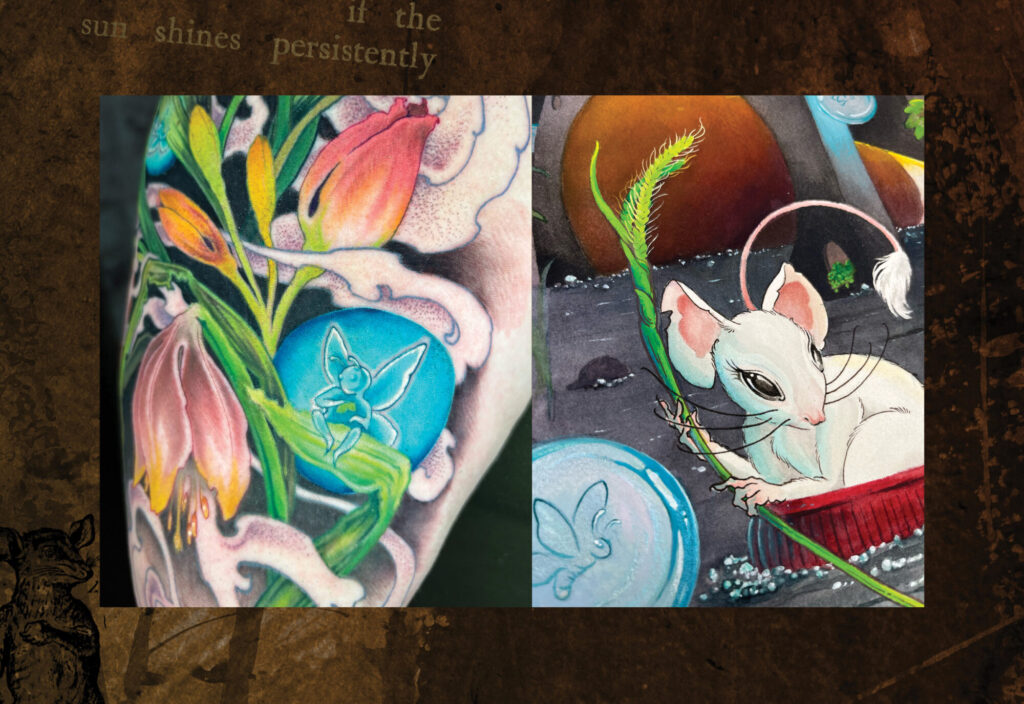
Has skating influenced the way you design?
I think it has, just from exposure to skating culture changing my visual palette, as well
as adopting a “go with the flow and don’t overthink everything” mindset. I think it’s made me a better artist. I’m more attuned to the physical side of myself now, and I think that impacts the flow of my work, especially in the sketching stage, which is the foundation of everything.
What’s the most unexpected story someone has trusted you to put into their skin?
So many pieces I do for people I don’t explicitly ask about. I do a lot of cover-ups and memorial tattoos, and those are always pretty emotionally charged. I try not to pry and to support people if they decide to talk about what the piece means.
I remember tattooing one client years ago. It was a simple design—just the signature and dates from her son—and I could tell from the dates how fresh the loss was. People are so strong, even when they shouldn’t have to be. I’m so honored people trust me to help them with this part of their grieving process.