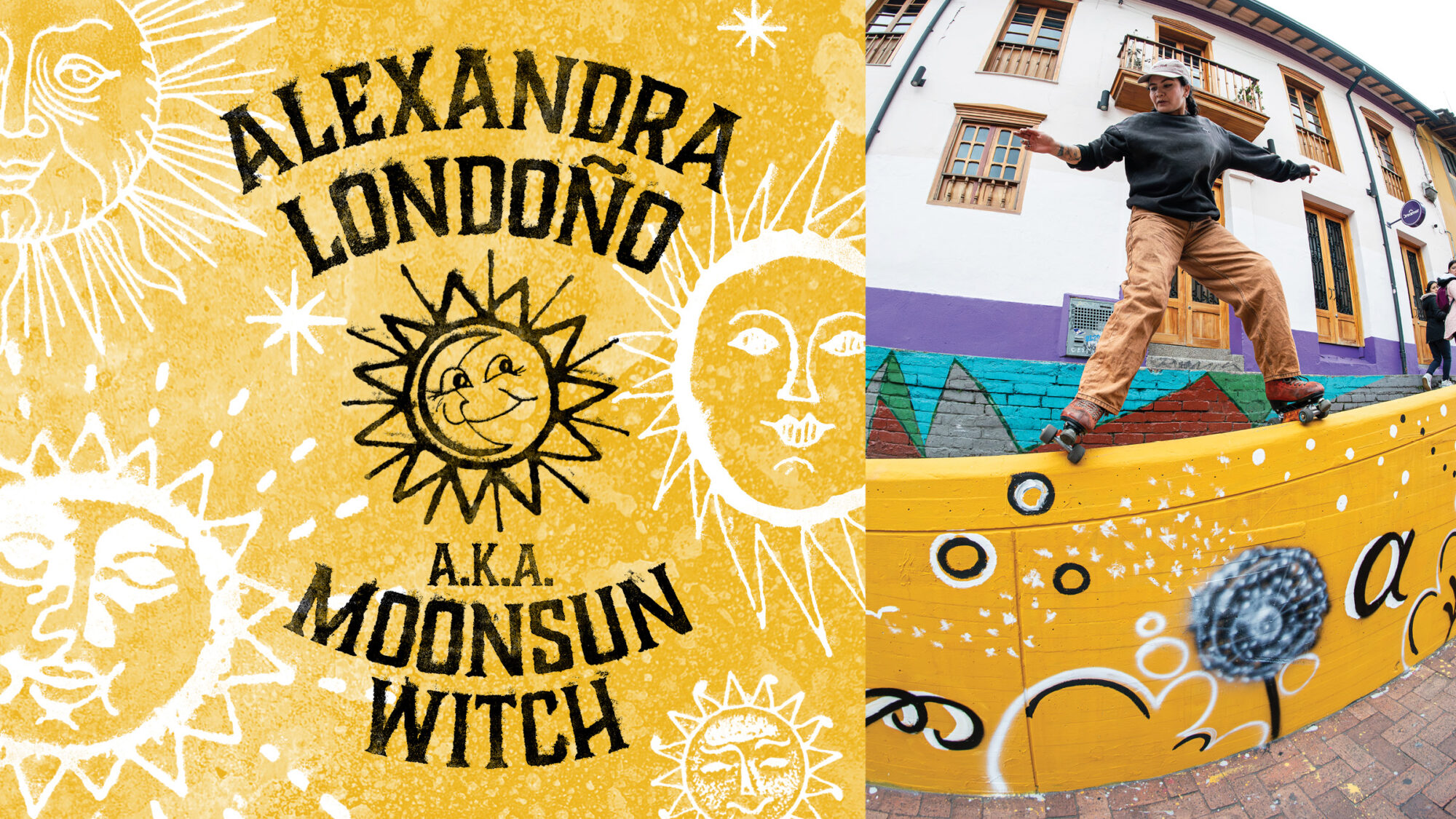
Interview by Samantha Trayhurn
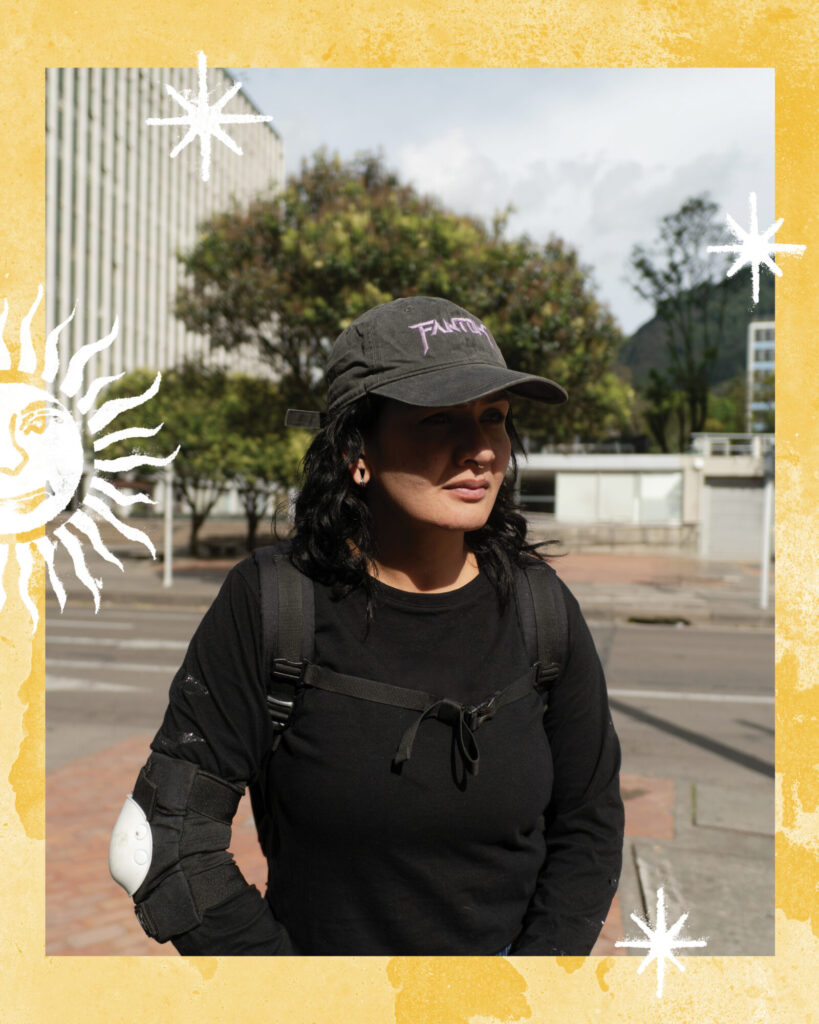
I’ve been friends with Alexandra Londoño (a.k.a. MoonSun Witch) since my first trip to Colombia in 2018, where she blew my mind with her powerful energy. I was still pretty fresh to skating in skateparks, and I remember seeing her jump from a bank onto a rail that was almost as tall as she was. All these years later, it was really special to sit down and interview her. We spoke in Spanish, and the text has been translated for your reading pleasure. When we caught up, Alexandra had just returned from a beach holiday. On Instagram, of course, it looked like she was living it up at some tropical resort like a rockstar, but she soon told me the reality was very different.
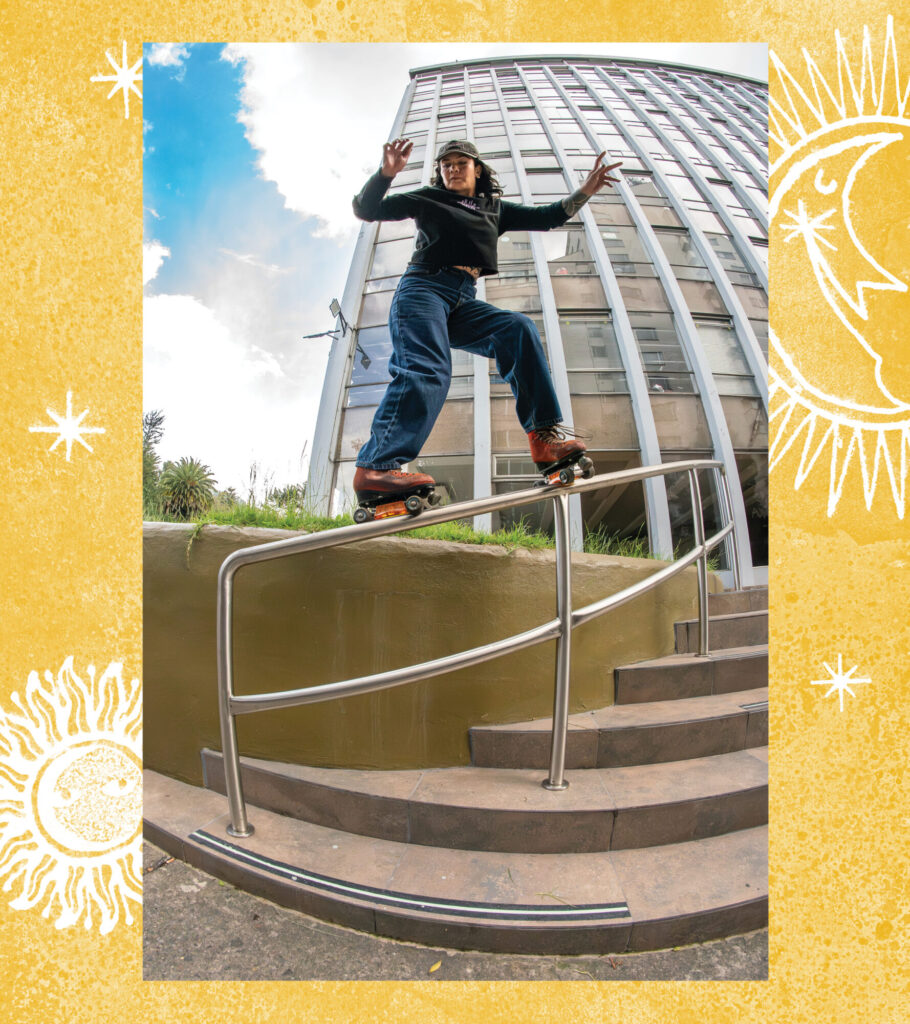
If you’ve watched Fuego by Hell on Quads you can see how badass this alley-oop soul was.
Photo: Nicolás Delvalle
So, how was your trip?
It was a bit fun, but chaotic. It rained a lot, a bridge fell, and we couldn’t cross it on foot. There were a lot of people. In the rural area, towards Santa Marta, the bridges aren’t that perfect.
Oh my god. I saw a bit about the floods, but I didn’t know that’s where you were.
Yes, Santa Marta and around there. The people of the town use those bridges, so when one falls it’s a big problem.
Wow, sounds intense. Sorry if my Spanish is rusty. I’m just waking up. It’s 6 a.m. here, and I just finished walking my dog. Are you also a dog person?
Yes. I love them. I have two dogs that I adopted. Here we call them “Criollo.”
If you could be a dog, what breed do you think you would be?
Criollo, also. Criollo dogs are a mix of many breeds. That’s what makes them unique. I think I identify with that.
So, the theme of this issue is “Feral,” and when I found out I was interviewing you, it made me think of that Colombian saying, “Como una cabra,” which means, “like a goat.” Can you explain that? Because for me, “feral” is kind of wild and crazy, like that phrase.
Yes, it means out of control, but with a lot of ideas. Very active. A goat never stays still. It’s always moving, always doing something. I think it’s similar to the Colombian personality. That desire to always do more.
Do you feel that connects with skating?
A little bit. Especially in how I make decisions when I skate. I think a lot about things, but I also just do them. I think about what I can achieve. If I go to a spot and want to try a trick, I think first, but then I risk it. Sometimes you think, Am I going to fall? But when you have that goat attitude, you don’t overthink. You just go.
When did roller skating enter your life for the first time?
I actually started with roller derby; 2009 was when roller derby arrived in Colombia. Then, in 2013, I started skating ramps. At that time, there was this big boom—Michelle Steilen (Estrogen), Lady Trample, Barbie Patín. I watched Michelle’s video, the one she did with Bones, and I realized: “Ah, you can do that on quads. Not just derby.” At that time, in Colombia, there was only one person skating ramps on quads. A man, he’s older now, and he skated vert. So, I started alone. There wasn’t anyone else yet. About a month after I started, I convinced Caro (Carolina Hernandez) to come skate ramps with me. She was scared at first, and now look at her.
What was the difference between roller derby and ramps in the beginning?
Derby helped us a lot with stability and basic technique. We already knew how to skate. But they’re very different. In derby, you’re mostly on flat ground. On ramps, you’re constantly changing directions. It’s a different feeling. Still, because we had the technique, we skipped some beginner stages and progressed faster.
So, your skating adventure started with derby. What attracted you to roller derby?
I’ve always done sports. Since I was little: soccer, football, etc. I was even in the Bogotá team at one point. I’ve always been very competitive. So, when I saw roller derby, I loved that it was a team sport. I loved the contact. The impact. The strength of it.
Were you scared of getting hurt?
Never. I was 17 when I started. At that age, you don’t think. You’re like a goat. You just want to play. You want to learn fast. My family was low-middle class. We didn’t have the money to buy proper equipment. So, I made my first derby skates by hand.
Like DIY?
Yes. My dad had some old quads for skating in the street. He didn’t like that I wanted to play derby because it was violent. But he gave them to me. The boots were way too big. So, my mum gave me some skate shoes, and I took the plates of the skates to put on them. I didn’t really know how to assemble them. My dad helped me. The wheels were very small and very hard. They didn’t even spin properly because they were so old. But that’s how I started.
Were there many people doing derby then?
Yes, derby had a big boom in Colombia at that time. Two big teams, almost 30 people each. I started without even knowing how to skate properly. My sister and I shared one pair of skates, so we learned with one skate each sometimes. I literally learned to skate in derby.
That is a big boom. Do you think it’s because derby is connected with Colombian culture?
Yes, especially with subcultures. Many people felt rejected from other sports because of tattoos, hair, gender identity, or sexuality. The LGBT community didn’t always feel safe in traditional sports. Derby was different. People had colored hair, tattoos, and different body types. There wasn’t one “correct” body. It was inclusive.
Is it still like that in roller skate culture?
Yes. It’s still a space where people connect without fitting into a prototype. You can practice at any age. The sport doesn’t limit you as others do. Derby and ramps allow adults to learn. That’s important.
Is there a place in Colombia that feels important in your skate history?
Yes. Parque Nacional. It’s a public park where I learned. It’s not a skatepark; it just had flat ground, and we took over the space. We made a track and trained there for five years. It was open. If it rained, we trained in the rain. That’s where derby really grew for us.
That’s so badass. Playing derby in the rain. Now Colombia has so many good skateparks. How did that come about?
When I started, there were only two parks, very DIY and badly built. But the community grew: skate, BMX, roller skating. We organized meetings. We showed the city that we were a big community. That’s how parks like Tercer Milenio and Fontanar were built. It came from community need.
Is DIY culture still alive, too?
Yes. There’s a skatepark called The Philly’s; it used to be a drug spot. The community reclaimed it and turned it into a skatepark. Skate is part of social change in that way.
Can you tell me what it was like growing up in Colombia?
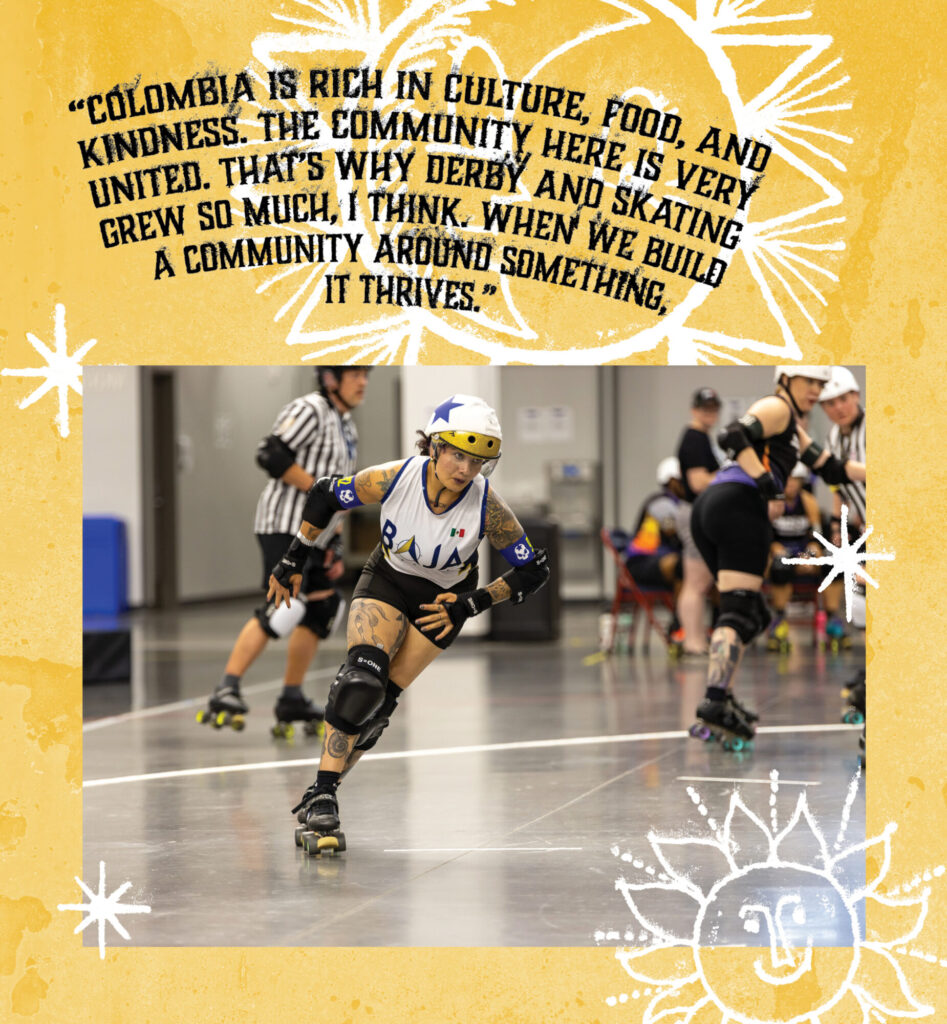
Colombia is improving economically. We produce food and textiles. It’s growing. But many of us grew up in poor neighborhoods. We weren’t born into comfort or easy access to sports. We had to create opportunities. Being Latino is feeling proud that you’ve grown despite limited opportunities. For example, seeing a Latino sing in Spanish at the Super Bowl. Some people didn’t like it. But for us, it represents opportunities. Colombia is rich in culture, food, and kindness. The community here is very united. That’s why derby and skating grew so much, I think. When we build a community around something, it thrives.
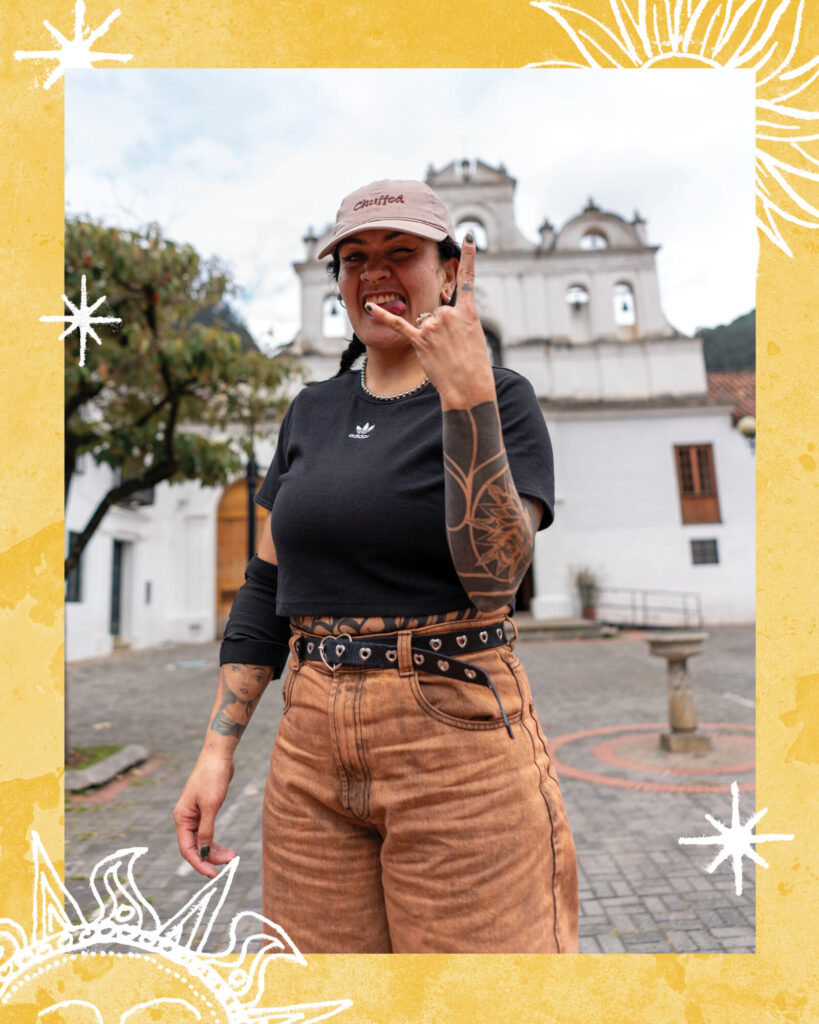
How did skating change your life?
At first, it was just a hobby. I studied graphic design, then photography. I worked other jobs. But when I leveled up in skating, I wanted to go to the 2014 World Cup. That was the first time a brand sponsored me. An Australian brand called Crazy Skates. It was the first international brand to believe in me. In Colombia, skates and protection are very expensive. I would have to work all year to afford one pair. That sponsorship showed me what was possible. That changed my life.
You’ve been skating for more than 10 years now. What’s one opportunity that stands out as a favorite? A trip, a moment, something special?
The first trip I did outside the country was to Chile in 2016. That was very special. It was the first time the team I created with Caro (Carolina Hernandez), Hell on Quads, held its first international event there. We organized it with girls from South America. One week we did roller derby, and the following week we did park skating. We united the community. It was beautiful to see so many Latin American skaters together.
Tell me more about Hell on Quads. When did it start, and what is the project?
Hell on Quads was born from the need to grow a community. To show the world that Latin Americans have a lot of potential, not just as a “skate team,” but as a team that empowers. We wanted to help people explore possibilities in skating and in life. It started in 2014. Caro and I sat down and said: Let’s create something together that helps others achieve what we’ve achieved, and also skate together, because at that time people were skating separately. At first, the focus was Latin America. To connect skaters across the region. Later, it grew internationally. We’ve done many events and projects. And recently, we released our first full street video with the whole team. We all have different levels. Not everyone skates the same. But everyone took the risk to skate street. That was very beautiful.
How has the transition to street been for you?
Very difficult. I’ve had many injuries from derby and roller skating. Street skating gave me a lot of fear. People say, “You know how to fall.” And yes, I do. But the street is different. You have to think very fast. Sometimes you only get one try because security asks you to leave. There’s pressure. And there was pressure from the community. Everyone was skating on the street, and I wasn’t. People would ask, “Why aren’t you skating street?” I needed to wait until I felt comfortable with the space,with my body, and with my mind.
How are you managing that?
I treat it like a job. In derby I’ve worked with sports psychologists. I transferred that mentality to street skating. I read a lot. I’ve worked on how I communicate with myself. I started slowly, with smaller spots, less risky places. I’ve been in this transition for two years. This year, I finally said: I want to record. I want to skate street because I feel ready, not because it’s trendy. The process had to feel safe and progressive.
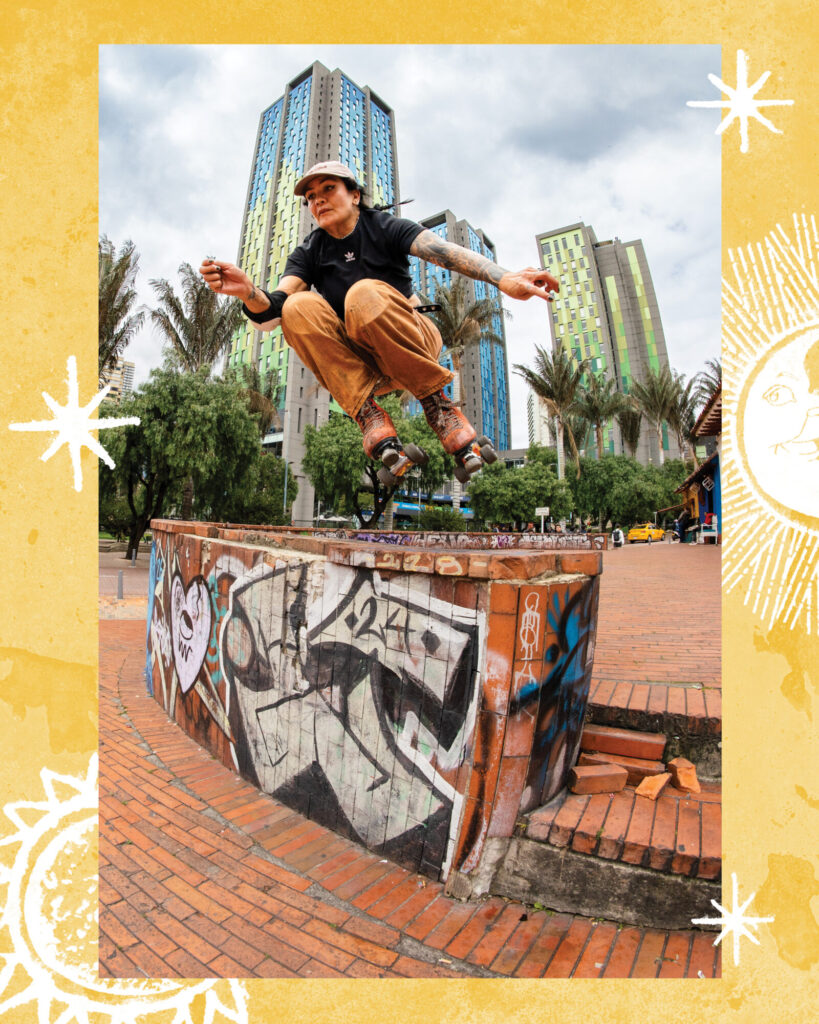
Photo: Nicolás Delvalle
For sure. It’s dangerous, and you also have your job. If you get hurt, it affects your whole life.
Exactly. Very few people live from skating. We all work. We pay our rent. When you’re older, you think about that. When I was younger, I was a crazy goat. Now I’m more conscious. But I don’t limit myself, I just move differently. I’m very proud of what I recorded for the Hell on Quads video. The process was correct for me.
What’s your favorite trick from the video?
Alley-oop soul on a rail. I’ve done it before for a Fantom photo. People say it’s complicated, but I like how my body moves in it. I skate a lot backwards in derby, so tricks backwards feel natural to me.
Tell me about your work. What do you do when you’re not skating?
I’m a stylist. I work in an alternative hair salon and do modern cuts, colors, and creative styles. I’ve been doing it for almost 15 years. I love it. My boss supports my skating, so I can travel and organize my schedule. I work one day on, one day off. On my off days, I skate.
Your Instagram photos are beautiful. Is it another creative outlet for you?
Yes. And many of my clients are from the skate or BMX community. So, our worlds connect.
What part of your personality only appears when you’re skating?
It depends. In derby, I’m extremely competitive. Very demanding. Sometimes too demanding. That’s why I’ve reached a high level and played internationally. In ramps, I’m different. It’s my safe place. I don’t compete with others, only with myself. People who only know me from roller skating are surprised when they see me in derby. It’s like two personalities.
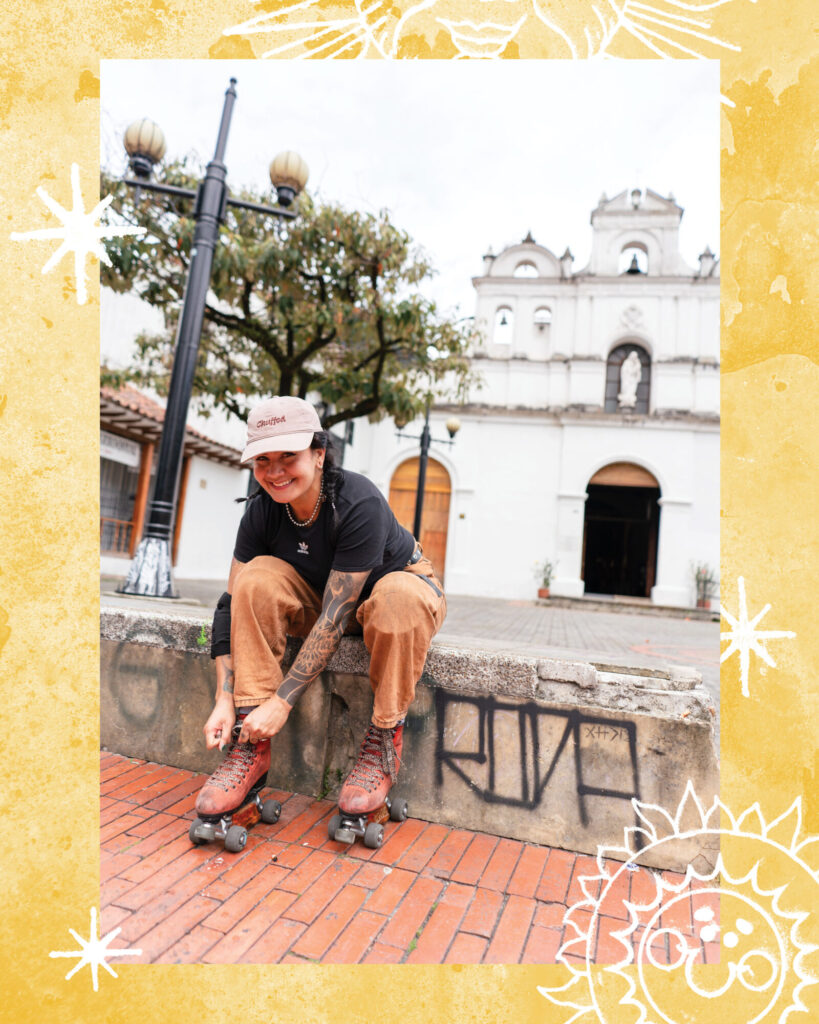
You recently went to the Roller Derby World Cup again. How was it this time?
Incredible. The first game was very hard. We played Canada, second in the world. It was a lot of learning. Then Chile is also very strong. I connected with many people I know from roller skating who also play derby.
When you’re traveling, does it get hard to communicate? I know you’re learning English. How is it going for you at the moment?
It’s been difficult. I didn’t learn as a child. I didn’t think I would need it. Now I try. On trips, I force myself to speak. Sometimes I use my phone to translate. The skate community is patient. In other spaces, people aren’t always patient. But in skating, people try to understand you.
Do you think skate is its own language?
Yes. It unites us. In France, people didn’t want to speak English. We didn’t share language, so we just skated. And we connected.
What are you most proud of right now?
Overcoming my fear of street skating. The first time I tried, I was very scared. Now I believe in myself more. A trick doesn’t measure my level. A spot doesn’t measure my level. We all skate differently. I train in the gym. I strengthen my injuries. I talk to myself differently now.
You’ve had elbow injuries, right?
Yes. I dislocated it when I first started skating. Again in 2018. Again in 2021, and then 2024, two months before RollerCon and Milano QuadFest. I almost didn’t go on that trip to the U.S. and Europe. I was heartbroken. I couldn’t skate how I wanted. I was there to compete, but I didn’t feel at my best.
Yeah, I think a lot of people experienced that on the Milan trip. There was a lot of pressure with so many high-level skaters. A lot of people are struggling with injuries.
Yes, but I went anyway, to connect. Seeing everyone there healed something in me.
What is your goal right now?
To evolve. To keep learning. To teach. To help others find their style. And to take care of my body so I can skate until I’m old.
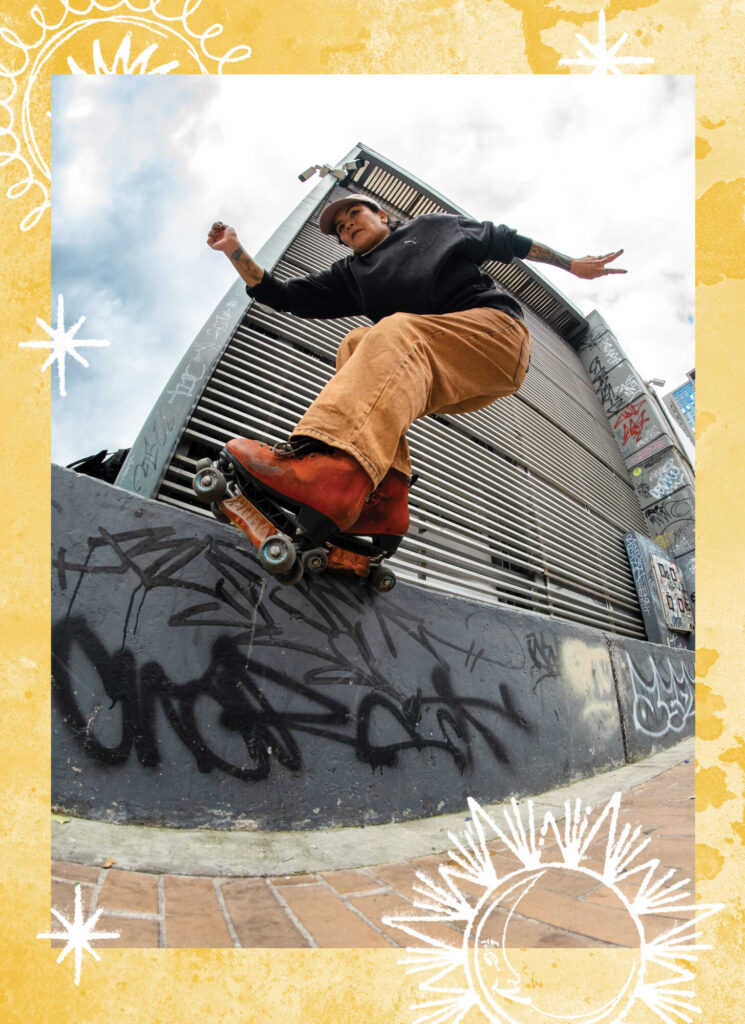
Photo: Nicolás Delvalle
Here in Australia, I already feel old when I skate. It seems like everyone at the skatepark is a kid, or all the roller skaters are way younger. Are there older skaters in Colombia?
Not many. Mostly young people. We joke that we’re old ladies. But I want to skate as long as my knees and my heart allow me. One day, I’ll retire from derby; it’s intense. But I’ll continue roller skating.
Yeah, it’s a lot of work to keep the body fit for skating. How often do you train?
Three derby sessions a week; two gym sessions, one recovery/stretch day, and skatepark sessions whenever I can. My job is manual, too. I’m always moving. I can’t stay still.
Yeah, you seem like someone who has to be moving to be happy. What’s your star sign?
Cancer.
Oh wow, I was expecting something more energetic. Like a fire sign.
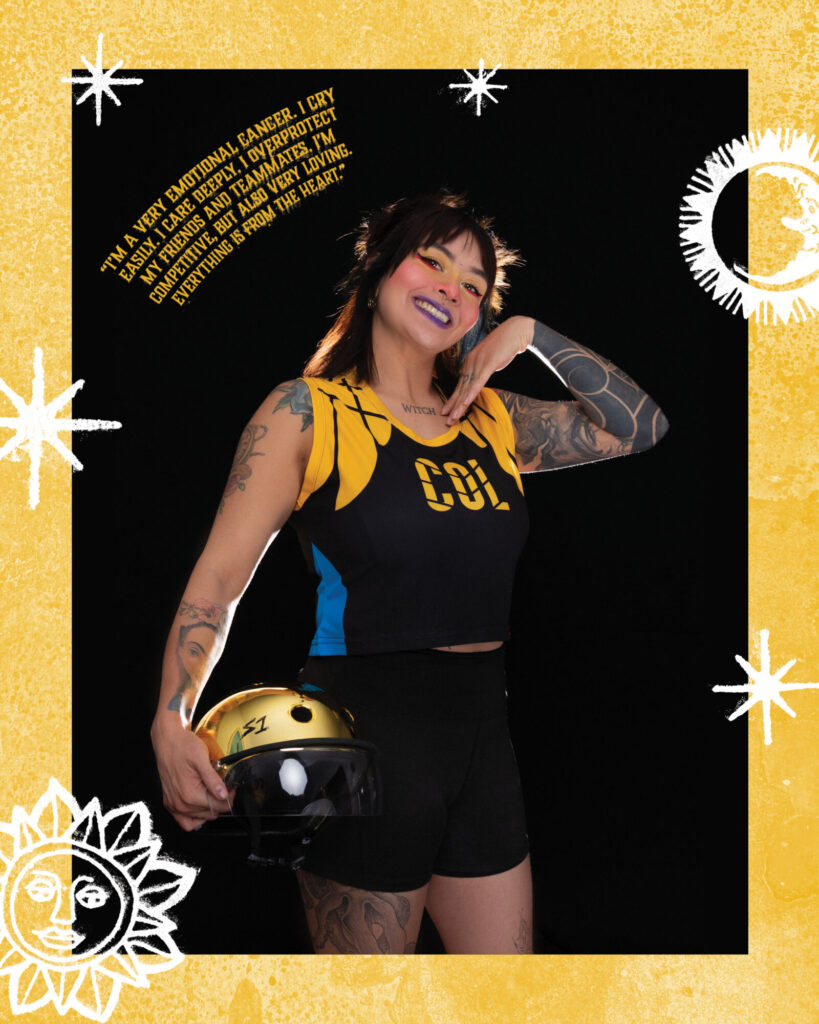
I’m a very emotional Cancer. I cry easily. I care deeply. I overprotect my friends and teammates. I’m competitive, but also very loving. Everything is from the heart.
What’s a challenge for you in skating?
Well, my topside tricks; top acid, top soul are strong, but my natural soul side is harder for me. Even though I’m ambidextrous, sometimes my brain blocks me.
Is there any place you still want to visit to skate?
Australia. Maybe next year. I want to go to Japan first, then connect to Australia.
Yes, please! What animal would you hug in Australia?
A koala.
They have long nails.
Very long.
They aren’t as crazy as goats, but they can still get feral.
I want to see it. I hope to see you soon.