Interviews by Samantha Trayhurn
About a decade ago, I rolled into a skatepark for the first time after falling down a late-night internet rabbit hole, first the tutorials from Lady Trample, then the now-legendary Bones video featuring EstroJen and crew. Like a lot of people, I’d come from roller derby, where skating lived inside rules and lines. The park felt uncertain, new, and completely free. I wasn’t alone. A whole wave of skaters stepped off the track and out of the rink around the same time. So, looking back at how far this shift has carried us, I wanted to talk to some of the skaters who first nudged our community out of traditional skating spaces and into the world of hard concrete and streets. These were some of my biggest influences, but there were many others, too. Shout out to all of the wild ones who did it without a blueprint.
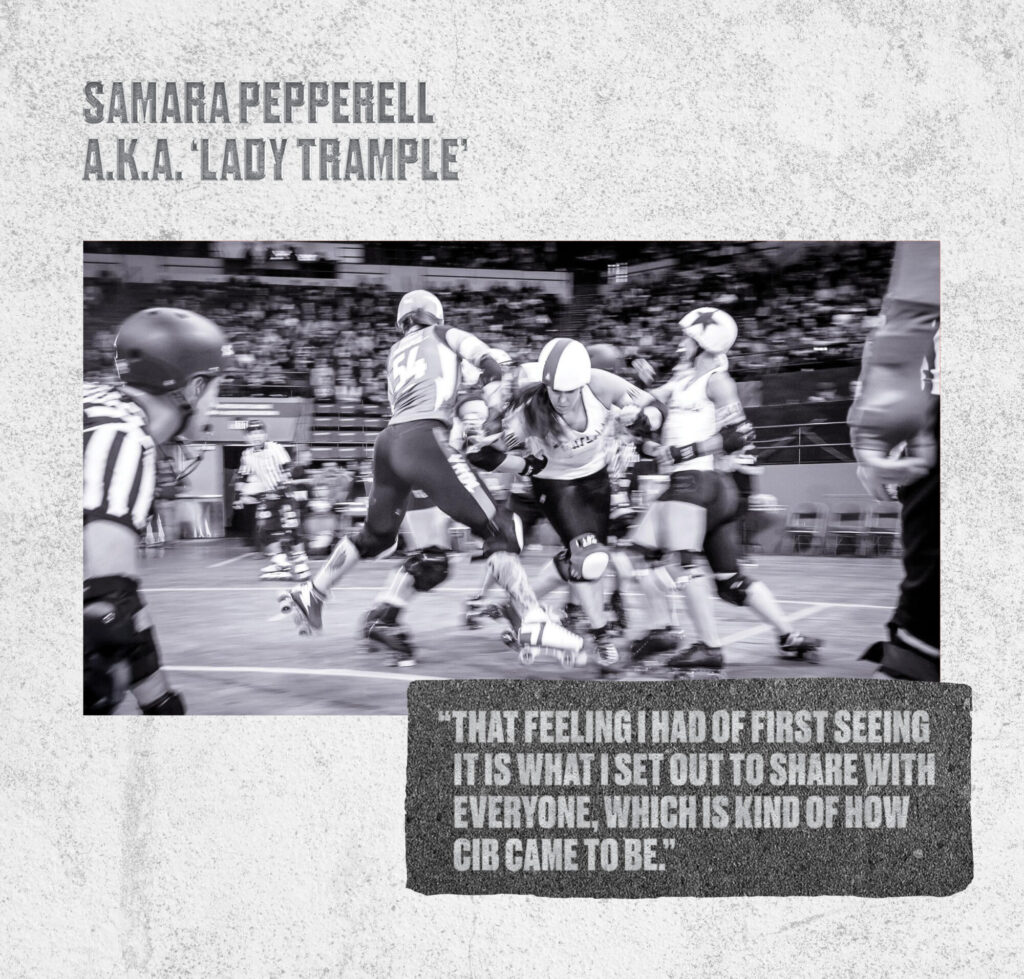
SAMARA PEPPERELL A.K.A. 'LADY TRAMPLE'
Where are you from?
Tāmaki Makaurau (Auckland), New Zealand
When did you first start roller derby?
2012
Who did you play for?
Pirate City Rollers (2012-2015), Victorian Roller Derby League (2016-2018), Denver Roller Derby (2019-2020) Covid kind of confused my timelines.
When did derby stop feeling enough and led to taking up aggressive skating?
It wasn’t that derby wasn’t enough, but when I discovered that you could roller skate on transitions, I just fell in love with it. I was introduced to the concept by a new skater in town, and I took her on an outdoor skate. When we stopped at a park, she dropped in, and that’s it, I was hooked. That feeling I had of first seeing it is what I set out to share with everyone, which is kind of how CIB came to be.
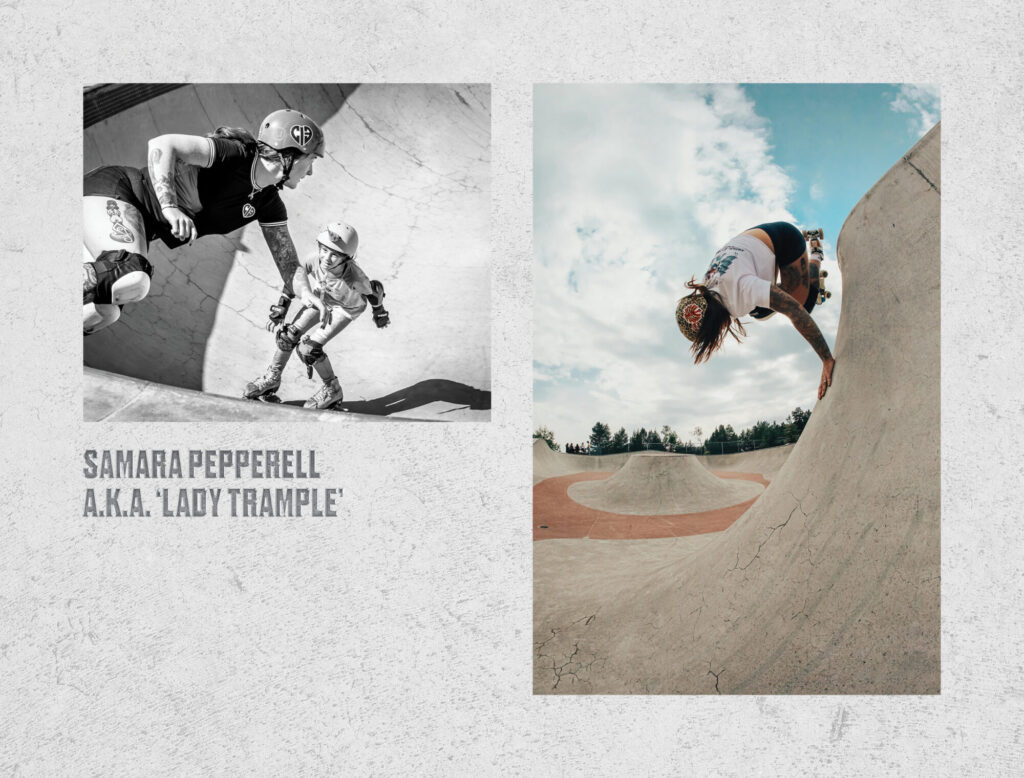
Right: Photo: Kelly Turner
You accidentally inspired a wave of people, but who lit the spark for you?
The skater’s name was Cutthroat, a very badass individual who moved over from Aus and through her I discovered park skating and the niche underground scene that was brewing. I came across skaters such as Fink and Nikita Woolcock, as well as a small but growing community of skaters who really inspired me.
What did it feel like to skate without rules?
That was definitely a draw card. I liked the paradox of having two different reasons to lace up. The rules, teamwork, and drive of derby filled a lot of my cups, but the completely free rein you had in the parks topped it all off. The only limitations you had were your ability, confidence, drive and weather. I used to feel so fearless, and honestly, I’m a little envious of that version of me.
Looking back, what would you say to that version of you on the first day in the skatepark?
You’re in the right place at the right time, and you’re about to go on a journey that will change the course of your life. Oh, and wear your kneepads!
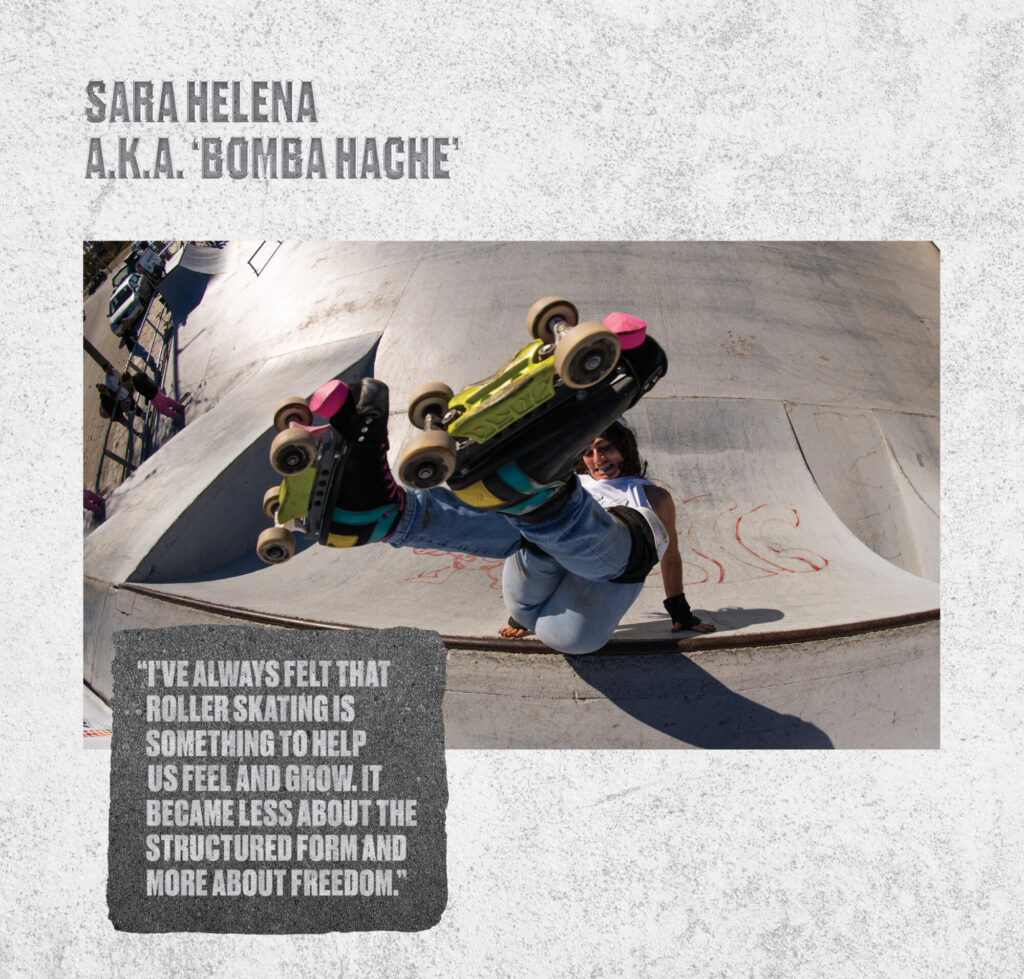
Photo: Angel Zorraquino
SARA HELENA A.K.A. 'BOMBA HACHE'
Where are you from?
I’m from A Coruña, Spain, a beautiful coastal city in the northwestern part of Spain.
When did you start artistic skating?
I started rollerblading at an early age with inline speed skating, and then at four years old, I started figure skating. I was drawn first to artistic roller skating as a way to express myself, but it was too much structure, competition and training. I stopped at 12 years old. That gave me the base for my roller skating. It didn’t take long before I began exploring with my roller skates outside in the streets, the rink (with roller derby) and finding this perfect discipline for me in which I can
express myself to the fullest without limits, mixing my styles and disciplines.
When did the skatepark start calling your name?
The skatepark started calling me when I realized I wanted to express myself without limits, without anyone telling me when, what and where to do my thing. If I didn’t reach a goal there, that would be only on me. I saw it as a space where I could give my absolute best, and if I didn’t reach my goals, I knew the responsibility would be entirely mine. That accountability pushed me to grow and become the roller skater and person I am today. What I loved about this sport is that every corner becomes a canvas and that every trick tells a story. I’ve always felt that roller skating is something to help us feel and grow. It became less about the structured form and more about freedom.
Did your style translate straight away, or did you have to break habits?
It wasn’t instant. I had to break habits from artistic skating and shift into a more open, freer mindset. I learned to let go of rigid technique and embrace adaptability. But I wasn’t only breaking personal habits, I was also challenging certain misconceptions within street culture. At the beginning, I stood out. First, because I was a woman in a space that wasn’t always used to seeing us take up room. And second, because I was bringing a discipline that wasn’t widely understood. Instead of separating what I already knew from what I was discovering in the streets, I began merging both worlds. In doing so, I became one of the first to blend artistic skating elements with freestyle, creating something that felt entirely my own.
You were (and are) a big inspiration for people developing in the park and street; what do you hope you have imparted to them?
I hope I’ve imparted confidence, creativity, and the belief that skating is personal, that you don’t have to fit into a mould to be valid and successful. My message has always been about encouraging others to find their own voice on wheels: training hard, exploring fearlessly and not underestimating the inner power of yourself in progress.
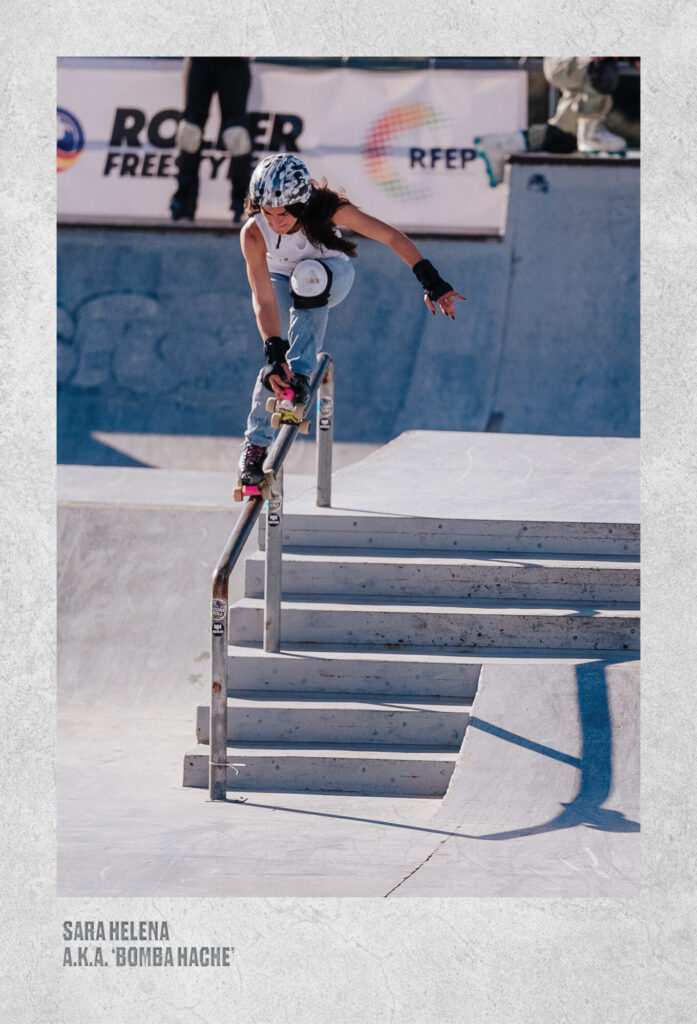
Photo: Angel Zorraquino
Was the loss of perfection from artistic skating scary or freeing?
It was both. Letting go of perfection was scary at first, as it meant stepping into uncertainty. I felt pretty lost for years, not knowing where to take my roller skating next. In the end, it was liberating. It allowed me to find spontaneity, fun and a deeper connection with myself, the environment and with other rollerskaters.
Do you still feel like you’re performing when you skate?
Yes, but it’s not about being watched. It’s about channelling everything I’ve worked for (the effort, the discipline, the nerves…) into movement. When I skate, I’m releasing and transforming that energy. It becomes a dialogue between me, the space and my wheels. It’s not a performance for others; it’s a conversation with everything I’ve built up inside me. And definitely, that mindset helps me overcome myself.
What would you tell the version of you lacing up for your first session outside the rink?
I’d tell her: Trust your instincts. You don’t need to fit in to belong. Stay resilient and strong, because there will be injuries, falls, and moments that will try to slow you down or make you doubt yourself. Don’t let them define you, but let them shape you. Fall without fear, keep showing up and don’t shrink yourself to make others comfortable. One day, the path you carve with your wheels will inspire someone else to start theirs, and that is definitely the best prize ever.
CAROLINA HERNANDEZ A.K.A. '@986'
Where are you from?
Bogotá, Colombia
When did you first start roller derby?
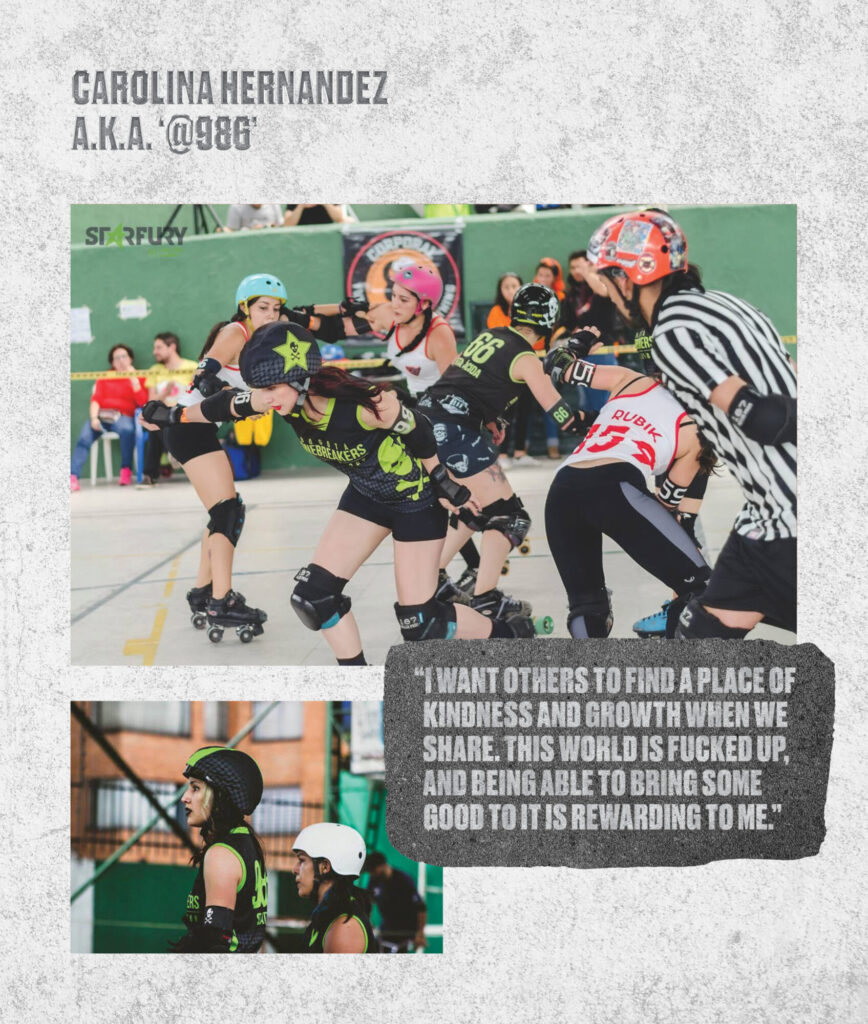
I started when I was 16 with a small team, pretty far from where I lived. Two months later, joined Bogotá Bone Breakers and played with them for nine years.
How and when did you realize that you could skate in the skatepark and streets, too?
In early 2014, Moon told me about CIB and convinced me to start going to the skateparks with her and start a CIB Colombia chapter, which later became Hell on Quads. Around that time, we saw the Estro x Bones video, and that sealed the deal for us.
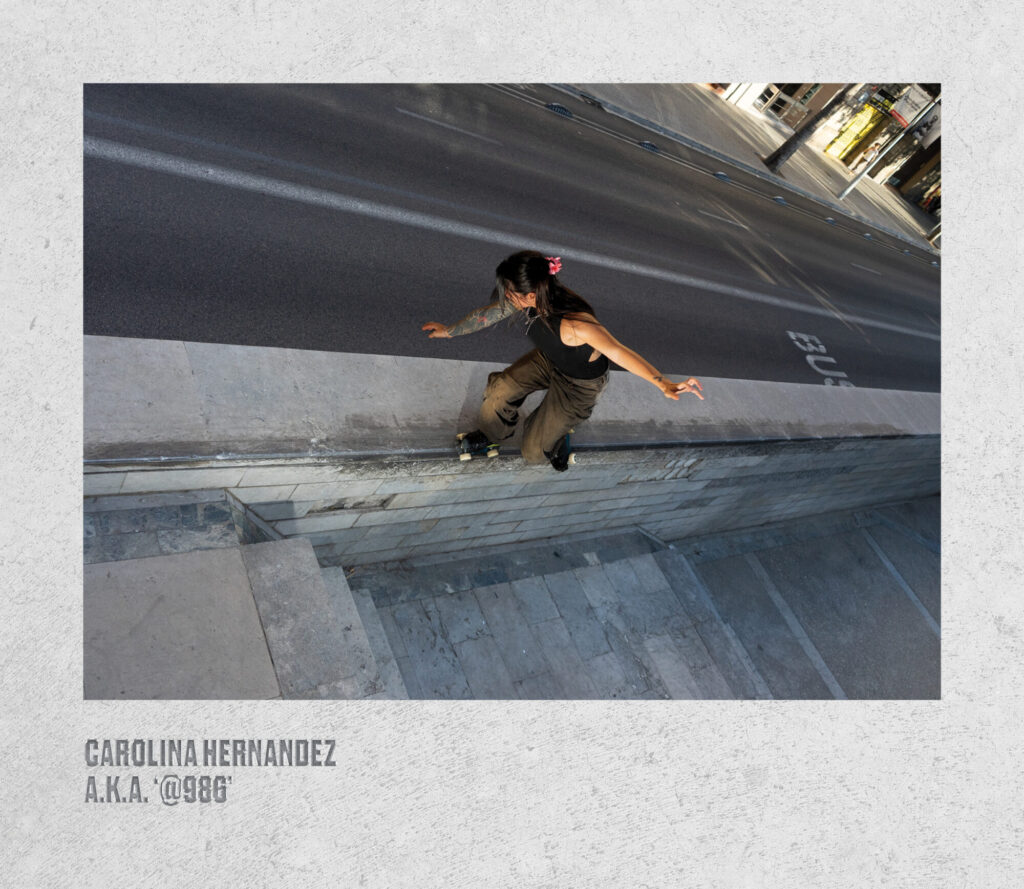
Photo: Marian Isa
Did you have to unlearn the rules before you could find style?
Definitely, there’s a thing we call “derby style,” it was pretty recognizable: stiff upper body,always guard up and geared up, wide stance… I was a jammer, so I had sort of more freedom of movement, but even to this day, I see remnants of that body posture because that’s how I learned to skate. That was the best part, in my opinion, being able to move on from structure and create a style with the skating I had at the time. I like my skating to reflect that power but also look effortless. I am not afraid of speed because of derby, and being used to falling helped a lot, too. I think it was more of a mental challenge because roller skating is a solo thing, and derby is a collaborative skate practice.
Who did you look up to at that time?
The obvious answer is Lady Trample and Estro, we briefly met them at the 2014 Roller Derby World Cup; it was sick to be starting in the sport and to have a good first impression with them. But my biggest inspiration once I got deeper into it was Bambi Bloodlust. It took us longer to have access to appropriate gear, and watching her ripping on narrow trucks was super inspiring. She’s also super kind and welcoming. Last but not least, Moon has always been my skating companion, and we got to grow together while watching online videos. I’m fortunate to have had her to keep each other in line and motivated.
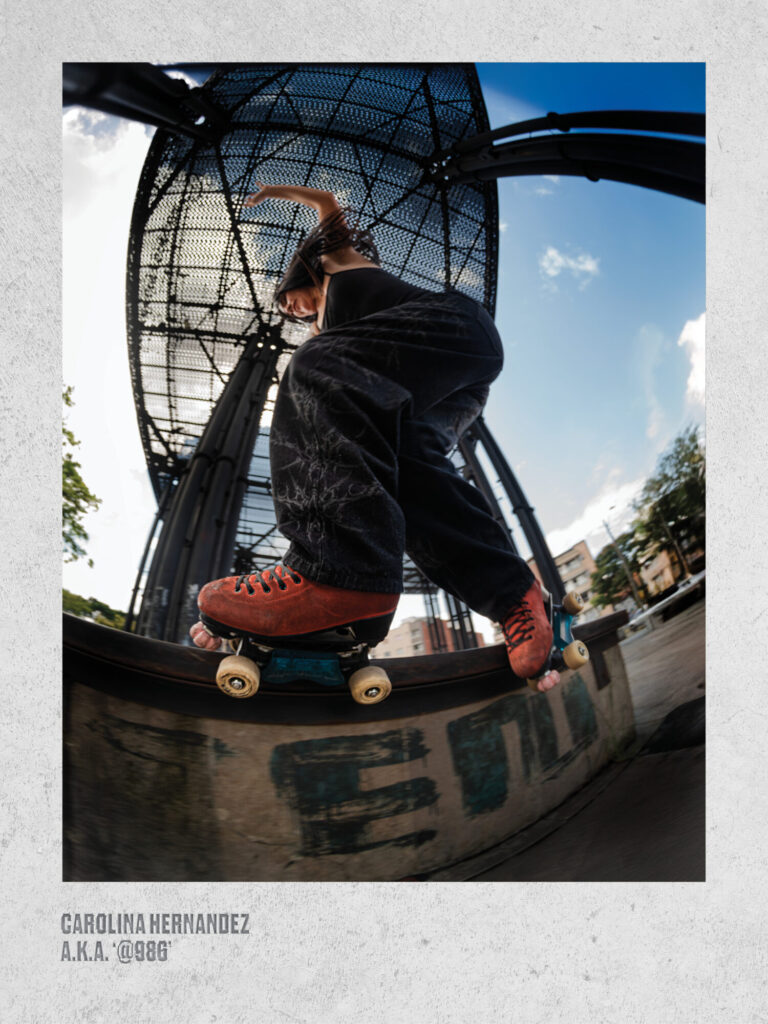
Photo: Crowned by two
Does it feel surreal knowing you’ve inspired people to start skating—not just in your country, but all over the world?
It really does feel weird; it took me a while to get used to it. At some point, I realized that in the end, it’s not how good a skater you are; you can partly inspire through that, but giving others a genuinely good experience is what makes the difference. Especially in smaller groups and one-on-one interactions. You never know how you can impact others’ lives, and how they impact your own. People have a partial idea of others online. I am happy with being able to bring people closer to skating one way or another. Most of the people I’ve met through this have become my friends. I want others to find a place of kindness and growth when we share. This world is fucked up, and being able to bring some good to it is rewarding to me.
If you met your early derby self at the skatepark today, what would surprise them most about you?
I would probably be surprised by how many friends I made through it. I was always an introvert, and through skating, I’ve found a place where I belong. I would also be proud of my skating because I never thought I could do the things I do today with my body, especially after my knee surgery and injuries. I got to channel all that raw energy into park skating after quitting roller derby. Maybe shocked to see how creative and free I allowed myself to be: my head is pretty dual, can be super squared and stubborn sometimes. I always thought I would live a structured, office-like life, and now I get to be more chill and create all the time.
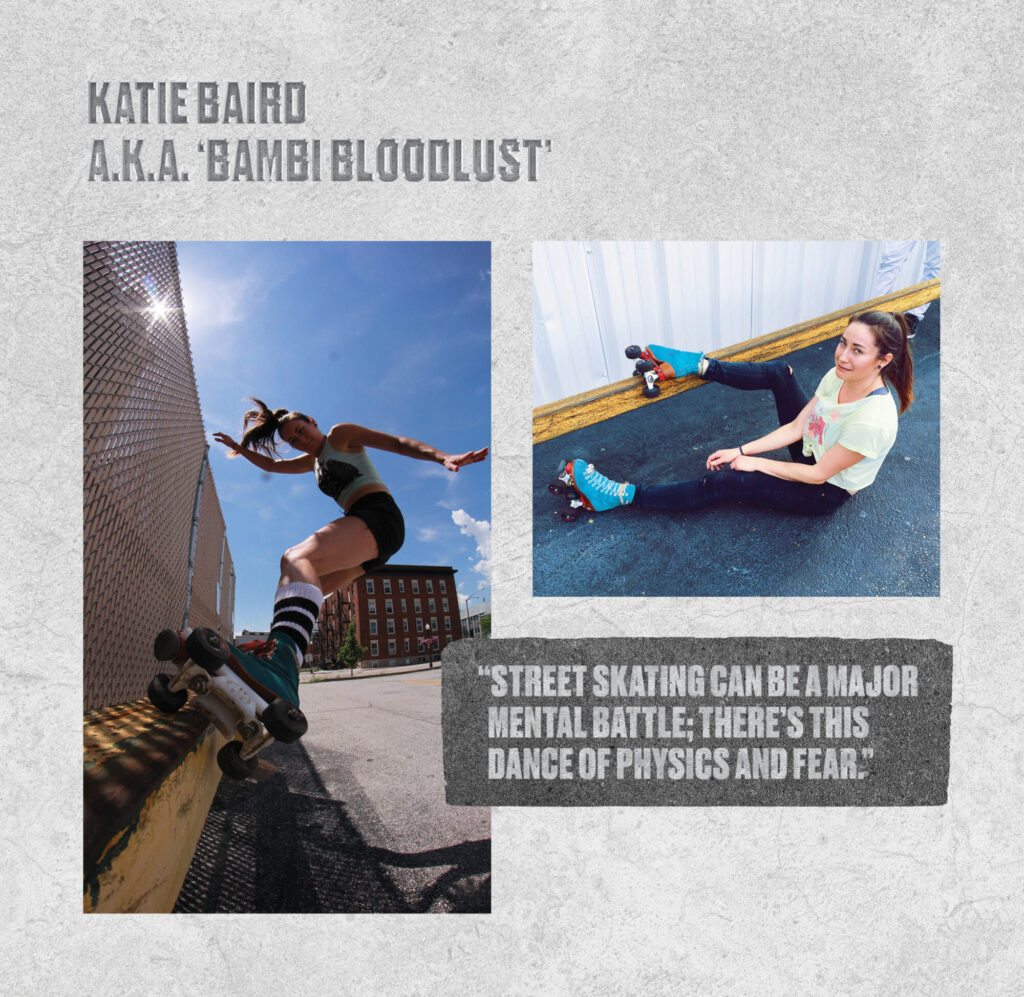
Photo: Caleb Smith
BAMBI BLOODLUST A.K.A. 'KATIE BAIRD'
Where are you from?
Currently, Des Moines, Iowa; past: Chicago, Central Illinois.
When did you start roller derby?
In the fall of 2011, after I graduated from college.
Who did you play for?
The first team I joined was the Decatur Derby Dames, then the Prairieland Punishers, and most recently, Windy City Rollers
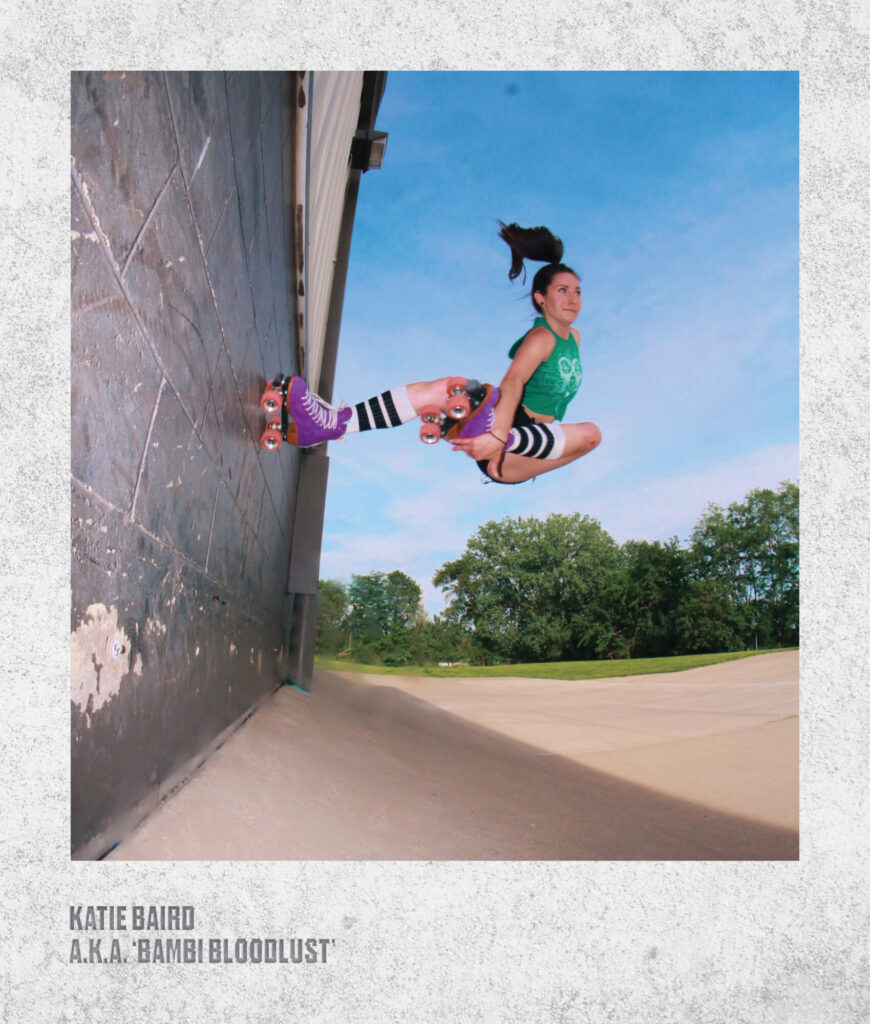
Photo: Caleb Smith
What pulled you toward ramps, streets, and coping? And when was that?
The spring after I started roller derby, I was thoroughly falling in love with roller skating in general. I was obsessed; I wanted to skate every day. Roller derby practice wasn’t enough, so I started hitting the trails. A nearby trailhead was located in a park near my house, and I had to skate past a skatepark to get to the trail. I would skate past the skatepark and look in from behind the fence, thinking “there’s nothing stopping me from rolling around in there. My roller skates could work just as well as their skateboards.” In March of 2012, I finally got the nerve, and I went in and started rolling around. That first day, I rolled down all the ramps and tested out the mini, pumping and doing 180 turns. I truly felt like Tony Hawk (which I’m fairly sure I cringingly stated on Facebook that day.) I was instantly hooked.
Who were you watching that made you think, I want to try that?
The spirit of Reggie Rocket has lived rent-free in my head since childhood, so when I saw the skatepark for the first time on my trail skates, I ran to YouTube and typed something like ‘roller skates in skatepark’ and I remember the first videos I found were one of Estro (Michelle Steilen) skating around a bowl and a Dying Breed Skatepark Tour video from RollerCon 2009. I think it’s Desi, Jay, and Estro skating a vert ramp. That was all I needed to fill me with the confidence to go for it. Not only was it possible to use roller skates, but you could also SHRED. I believe Lady Trample started skating ramps in 2012 as well. I was desperate to find and see if other people were doing this. Instagram was still pretty new, but I quickly found a Facebook page for ‘Chicks in Bowls’ and some posts on Instagram by searching hashtags. Those early posts and hashtags are where everything grew from.
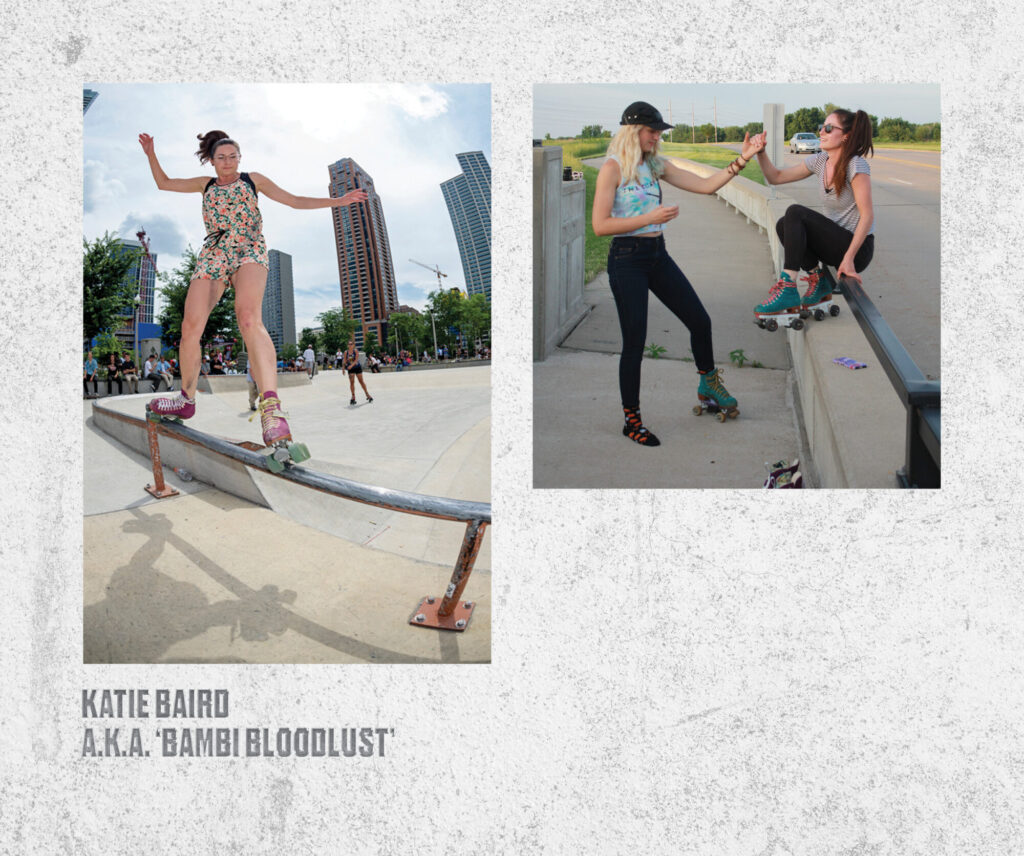
Right: Karli Craig and Bambi helping each other out.
Photo: Caleb Smith
What surprised you most the first time you skated on a street spot? During those first sessions, did you ever think park and street skating would be where they are today?
There was a shift in the way I started looking at the world around me. I love hunting for little spots where I could try something on. I would skate around downtown Decatur and do little wallrides, jump three stairs, skate off small ledges, jump bench to bench, shoot the duck down courthouse steps, just the most minute tricks. I’m sure I looked silly, but the thrill was insane. It was so empowering to be out in the world outside the park. Soon, I procured a slide block and quickly figured out how to slide on the P-rail at the skatepark. That was such a rush, something I never thought I would be able to do; it was like this whole world was unlocking and being revealed. I was surprised by how HARD it truly is, and how cerebral. For me, skating parks and ramps are a practice of flow and endurance where I can get in a groove and zen out. Street skating can be a major mental battle; there’s this dance of physics and fear. Back then, I could feel and see the potential, even if what we were physically doing was just scratching the surface. I had a feeling that once roller skaters had more visual examples to learn from, things would ramp up fast. I’m amazed at the skill present in the scene today. I look forward to seeing the ways in which we continue to push limits and explore and define our sport. I hope to see more styles, influences, and niches develop. People bringing new perspectives and individual creativity are always my favorite thing to see.
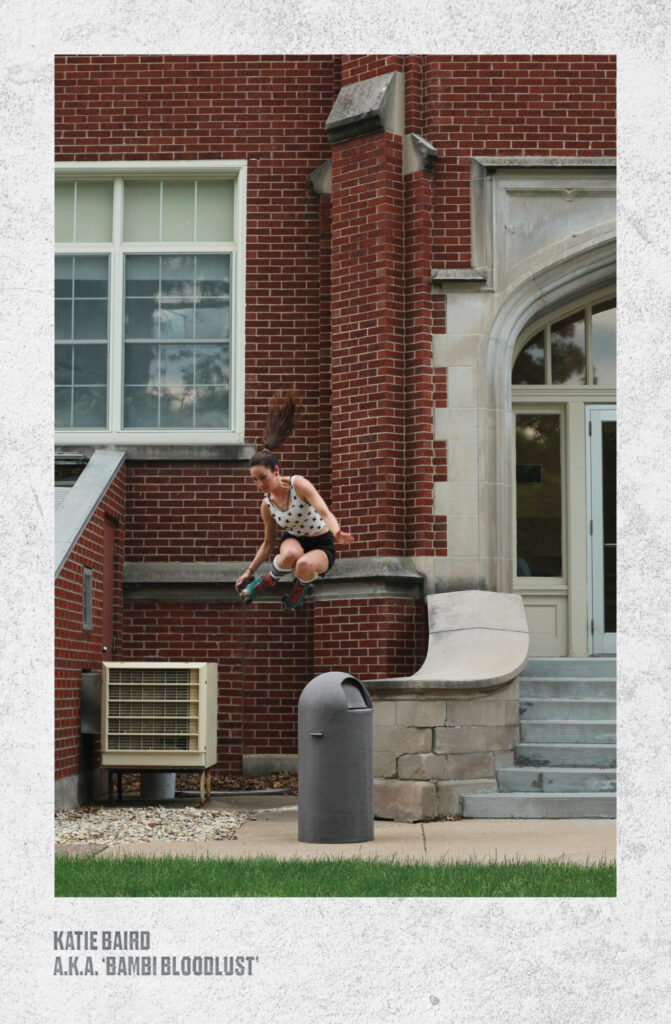
Photo: Caleb Smith