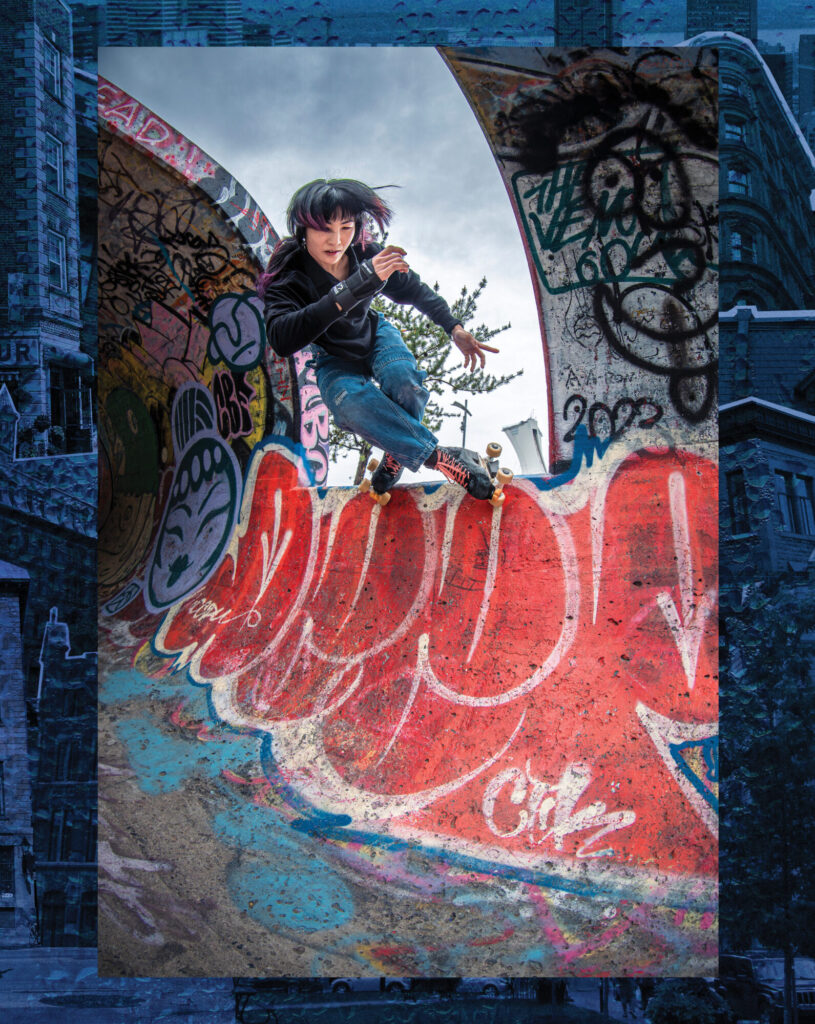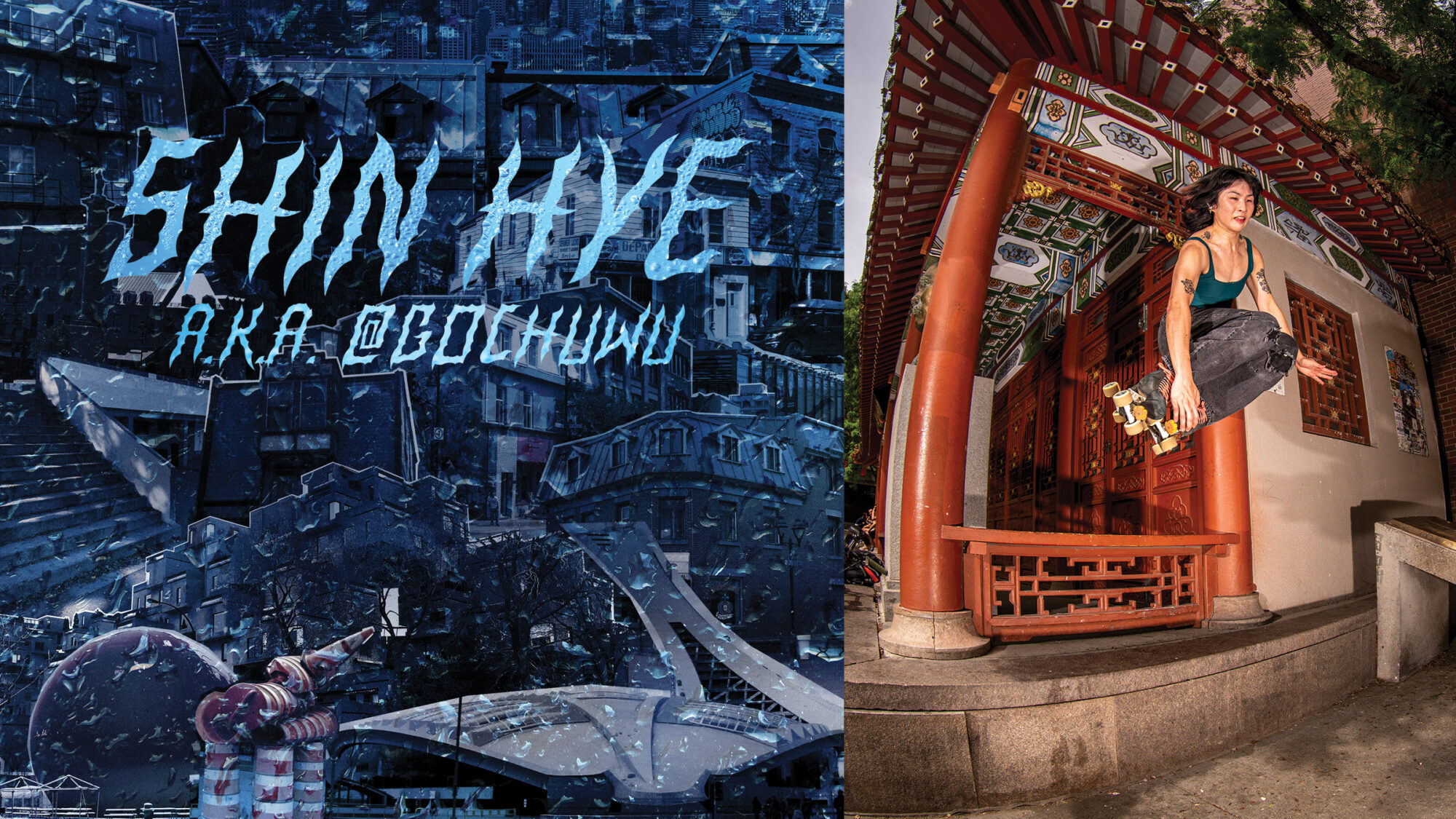
Interview by Samantha Trayhurn
Photography by Yanik Nolet
How did I first come across Shin Hye Koo’s skating? In true pandemic-era fashion, it was through Instagram. If Covid can be thanked for anything, it’s the way it exploded the visibility of roller skating worldwide. Suddenly, the scene felt both huge and intimate at once. There was something cool about discovering skaters in places like the UK, France, and in Shin Hye’s case, Canada, all working through the same tricks, the same frustrations with their gear, and carving out their own paths in each little corner of the world. Watching her skating over the years, I have been impressed not only by her style but also by the way she approaches skating with creativity and joy. So, when the opportunity came to sit down and chat with Shin Hye, I was excited, even if I had almost completely messed up coordinating the international call. Five minutes after the time I thought I’d scheduled, the connection comes through. Shin Hye fits me in, even though the call is a full day earlier than she expected.
Okay, awesome. Thank you for making it to the call. Wow, god, I feel like I sometimes need a university degree to set up international meetings.
It’s okay. You were doing all the heavy lifting, figuring out the time zones and stuff.
Yeah. It never really quite makes proper sense, but that’s okay. We got there. Where are you from?
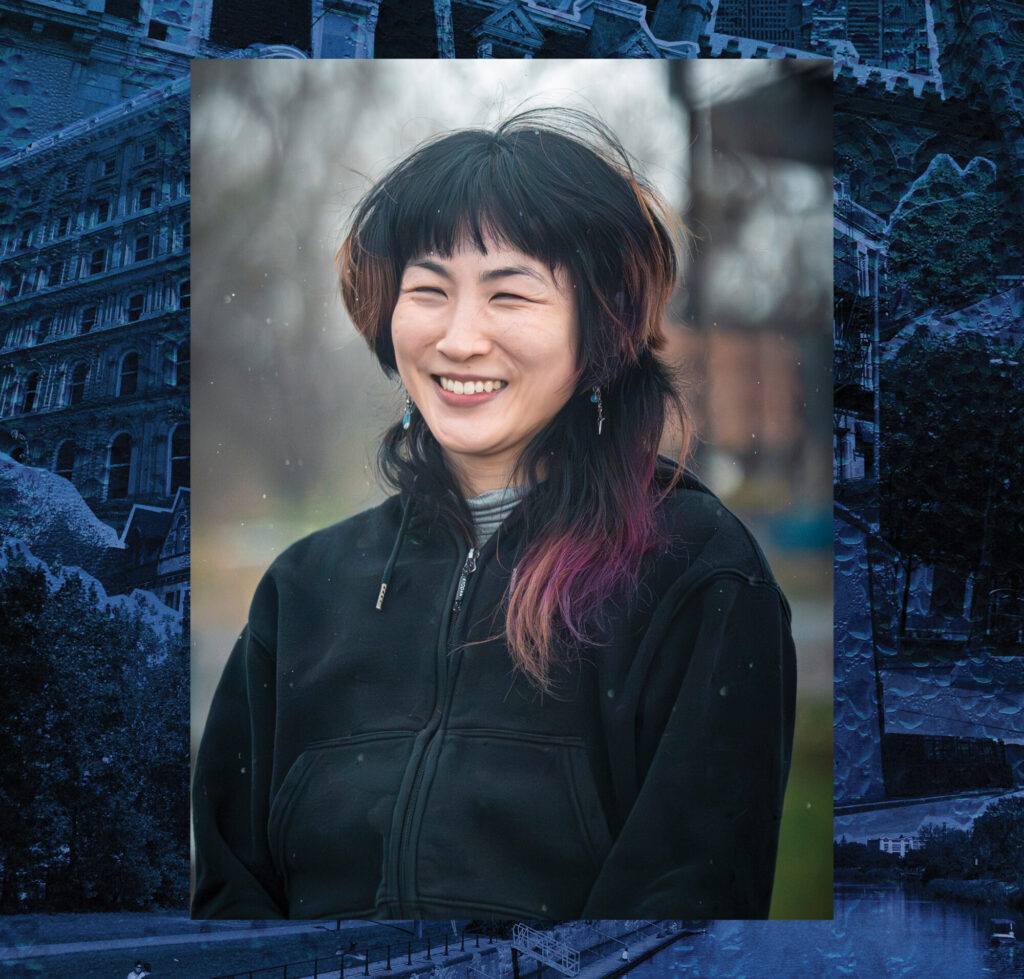
I’m from Korea, but I actually live in Montreal, Canada. I’ve been here for, I think, it’s been like 15 years now. This is where I kind of got into roller skating.
Awesome. So, you were born in Korea?
Yeah, I was born in Korea, but I moved around a lot when I was a kid, so I actually spent very little time there. Most of my childhood was spent in China, and then I moved here as a teen.
That’s pretty cool. Was that because of your parents’ work?
Yeah. It was because of my dad’s work. For a while, my mom and I lived in Korea, and on weekends, we would literally fly to Beijing to be with him and my older sister. But obviously that’s not sustainable long term, so eventually we all moved to China. I went to an international school there, which is where I learned English. Then my sister got into university at McGill here in Montreal, and my dad’s contract in China was ending. My parents asked whether I wanted to continue studying in English in Canada or return to Korea.
I love Korea, and I’m very proud to be Korean, but academically, it’s very rigid and strict, and the environment I grew up in was the opposite. Plus, I’m honestly most comfortable speaking English, so coming here made sense.
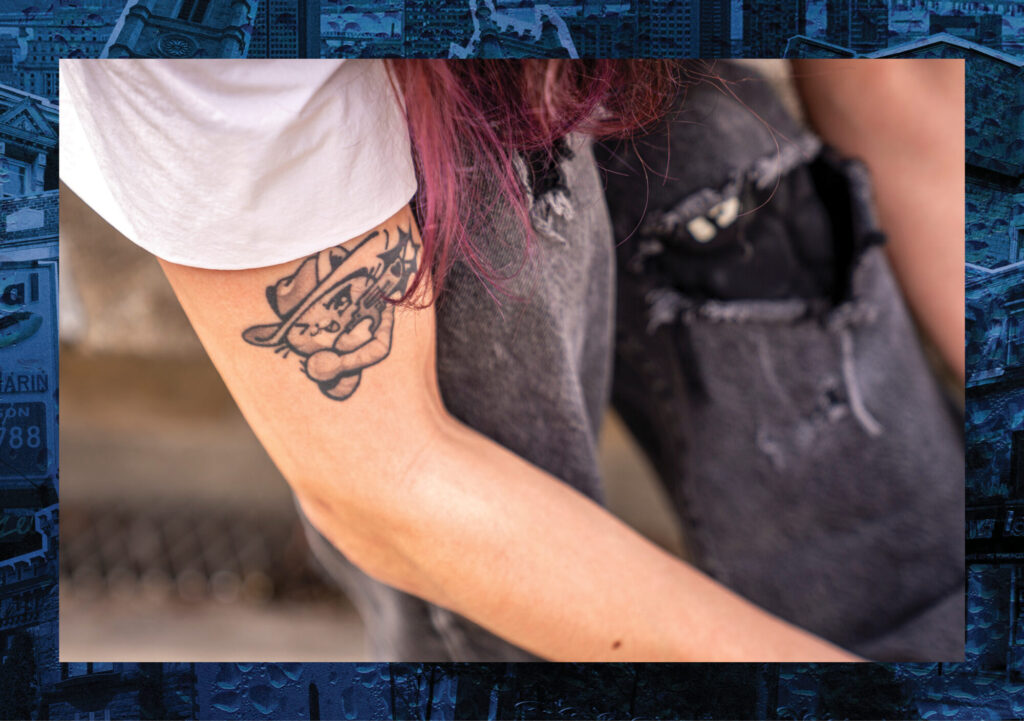
That’s so interesting. I think I saw that you’re a tattoo artist, right? Do you think that’s part of why the rigid structure didn’t really fit with you? Were you always a creative kid?
Yeah. My parents had me pretty late in life. My dad just turned 75, and I’m in my 30s. But despite that, they were actually pretty open-minded compared to many people in their generation, especially Korean parents. Sending me to international schools and exposing me to different cultures definitely gave me more freedom.
I’ve always been creative. My mom is really artistic; she’s amazing at sketching and drawing. She always said that if she’d had the opportunity, she would have pursued art more seriously. But she was the eldest of six kids, and my grandfather passed away early after having a stroke, so she had to help support the family. I still remember her set of fancy coloring pencils. I used to draw constantly. A lot of the things I wanted to learn growing up were motivated by art and pop culture. My mom tells this story about how obsessed I was with Sailor Moon. I wanted to learn how to read so I could understand the lyrics on the TV screen.
I love Sailor Moon. Which Sailor Guardian did you want to be?
Usagi, because I wanted a Luna of my own, and also because I was a big crybaby as a kid!
[Laughs] So, your parents supported your artistic side?
Kind of. But as I got older, they always emphasized stability. They’d say, “Art is great, music is great, but it should stay on the side.” My mom’s a nurse, my dad studied law, and they both came from very academic, practical backgrounds. In their minds, working for a huge company like Samsung was the ideal stable life. So, through my 20s, I tried to follow that path. I worked in online publication and marketing, but I was deeply unhappy. I was depressed, burnt out, and unhealthy. I still kept trying to hold onto the nine-to-five because that’s what I’d been taught was necessary. Then I got laid off during the pandemic.
Is this where skating comes into the picture a little bit?
Yeah, there was a lot going on. I got laid off, I didn’t know what to do with my life, and the whole world felt terrifying during lockdown. Even though I’d always been pretty sedentary, being stuck inside all the time was driving me crazy. Before the pandemic, my partner and I competed in dog sports with our three dogs, such as agility, and things like that, so we were active and outdoors. But once the lockdown happened, everything shut down, and I also couldn’t afford it anymore because I’d lost my job. Then I saw videos online, I think on YouTube or TikTok, of park skaters like Estro and Indy Jamma Jones from Planet Roller Skate. I didn’t even know that kind of skating existed. I was immediately like, “This is so cool.” At the same time, I was trying to pursue art more seriously. I had an Etsy shop where I sold stickers and other things, and that’s actually how I eventually fell into tattooing. My partner told me, “Instead of finding another job you hate, why don’t you just try this? The rent will still get paid.” But I had so much fear of failure. I was always scared to try new things, and I think part of that came from my mom being very anxious and protective. Whenever I wanted to do anything adventurous as a kid, she’d immediately worry that I’d get hurt. So, I grew up carrying a lot of fear.
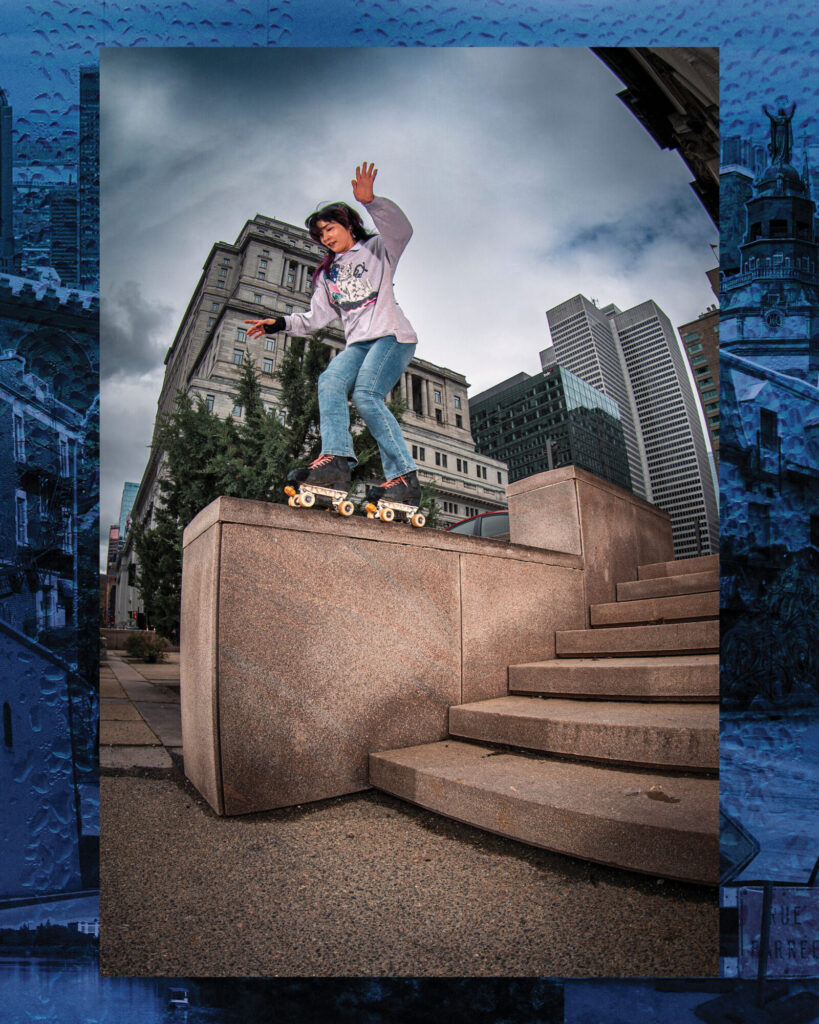
Eventually, I just got tired of feeling that way. I thought, I used to rollerblade a little as a kid. This looks fun. Why not try? I told myself I’d never go to the skatepark or do anything crazy, definitely no flips or anything like that. I just wanted to skate around. So, I started at this tiny, freshly paved schoolyard near my house. At first, I was so cocky. I thought, I don’t need protective gear. I know how to ice skate. Then I stepped out in the skates and immediately fell backward.
How did it feel overcoming that fear and trying something totally new?
Honestly, it was really anxiety-inducing at first. I was terrified of being judged, which is why I avoided skateparks at first. The schoolyard was empty because of the pandemic, so it felt safer. My partner ended up getting skates too because he got FOMO watching me skate, so we started going together. That support really helped in the beginning. But eventually I became curious about skateparks. We went together to a nearby park once, and it was full of scooter kids. After that, I realized I really wanted to overcome my fear of being alone in those spaces. I wanted to feel empowered there.
So, one morning I woke up early, grabbed my skates, and went alone without telling anyone. For the first 45 minutes, I basically just stood there awkwardly, feeling incredibly uncomfortable. But eventually I thought, You know what? These people are probably never going to see me again, and most of them are kids anyway. So, I just started skating. At that point, we also didn’t really know there was a park skating community in Montreal. It was still really small back then. A lot of the skaters we met later had originally come from roller derby and had returned to park skating during the pandemic.
That seems to have happened everywhere around that time. Here, skateparks got shut down during lockdowns, so everyone got pushed into the streets. Is that how you got into street skating, too?
Actually, here the skateparks became one of the few places people could gather once restrictions loosened. So, for me, street skating came later. What really influenced me was seeing skaters online and also skating with aggressive inline skaters here in Montreal. A lot of them had been skating for years and got back into it during the pandemic. The inline and roller-skating communities here blended together quite a bit. The skateboard community was mostly chill, but at first, roller skaters weren’t always included, and honestly, sexism played a part, too. But the inline skaters were really welcoming from the start. They showed me what was possible.
At first, I thought skating was just trail skating and park skating. Then I started seeing people street skate, and I thought, That would be amazing. I remember telling my friends that my dream would be to hit a handrail one day, even though I didn’t think I’d ever actually be able to do it.
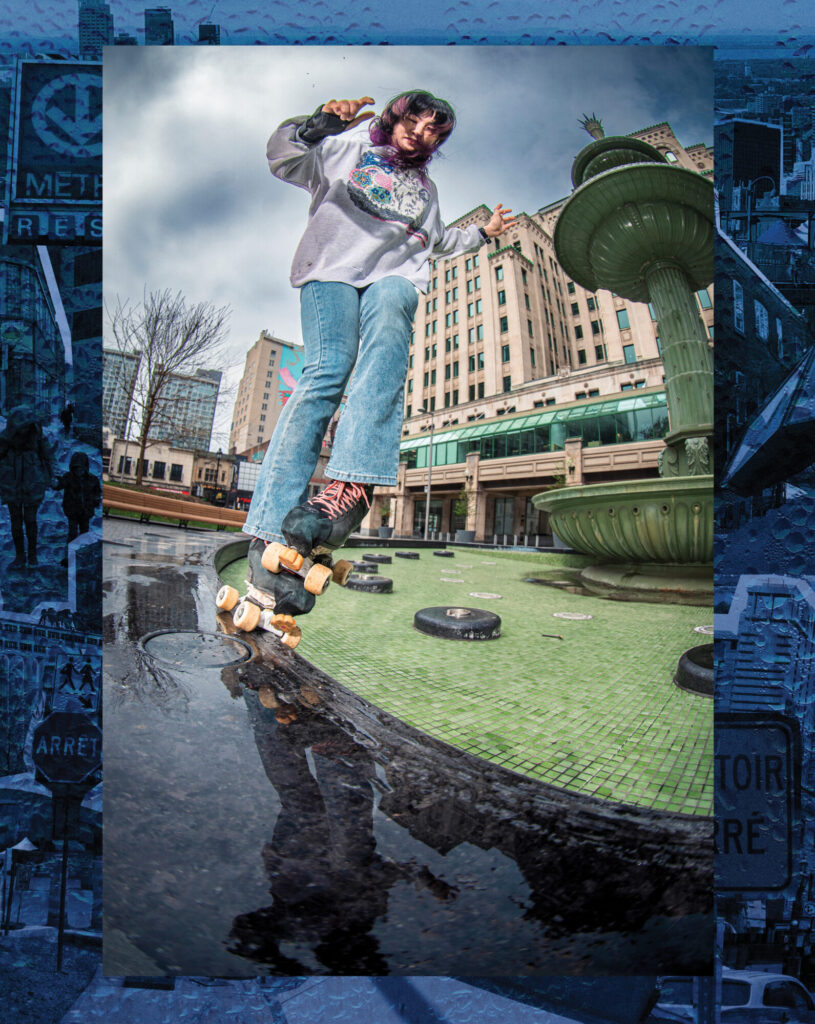
It sounds like there’s a pattern where you tell yourself, “I’ll never do this,” and then eventually you do. First, it was the skatepark, then the handrails. How does it feel when you overcome those barriers and prove yourself wrong?
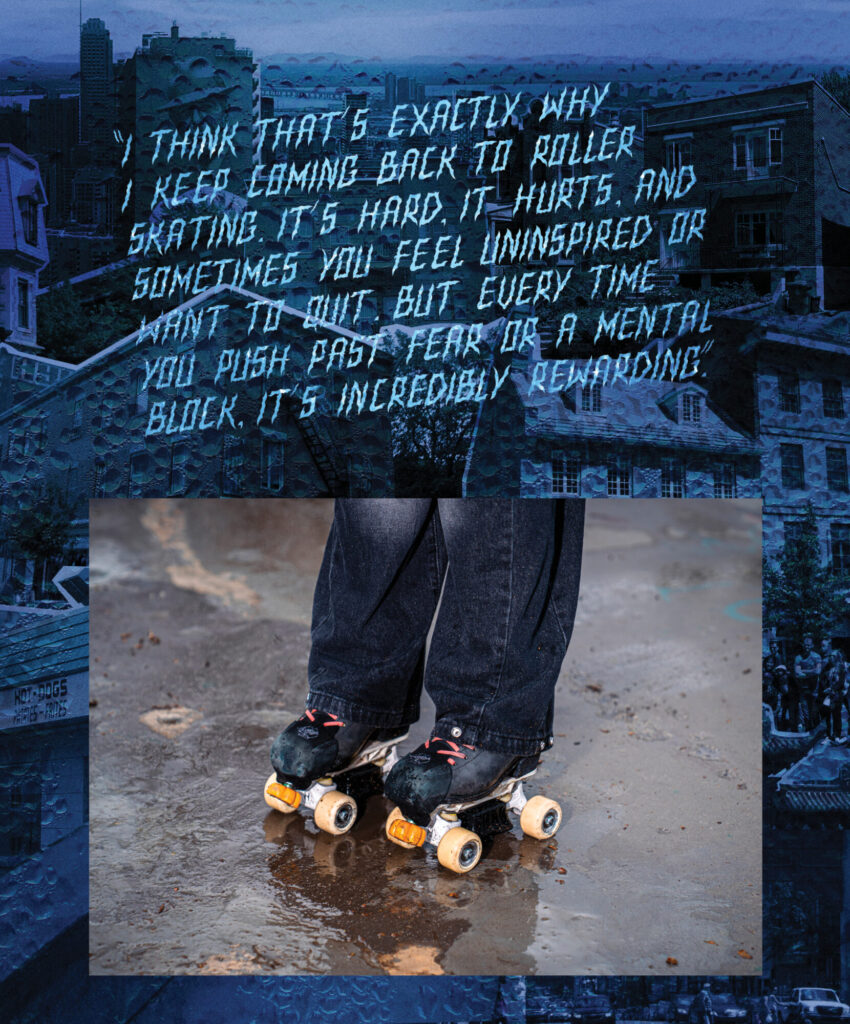
I think that’s exactly why I keep coming back to roller skating. It’s hard, it hurts, and sometimes you feel uninspired or want to quit. But every time you push past fear or a mental block, it’s incredibly rewarding. I honestly don’t think I’ve found anything else in my life that’s been that rewarding. Skating was one of the first things that made me realize I could do things I previously thought were impossible. It changed my self-esteem and my sense of identity. At the same time, it can also become a double-edged sword. When you’re not progressing or you can’t get past a fear, you start feeling like you’re not good enough. Social media can amplify that too. You see incredible skaters doing mind-blowing tricks and think, I’ve been skating for years, and I still can’t do that.
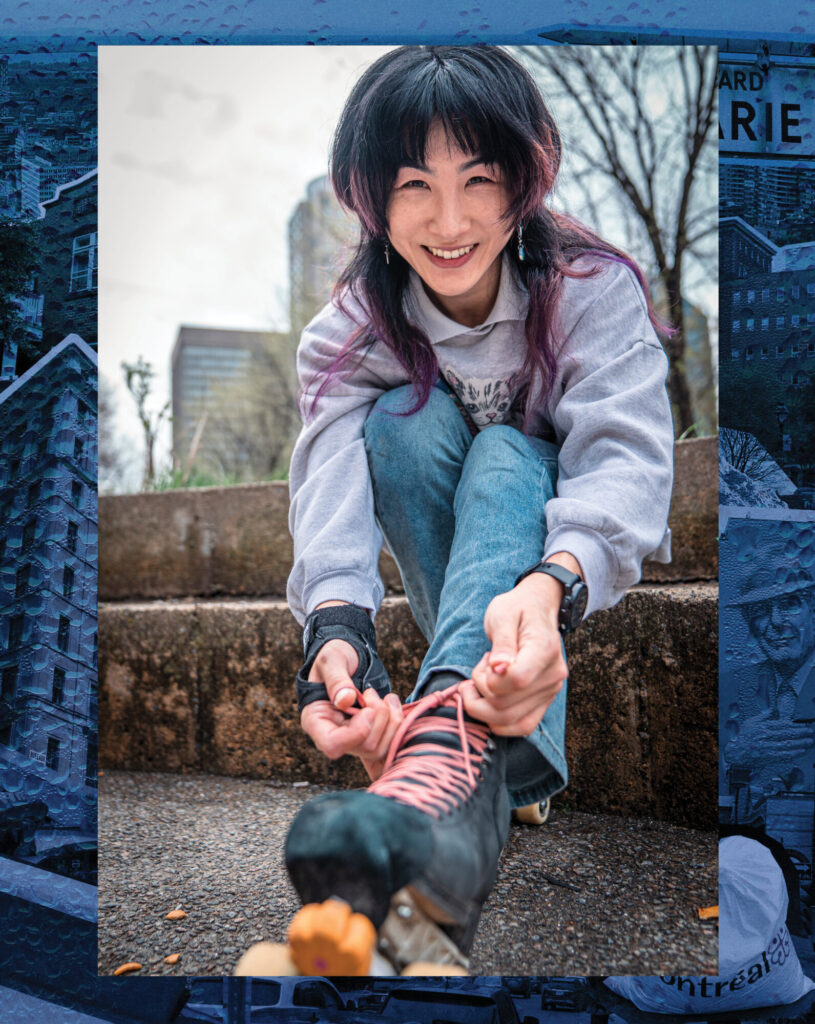
Do you think social media has helped or hindered your skating more?
Both. It can definitely become harmful if you’re constantly comparing yourself to others. I try not to think that way, but it’s hard not to sometimes. But we get to see so many people, too. I love watching Eshna Goenka skate because where she skates is so different from Montreal. She really embodies the spirit of street skating; she can make anything skateable.
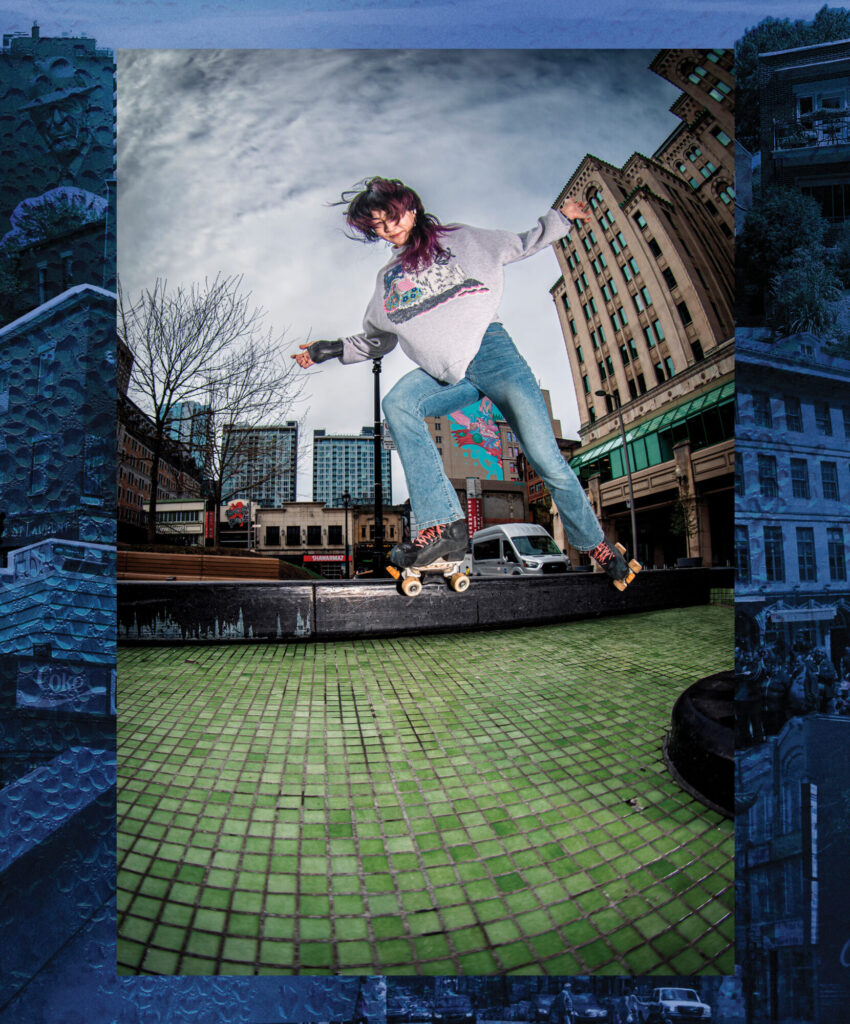
Have you met her in person? She has such a wild, fun energy when she skates.
Not yet, but that’s exactly how she comes across online, too. Without social media, I would never have known skaters like her existed.
I also think social media massively accelerated the sport’s progression. When I first started, people were experimenting with DIY setups, skateboard trucks, and all sorts of crazy builds. Now we’ve seen so much innovation because skating has become more visible online. More people are grinding, pushing the limits of what’s possible. When I first saw aerials and handstands on roller skates, I genuinely didn’t know those things were even possible.
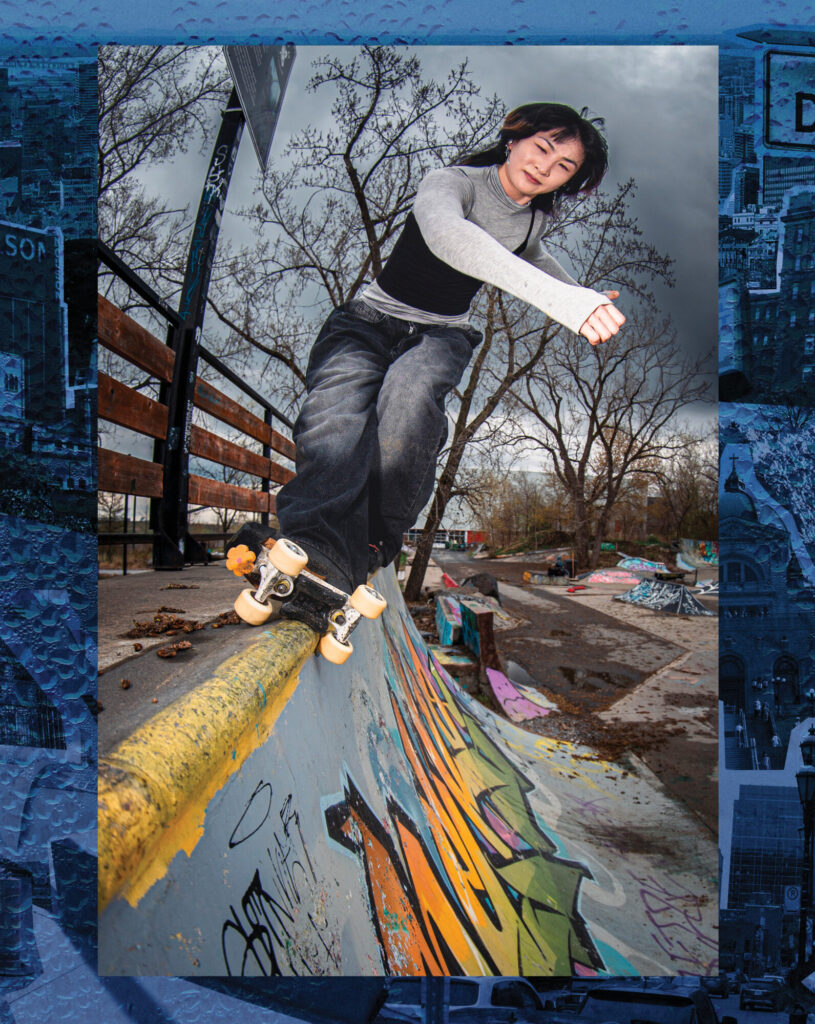
So, what’s the current thing you’re telling yourself you can’t do but that you’ll probably eventually do?
Probably releasing the video part. My friend Irina Lofdahl, who goes by Dua Flip on Instagram, and I have actually been filming one together. We shot most of it last year, but it still feels too short, so we’re trying to find the perfect ending clips. The hardest thing about making a part is that by the time it’s ready, your skating has already evolved. You look back and think, I could’ve done that better. But at the same time, you have to still be proud of where you were at that moment.
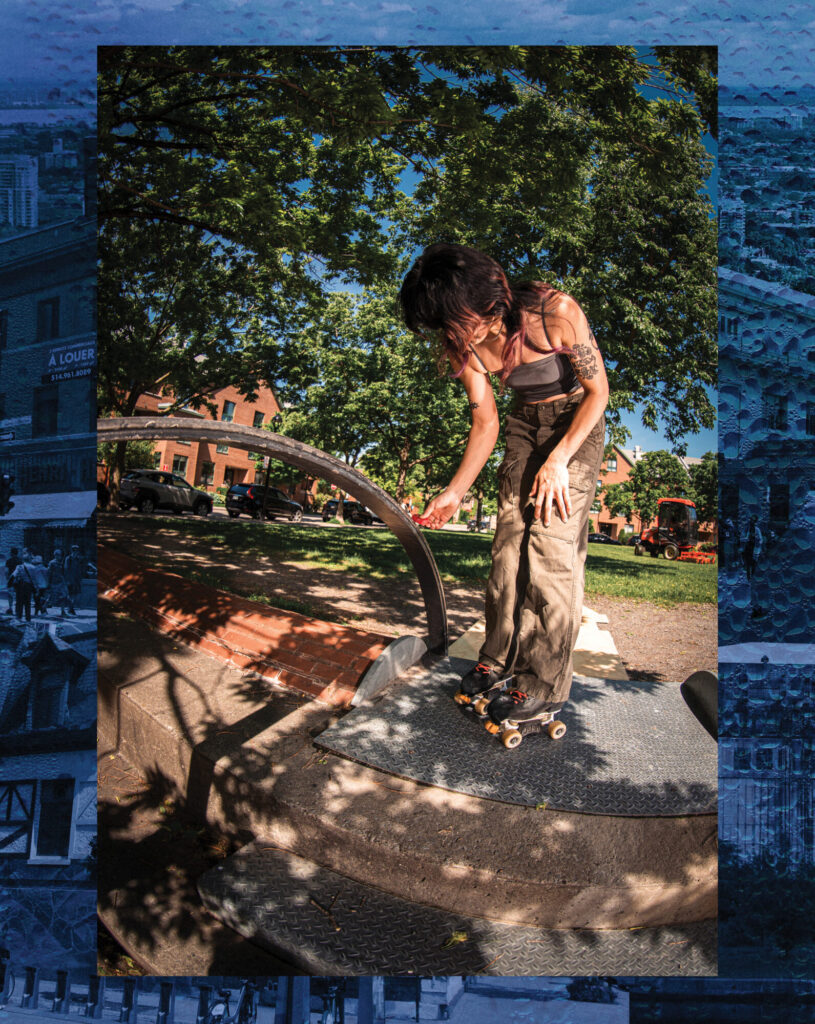
Absolutely. Coming back to the theme of the issue, if you had to describe your skating style as a weather pattern, what would it be?
Maybe like monsoon season. When I’m in my element and feeling inspired, everything flows and feels easy, but then there are also periods where I feel stuck, scared, and unable to move the way I want to. So, there are these really dramatic shifts between confidence and fear.
I like that. Like a dry season and a wet season.
Exactly.
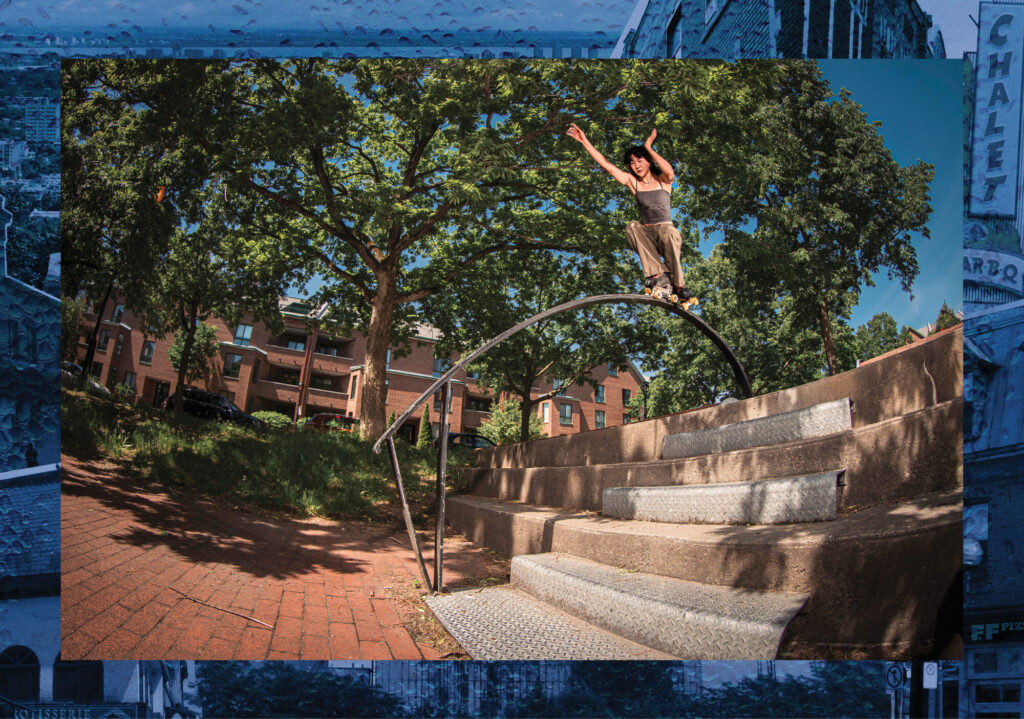
What are your favorite kinds of tricks?
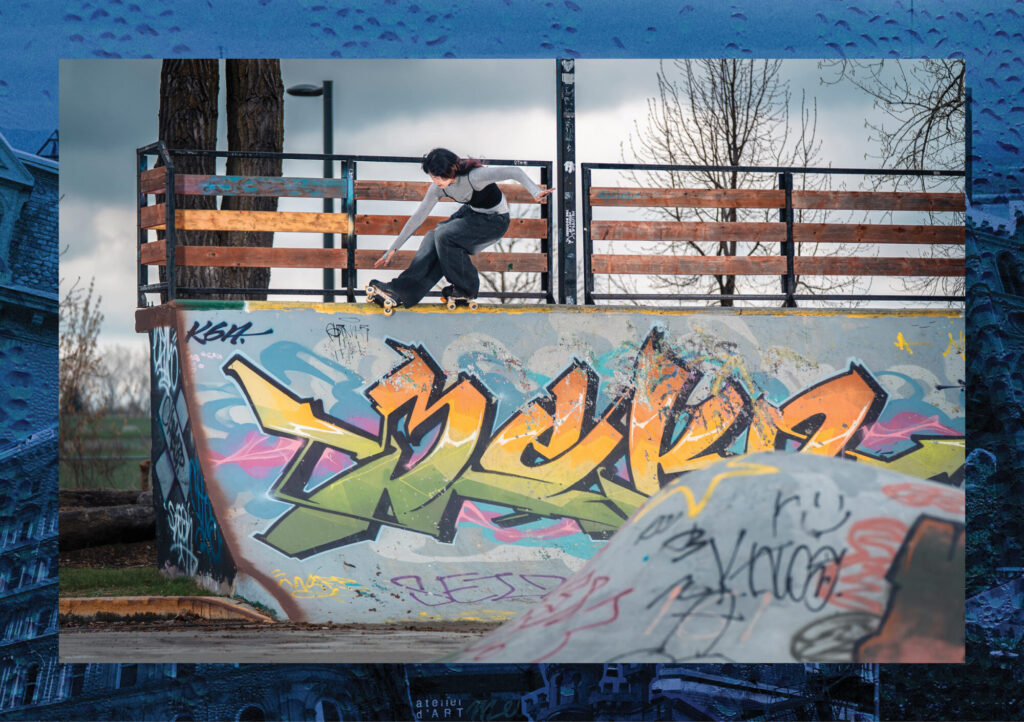
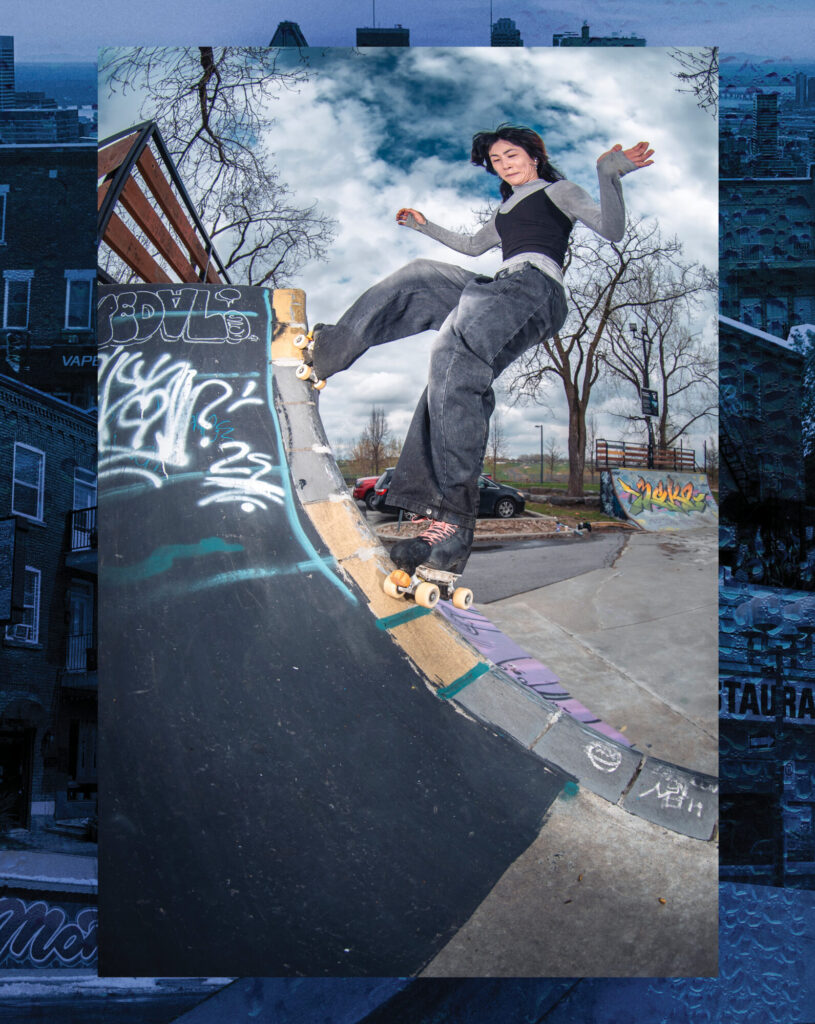
My all-time favorite is probably a top star. I think it looks incredibly stylish when it’s done well, and depending on how low or upright you are, it can look completely different. The hardest trick I can comfortably do right now is probably a true spin mizou. Going in blind is really difficult because you can’t see where your feet are landing. As for tricks I love seeing other people do? Royales. They’re so underrated and so difficult on quads with the current block setups. When someone can really lock one in and hold it cleanly, it looks incredible.
I was going to say, it’s definitely an equipment thing.
Totally.
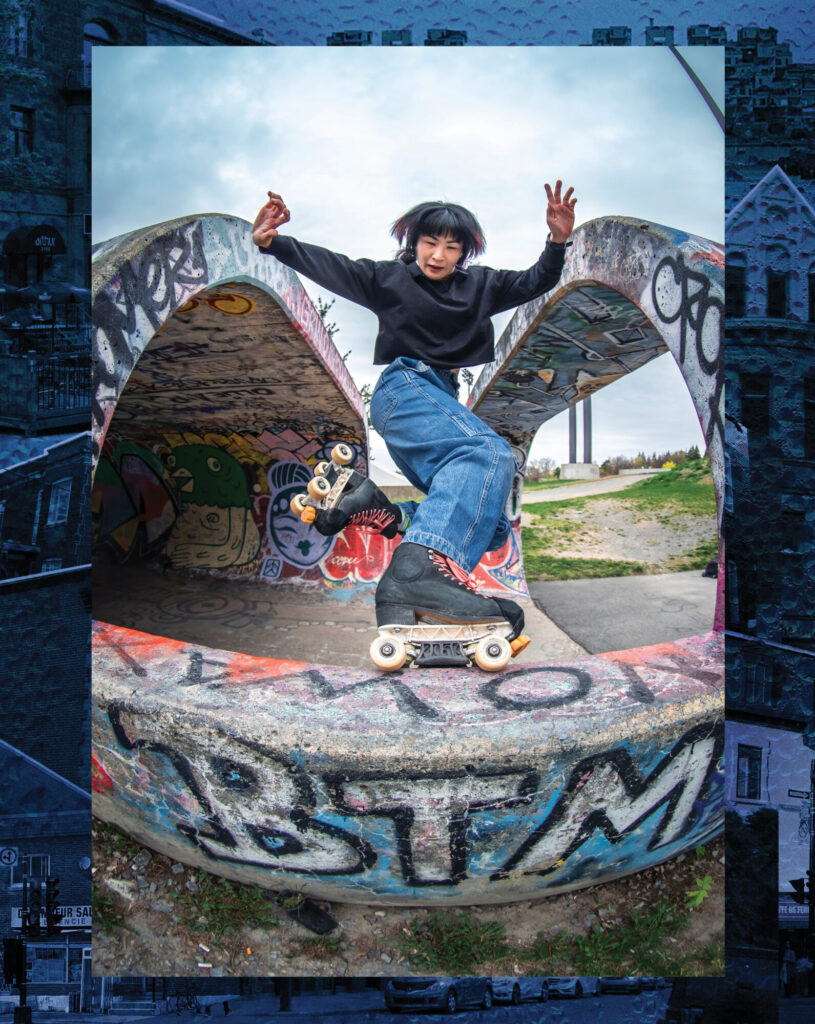
I’ve watched your skating over the years, and I think you have a really stylish approach. There’s a clear aesthetic element to it. Do you think that comes from your artistic background?
Yeah, definitely. I think skating is a form of problem-solving where interpretation is the most important part. It’s similar to art or tattooing. In tattooing, there are limitations like skin, technical skill, and longevity, but within those limits, you still try to create something unique and personal.
I think skating works the same way. You work within your limitations and strengths, using them to create your own lines and style. That’s what makes skating so creative and personal. No two people approach a spot the same way, especially in street skating. I love watching that, because I think everyone becomes a little bit of an artist when they skate.
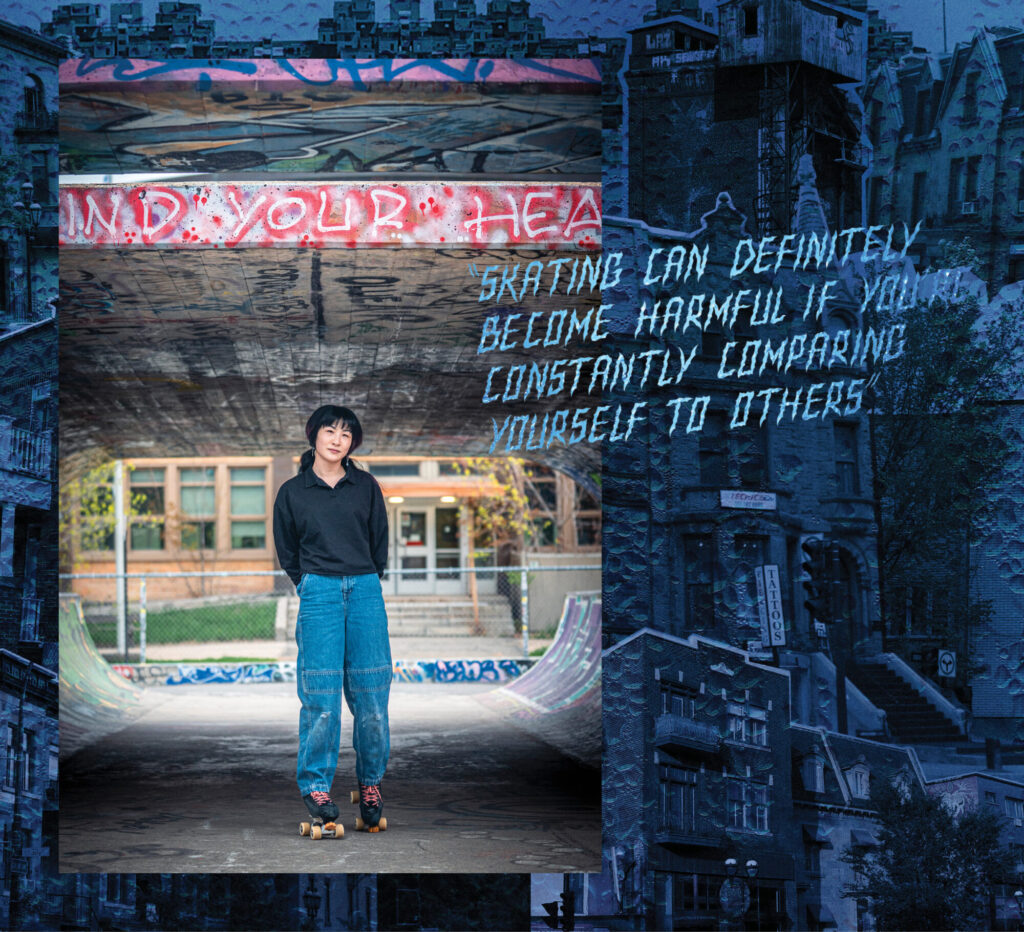
That’s such a beautiful way of putting it. And I guess with tattooing, there’s this permanence… you’re putting something onto someone’s skin forever. Whereas skating feels much more fluid. The canvas is always changing: the street, the concrete, the movement. Does skating feel more freeing in that sense?
It can feel freeing, but it can also feel urgent. In Montreal, construction is constant. It’s kind of what we’re known for. I was actually thinking about this earlier today. The photographer I’m working with and I stopped by the Big O this morning (this iconic street-skating spot here). Nearby, there used to be this rail I wanted for the edit last year. It was outside an abandoned apartment building. There was this huge, waxed ledge, then a gap to the rail beside it. I tried it a few times, but I was too scared to commit, so I told myself I’d come back later. Now the whole place is under construction and being torn down. So, there’s definitely this pressure that comes with skating street spots. You realize they’re temporary. But I think that impermanence is also part of what makes it beautiful.
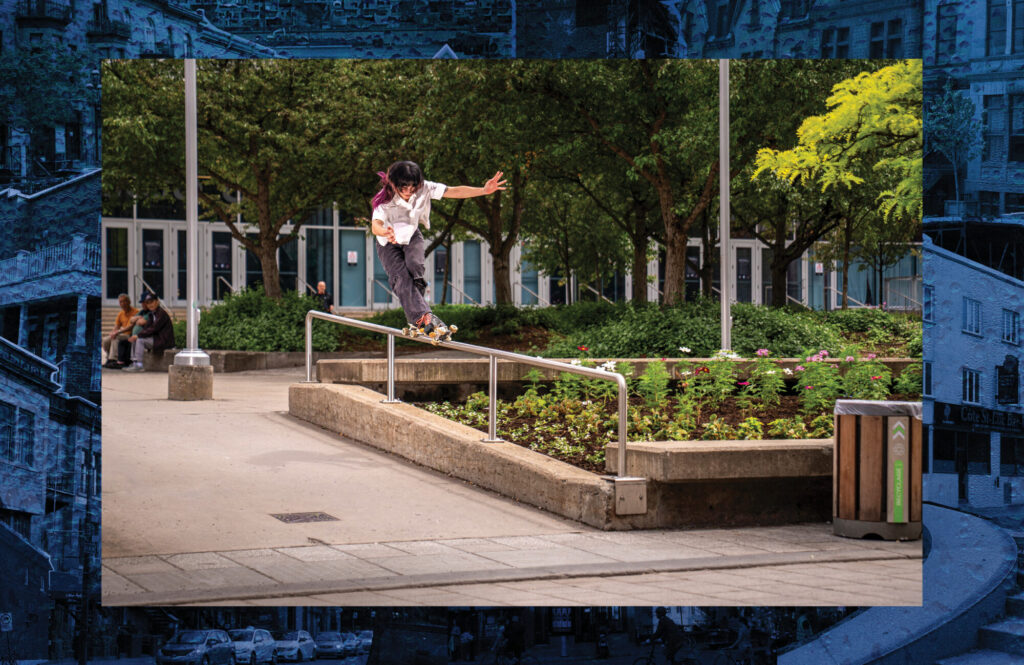
Yeah, totally. You can never assume a spot will always be there. And then on top of that, you’ve got the weather. How do you manage skating in places where the weather is such a big factor?
We’re lucky because Montreal has two really good indoor skateparks for winter. Many colder places don’t have that luxury. But by the end of winter, everyone gets sick of skating the same obstacles over and over. You miss being outside.
One thing I’ve realized is that there’s actually a lot you can do off skates that still benefits your skating. Recently, I started climbing and going to the gym more consistently, and honestly, it’s helped my skating a lot. Even if I’m not skating every day, I’m still training my body in ways that translate back to street skating or park skating. So, I think having those complementary activities has been really beneficial.
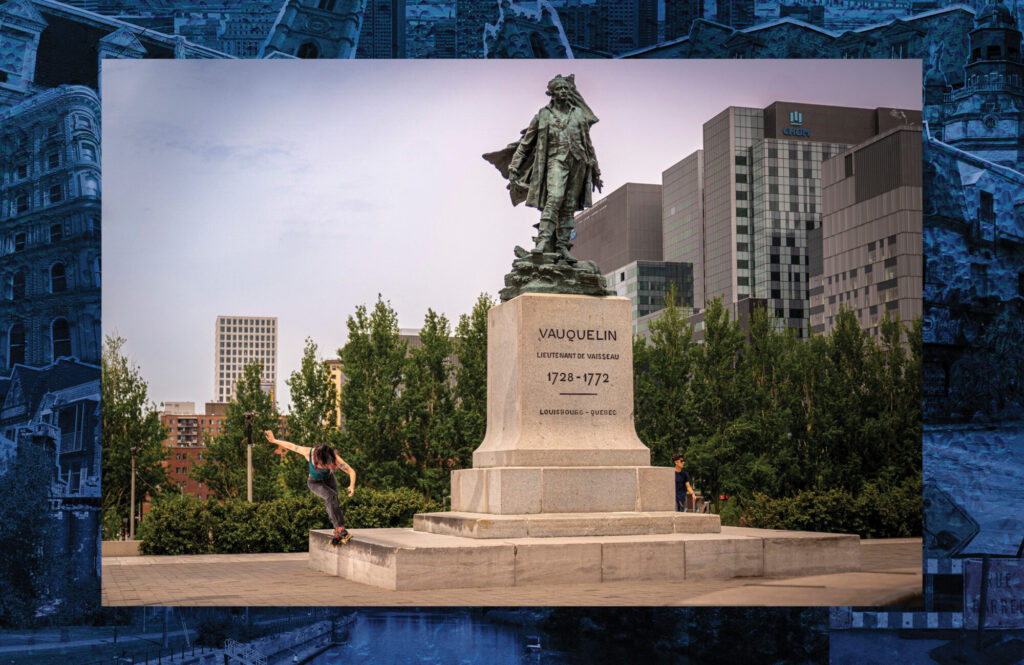
That makes sense. It’s kind of about leaning into the rhythm of the seasons.
Exactly. That’s how a lot of people in Montreal live. In the summer, it’s festival after festival, everyone’s outside all the time, soaking up the weather. Then winter comes, and because it lasts almost six months, everyone kind of hibernates. Even with the Montreal Cup, our volunteer-run community competition, it’s rained the last couple of years. Everyone just grabs leaf blowers and squeegees, and we pause until the ground dries enough to skate again.
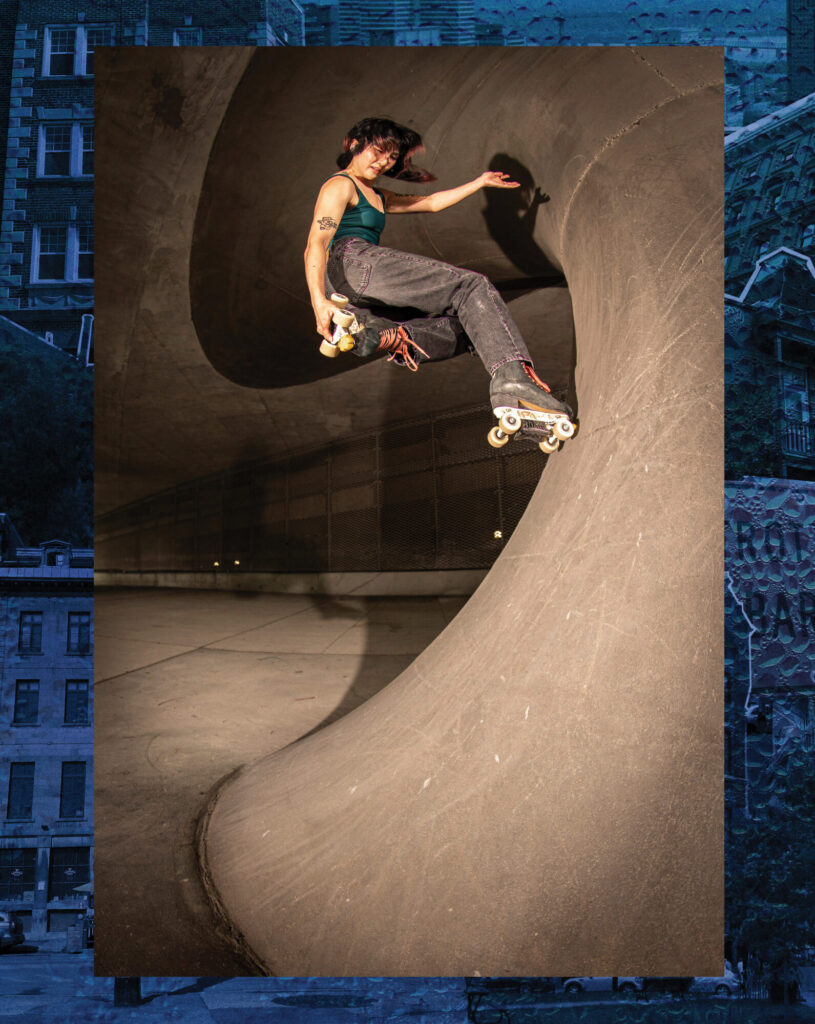
That’s amazing. And that’s coming up soon, right?
Yeah, this year it’s in August, right before my birthday: August 17-18.
Not to sound biased, but I genuinely think it’s a really special event. People come from all over, and even though the competition itself can be stressful, there’s such a strong sense of camaraderie between everyone: inline skaters, quad skaters, everybody.
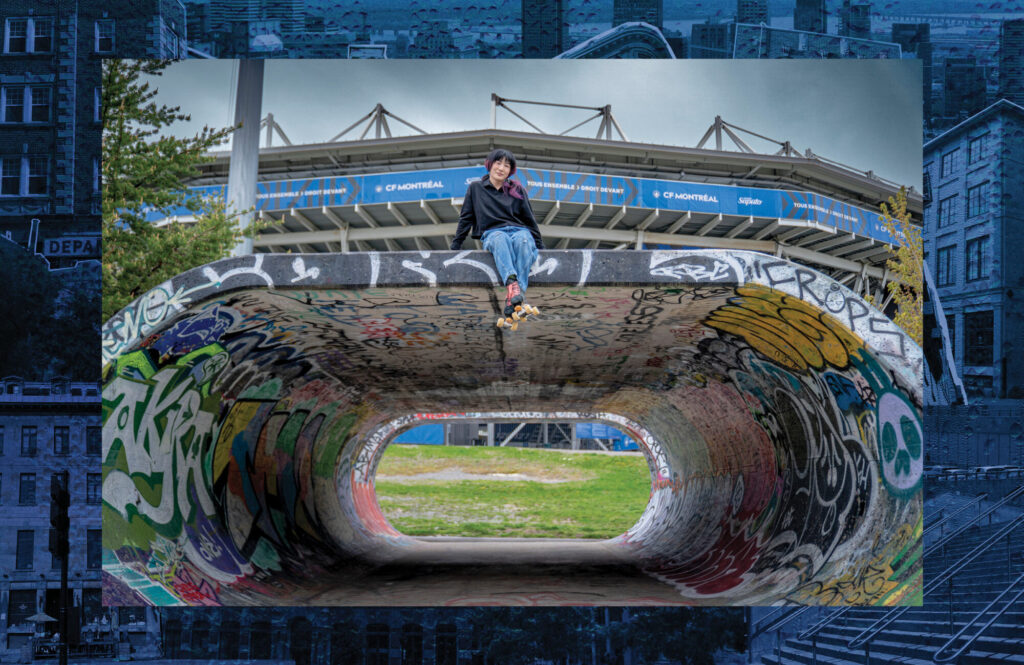
Montreal in the summer is just magical. The event takes place in Hochelaga, a historically lower-income neighborhood that’s also one of the most vibrant parts of the city. There’s so much art, so many interesting people. They shut down the street to make it fully pedestrian-friendly, and people who had no idea the event was happening just wandered in and suddenly saw people doing these insane tricks and stunts. It becomes this celebration of skating, community, and the city itself.
That sounds incredible. I hope lots of people get to experience it.
As I hang up the call, I’m left with an immediate urge to book a plane ticket to Montreal and experience this wild event where the street is transformed into a skater’s DIY playground. For now, though, I’ll have to settle for watching Shin Hye on Instagram as she continues to push past fear, expand what’s possible for her on skates, and inspire others along the way.