Interview by Ashley Galvan
Photography by Sophie Webster
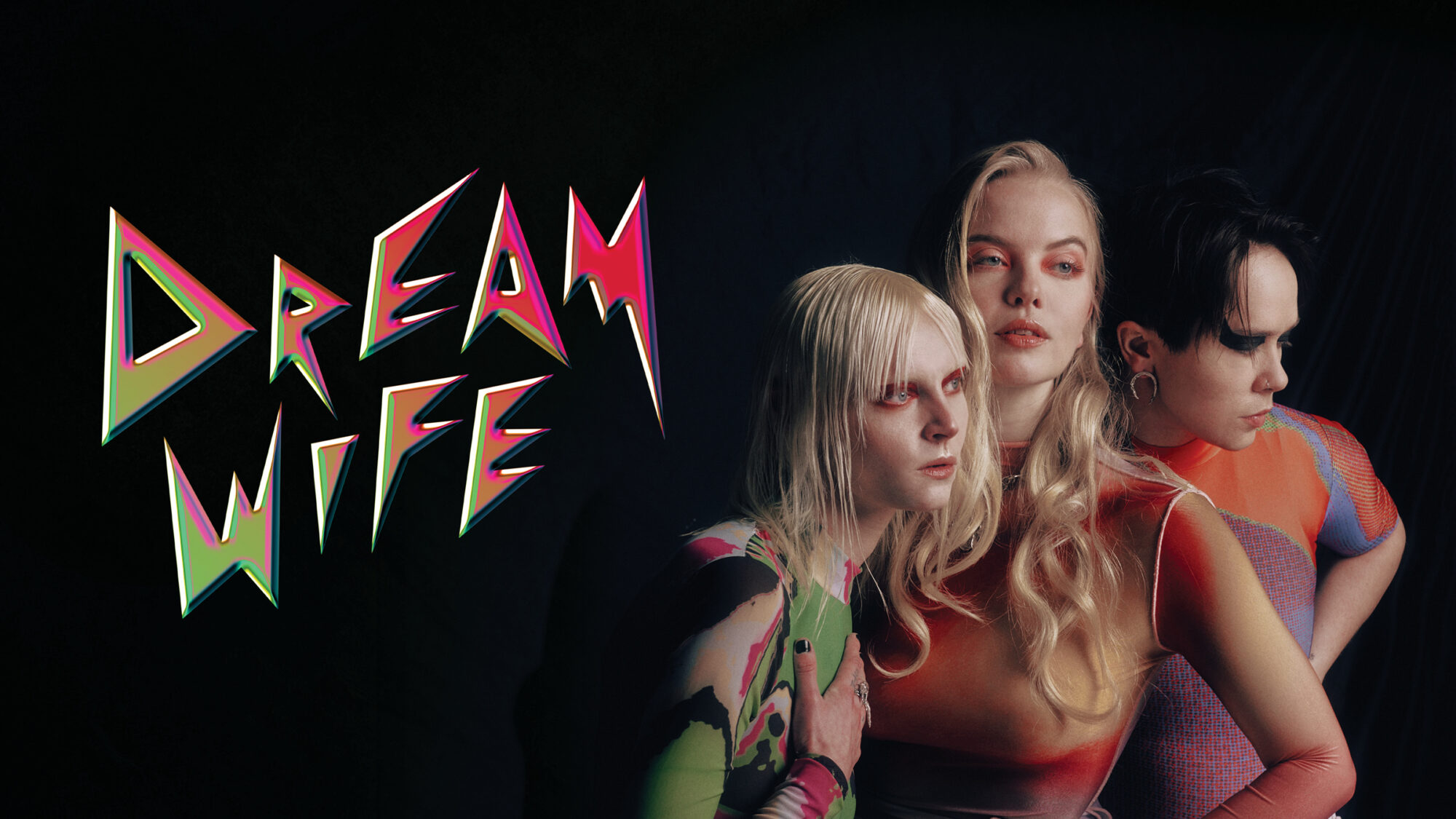
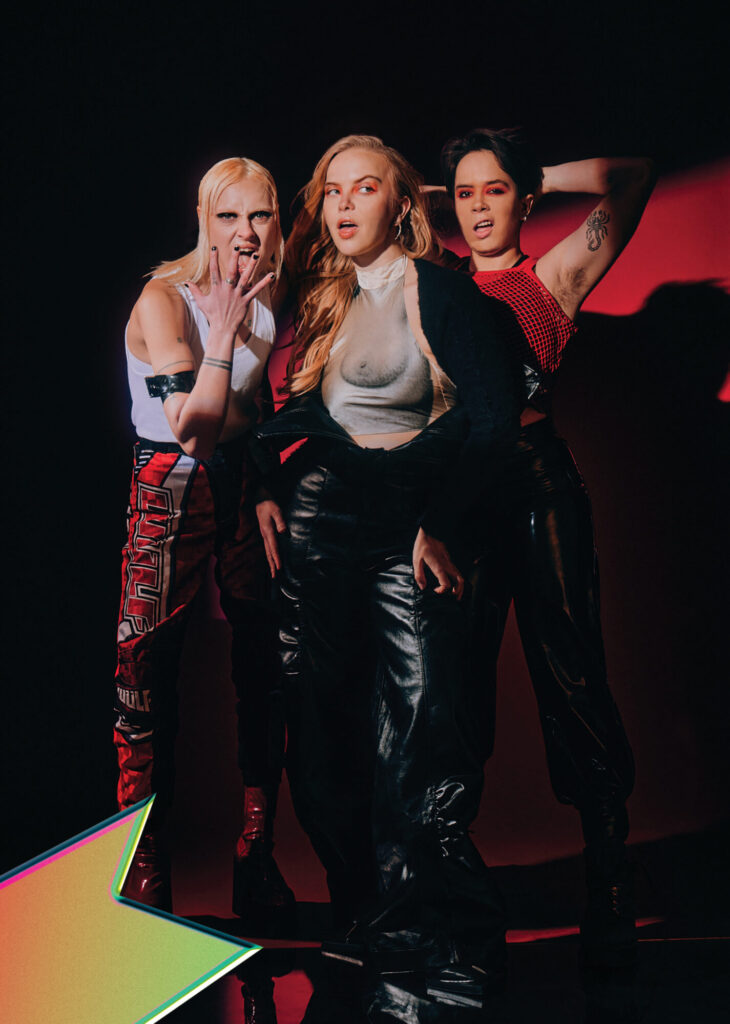
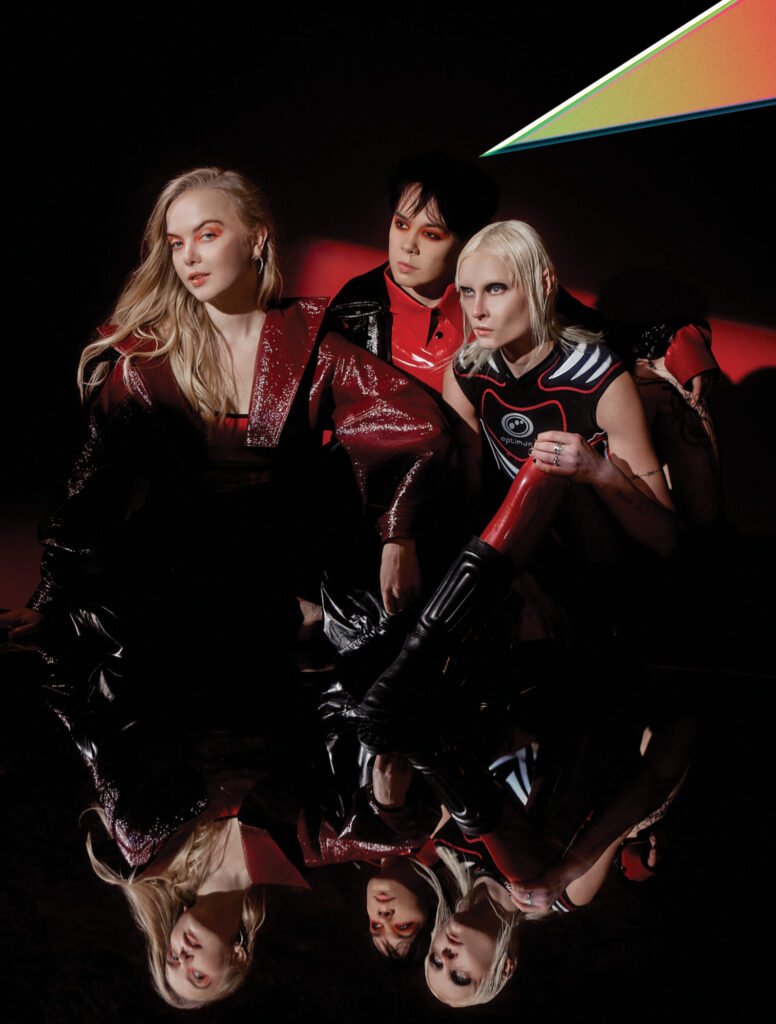
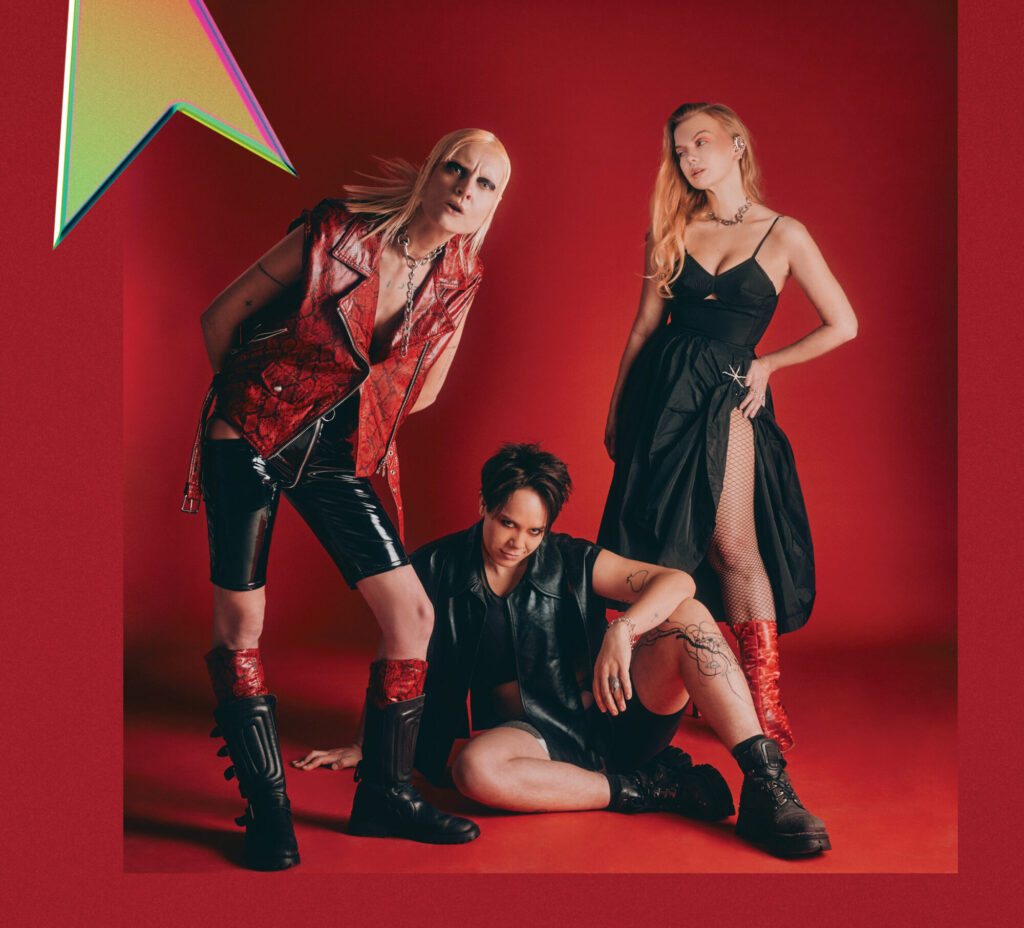
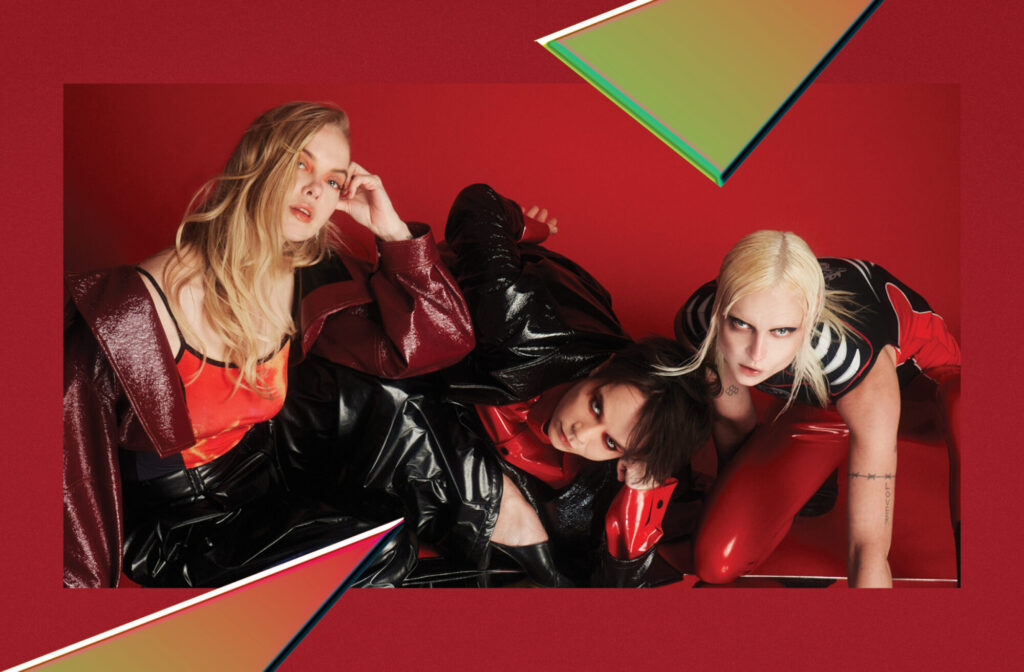
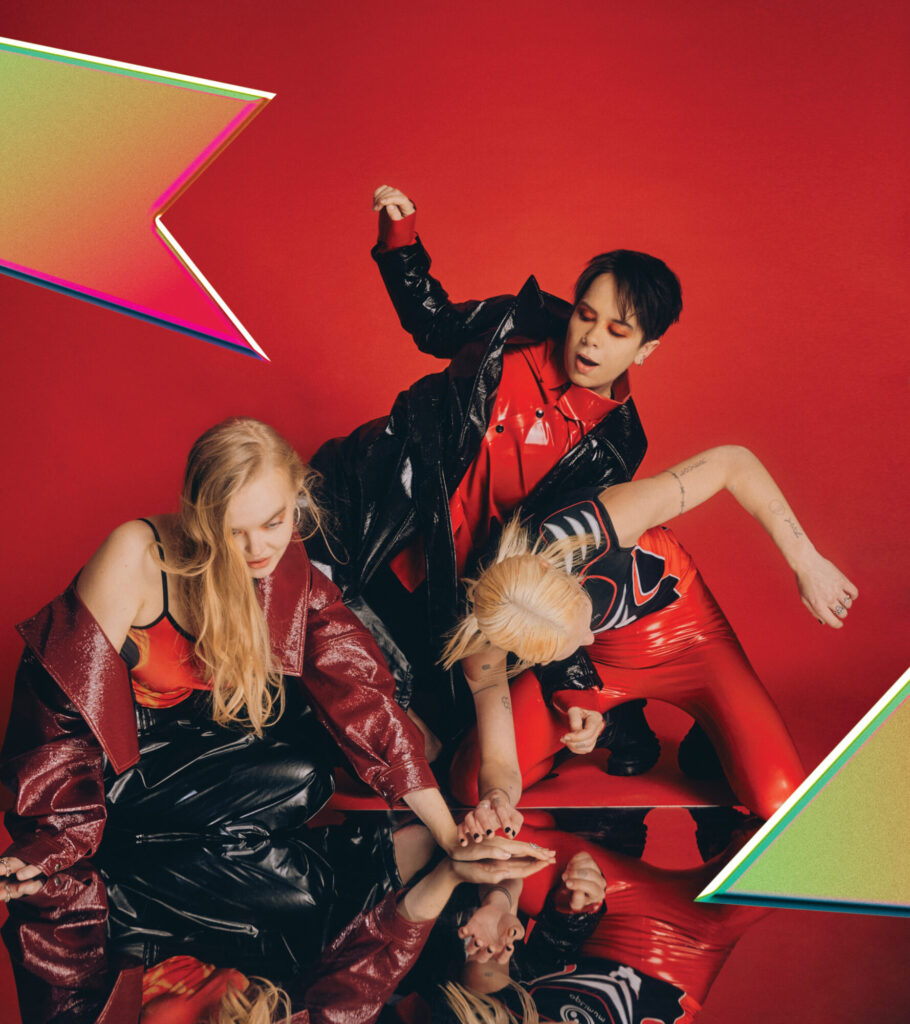
In the golden haze of a winter full moon, I caught up with Rakel Mjöll (lead vocals) and Alice Go (guitar, vocals) of Dream Wife—UK’s genre-defying trio. Dream Wife tears through shows like a shot of adrenaline, blending late ’70s post-punk hooks with the spirit of early-2000s New York rock. Between full moon rituals, they talk about the pulse of their music: community, and the unshakable power of playing live.
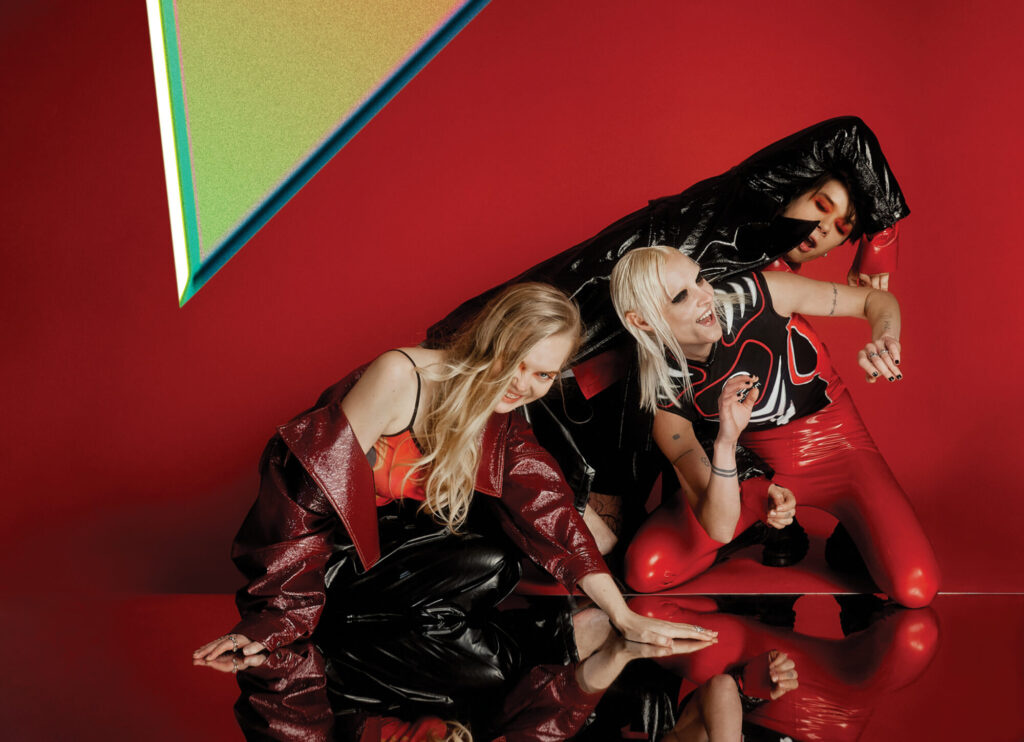
Happy Full Moon!
ALICE: I can feel the power!
I’ve been feeling the power, alright! Life’s been so back-to-back lately that I only realized it was the full moon last night, and I was like, Ah! I see… no wonder. It’s all adding up!
RAKEL: I just finished my full moon bath and listened to Chani Nicholas while doing it!
I’m literally gagged! I was just listening to Chani and thought, Chani! Tell me what we need to know, girl! I already knew you guys were my people when I locked in with everything she said. I was like, Okay, the nervous system is regulated. We good! Starting off the day perfectly. Thank you both for your time—I’m so excited! In the wake of the full moon, is there anything you’re consciously letting go of, or any rituals you’re doing as you head into the new year?
ALlCE: Being okay with drinking coffee and regenerating.
RAKEL: Alice’s wife wrote an incredible article about having to rest and how to relearn what rest is. I’ve been telling people I know about the article because it really frames: What is rest? That’s something I’ve been thinking about lately and discerning moments like, “Don’t overbook yourself in December!” I’m trying my very best to gather tools and learn new things. I feel like this past year, the year of the snake, has been about shedding. It’s been about gathering and learning something new. We’ve been writing this album, and we haven’t been like, “Okay, it’s done!” We wrote like 40 songs, and we are now like, “What’s important to us? What’s silly? What are we connecting to in this time of our life?” And instead of being like, “Oh well, let’s throw it out!” we’re like, “Let’s own it!” Not unnecessarily taking our time with it, but sort of being able to write in a flow state, and we’ve been doing that for most of the year. Now we’re going into the year of the fire horse!
OOOOOOH!
RAKEL: So, you are going to be kicking off the new year in this powerful light, if you will. You’ve been creating this fireball, and now you are ready to go, Goku!
ALICE: Yeah!
RAKEL: The album could come out this year or later, but next year. I am really excited to take the next step with all these new ideas! We are starting the new year in the studio.
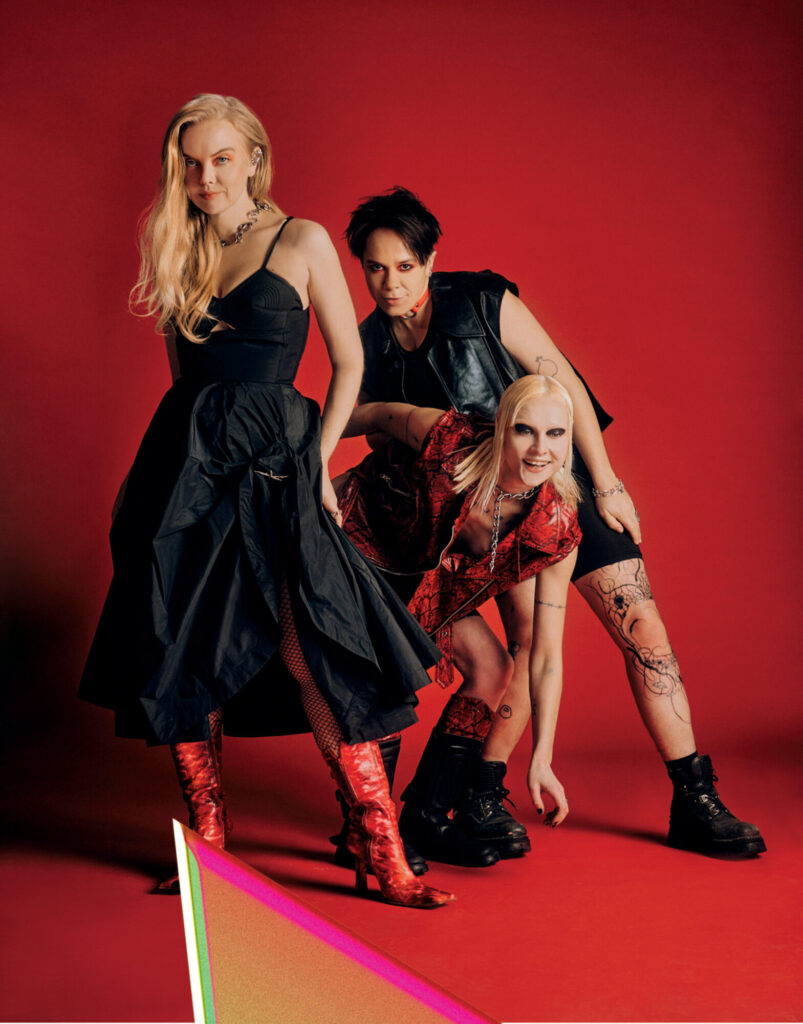
Alice: It’s been nice having Rakel come over, and we recorded some bits. Having those talks and caring about figuring out, “What is this song? What does it need to be?” I’ve really, really enjoyed creating in that way. It feels like we are giving them care, and then they are going to be ready to go! I feel like we’re caregivers through and through.
RAKEL: That’s something, as any creative knows, it’s not necessarily going to help you or make your work better. It’s more about catching that flow, following it up, revisiting, rather than just doing it again and again. We did that for our first album, but it’s really fun. How lucky are we to record another album?
Exactly! You’ve grown not just as bandmates, but as creatives and as a community—showing up for one another and turning that connection into something people can genuinely feel at your shows. There’s that rare, “chills” kind of energy you get when a performance feels like a breath of fresh air, and it seems like that’s becoming a defining part of what you’re creating. Having witnessed that sense of connection firsthand, how has this process shaped the way you think about community and your role within it?
ALICE: I think something that’s on my mind, and on many musicians’ minds, is AI. Going through the pandemic and losing live music taught us that you can’t replicate a live show, the feeling of community, or what it’s like to get everyone in a room together. It’s made me want to dig my heels in deeper and focus on what we can do live, when it’s all real, it’s all happening in front of you, and it’s us playing and writing these songs. It’s something I keep coming back to: We need to stand tall and say that we are a live band, and nothing can change or replace that.
RAKEL: Everything has to be driven, like, say, AI-driven music, and then there’s this push where it’s not about making it live, especially as various corporations are buying things and closing down smaller and independent venues. I think there’s sort of a coalition between music that you can’t play live and the question of
how we kill the live thing—especially the live information thing, and what that means for independent venues being strong and supported. So, I think there’s a lot of code, a lot of response to all of this. And I’m finding it shocking. I’m hearing friends talk about cancelling U.S. tours because, even though they’re playing huge rooms, even though the shows are sold out, it still doesn’t make sense financially.
Yeah, AI is this huge thing happening right now and changing the creative process, but also, being vocal about supporting your local music independent venues is so vital. It’s one of those things that is like, “What can we do?” despite it all. “What is necessary?” And with that, what is something that is a constant core value for Dream Wife?
RAKEL: Playing live is the reason we love this band. It’s not really the kind of project where we feel like it’s enough to just go into a studio and release something. It’s really about meeting people and seeing people at the venues. It doesn’t matter what side of the venue you play—it really is about the people putting
together the show. The owners, the promoters, and obviously the fans, the people uplifting the community.
Music, especially a lot of music, really spreads by word of mouth. That’s true even with the term “core family”; it’s about the people who will show up for you. We are so blessed to have people who genuinely feel joy around this project. I think a lot of that comes down to the live show. The live show is where we really get to enjoy this project, and where it can be enjoyed in return.
I was recently talking about how, at the end of the year, there are so many layers of reflection. You want to reflect on the wins, but there’s also this pressure to do so much more—when biologically, we should probably be chilling. Reflection is always nice and necessary, but it can also be a lot. I’m happy that you all can come together, nurture your souls, and create.
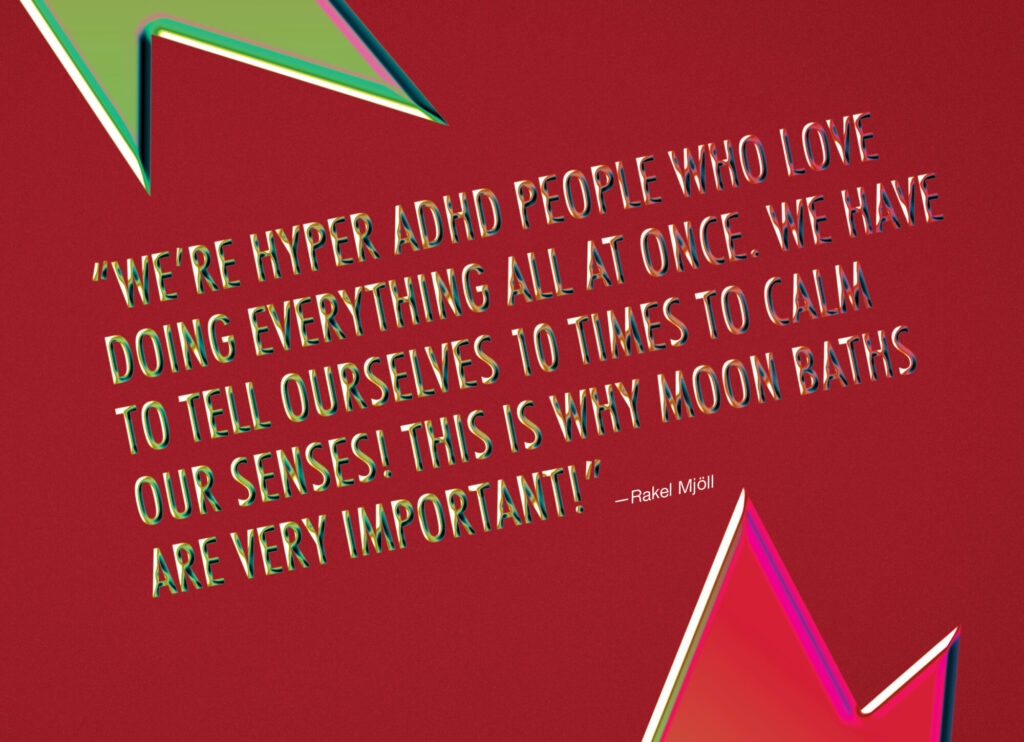
RAKEL: We struggle with rest. We are hyper ADHD people who love doing everything all at once. We have to tell ourselves 10 times to calm our senses! This is why baths are very important!
Very relatable. At this time of year, when we’re settling into the colder season, you’re going into the studio and playing a run of shows. When did the seed get planted for wanting to do the Support Your Local Music Venues Tour?
ALICE: It’s been a while since we’ve been in this creative zone, and it feels important to get out and play for the people who have supported us for years. It feels like the perfect opportunity to see how these new songs land live. What’s the vibe like? It’s a whole other way of understanding our music and the material, and how that relationship translates in a live setting.
RAKEL: It’s important to play songs live before they’re recorded, and Alice and I definitely felt that. On our last album, for example, with the song “Leech,” we played it live first and then recorded it. We had two studio sessions where we broke down songs within about a month, and in between those sessions, we were playing festivals. By the later session, we could really hear what those songs were like live. One of those songs was “Leech,” and the line “just have some fucking empathy” only came up once or twice in the song at first. But you could hear that people wanted to say it again.
ALICE: Yeah!
RAKEL: You could hear it from the audience—they started singing it back to me. That’s what you find out when you take a song out of its safe space and show it to people. You start singing it differently. We ended up reconstructing the song around that line, the core essence of it. Even live, there’s a longer version where the crowd starts singing it back to you, and it becomes this shared flow with the audience.
Wow, that is truly a beautiful way to have a creative process as a band. I really love that.
RAKEL: Even now, we’re itching to play these songs live, so it’s really nice to be able to do that in different independent venues around the UK.
How has it been bonding with Nuha Ruby Ra before you guys go on tour together?!
ALICE: We LOVE Nuha!
RAKEL: Have you seen her live?!
Not yet!
ALICE: It’s wild. Oh my god.
RAKEL: Talking about live shows, Nuha’s is unlike any other. She’s also been doing the same things as us—writing all year and not playing any shows, really being in that zone. She’s been itching to test out her new material, too. We were going to a café in London and chatting about it, and she was like, “Oh my god, can I join?” And we were like, “Hell yeah!”
Wow! Divine alignment strikes again! I’m telling you, you hang out with a fire sign and all of a sudden, you’re like, I have realizations!
RAKEL: She’s an Aries. So, yeah, she’s a fire sign!
How did it come together with the tour poster and everything?! I was laughing so hard. I couldn’t relate more. Who came up with it?
ALICE: Rakel and I were very sleep-deprived in Istanbul. We were at the airport, and we were like, “Oh my god, this feels like an ancient meme—like the world’s first meme.” We just wanted it to feel fresh and new, and somehow it all came together miraculously.
RAKEL: It came together very quickly, and we were booking shows and venues.
Divine alignment strikes yet again! I love a good hero’s journey. It goes back to the core because it’s genuinely the soul and pulse of what you’ve created. It gives connection, even through being authentically silly.
ALICE: Yeah!
Not only are we going to authentically chant things that might suddenly make you cry or change the trajectory of a song, but all of a sudden, you’re connecting with being real. I saw that tour poster and thought, What is going on here? I zoomed in, and I was like, OMG! Then I dove into all the details of what you guys are doing and thought, Wait a minute… this is good shit!
RAKEL: Yeah, because we aren’t announcing an album or a new song, we are literally just announcing a UK tour to support and play songs live.
That’s exciting, especially when you’re coming out of your cage, and you’ve been doing just fine. But it’s nice because it feels like a little kiss to yourself—like, “It’s okay, let’s go, and we can do it the way we want!” and that’s also because we’re surrounded by a community and people who will uplift us and stoke the fire.
ALICE: Exactly.
It’s like, “Let’s just do it the way we want and what feels authentic to ourselves!”
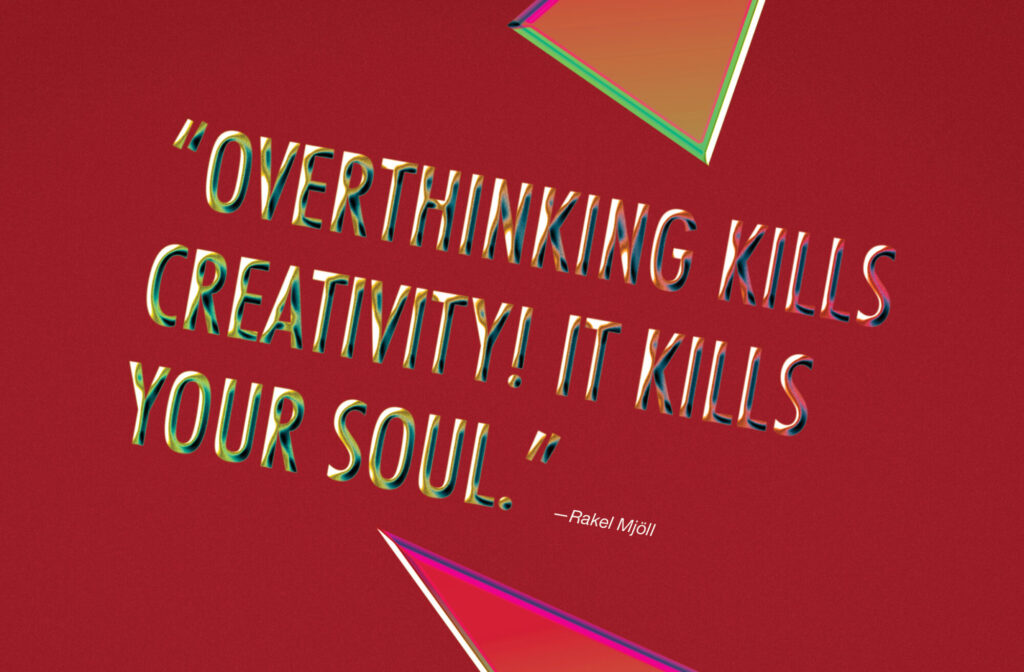
RAKEL: Overthinking kills creativity! It kills your soul. A lot of overthinking is internal, so the best way when you find yourself overthinking is to rest. I think also for our band, if we overthink, it’s not going to be healthy. That’s the full moon theory!
Thank you for that. I had to make a note of that! That was a good one, dang. I had to make a note and put it in my pocket! On that note, too, what is something you know now that you would tell your younger self, even if it’s your younger self via Dream Wife or however that looks for you?
ALICE: I think maybe, it’s in line with the caregiving thing, in that Rakel and I definitely have a tendency to go a million miles an hour. Going slow is really hard for us, especially in the creative process. I think having the time to actually gain perspective, stop for a minute, and ask, “What do we really want to do with this?” is important. Taking a moment feels really hard, but I would say to my younger self that it’s okay if things don’t happen instantly. Ultimately, you’re going to get it right, and time is actually the best possible thing sometimes for understanding what you’re doing. I’d also say it’s okay to slow down and just go for a walk—don’t feel like you have to be 100% all the time. Time and space are actually beneficial.
RAKEL: We really did almost burn out the first year. I agree with Alice on this, too—stop competing with yourself. Why are you always in competition with yourself? It’s really unnecessary.
I couldn’t relate more. These are all things I needed to hear.
RAKEL: You know when people say this line, and it’s supposed to be a good thing: “The only competition you have is with yourself” and I’m like, no, no, no, no. I’ve been in competitions, and I’ve been my harshest critic. I’ve stopped myself from doing things and thought, Girl, that really didn’t matter at all. I think this sentence is messed up. Also, what even is competition? I don’t really think about it that way, especially as an artist. It doesn’t really align with you, and it’s only going to stall you rather than help. I still don’t agree with this whole “competition with yourself” thing. I also think we need to ask: Why are we coming against ourselves?
ALICE: Yeah.
RAKEL: Why can’t we just continue with what we’re doing? That’s my thing. I think that sentence is messed up.
I think that’s really helpful. Something I was telling myself the other day when I was overthinking, even in a moment when I was decluttering, I was looking at half versions of myself and thinking, I did this… but then I stopped and realized I had been too hard on myself. So yeah, being able to hear your perspective on that was a moment when I thought, little did I know I needed this wonderful, delectable conversation!