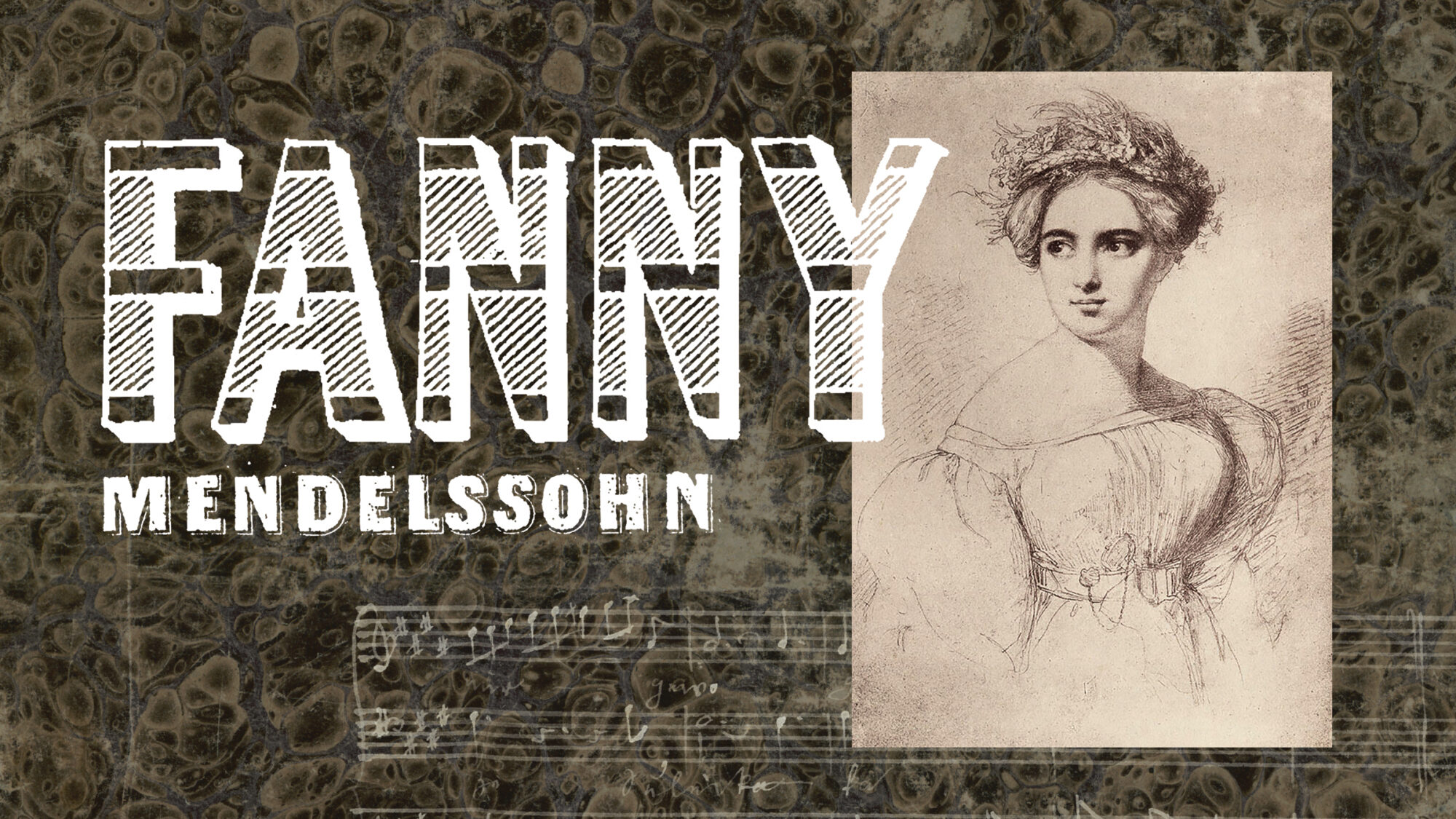
Fanny Mendelssohn, the badass composer who was doing the damn thing way before women were “allowed” to. Back in the 1800s, she was told to stay in her lane. No publishing music, no conducting, and definitely no playing instruments. But Fanny? She didn’t back down. She wrote hundreds of pieces. Bangers for piano, songs, choral works, all while the world told her to stick to being a “lady.” In this conversation, from the beyond, Fanny gets real about making art in a world that didn’t want her to, pushing back against sexist nonsense, and why she wrote music like her life depended on it.

Alright, Fanny, thanks for watching over us from up top and sticking around to see how far we’ve come, but stuck in a time where women were basically told to smile, sew, and shut up. What was that like?
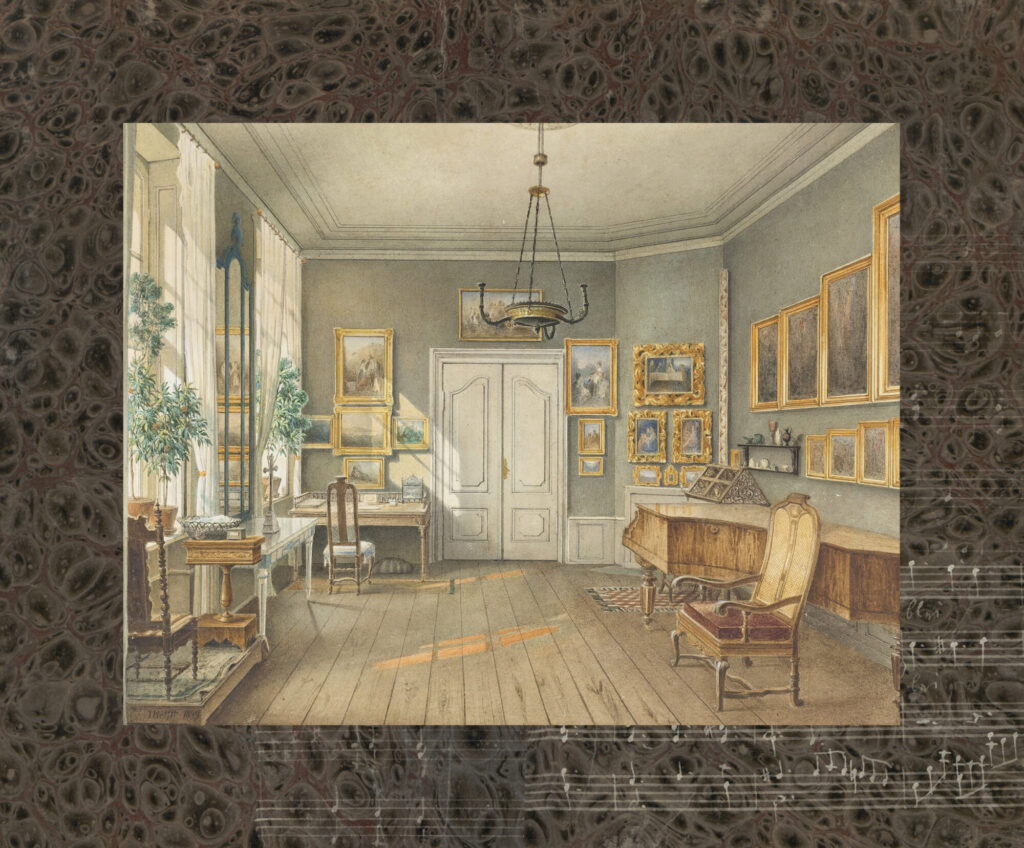
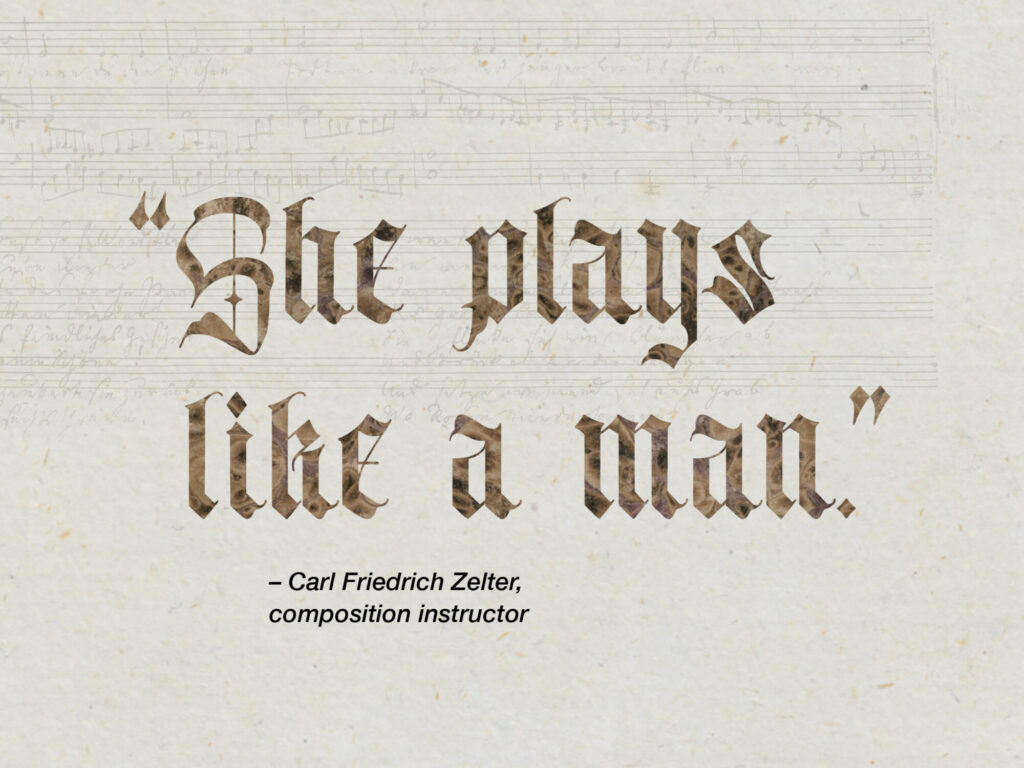
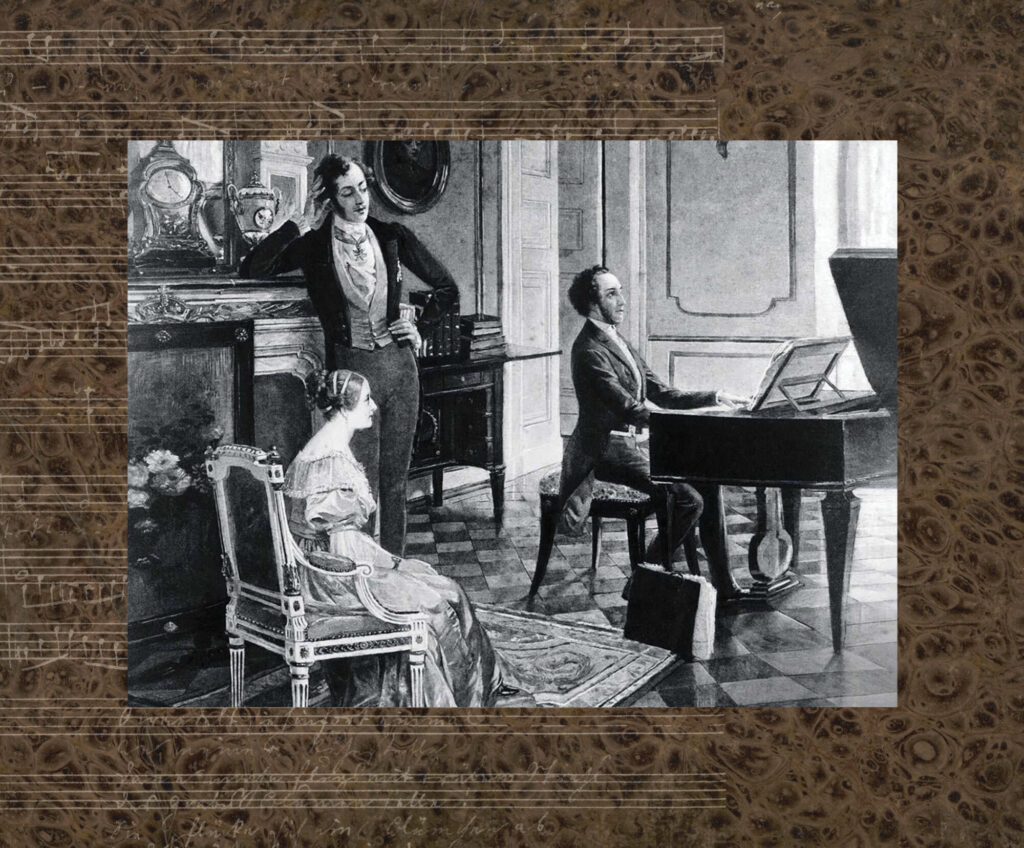
Imagine being a kid who can play Bach backwards with your eyes closed, but everyone around you is like, “Sweetie, that’s cute, now go pour the tea.” I was obsessed with harmony, counterpoint, all that nerdy music stuff. But the vibe back then? If you were a girl, music was a hobby, like embroidery, but louder. Publishing? Performing? Nah. That was “men’s work.” My dad told me that music could be Felix’s job, but for me, it should just be a “pretty decoration.” Like, excuse me? I’m not a damn chandelier. I was over it. But what could I do? Society was a whole-ass prison with nice wallpaper.
Speaking of Felix, let’s talk about the fact that some of your music dropped under his name. Spill it. How’d that go down?
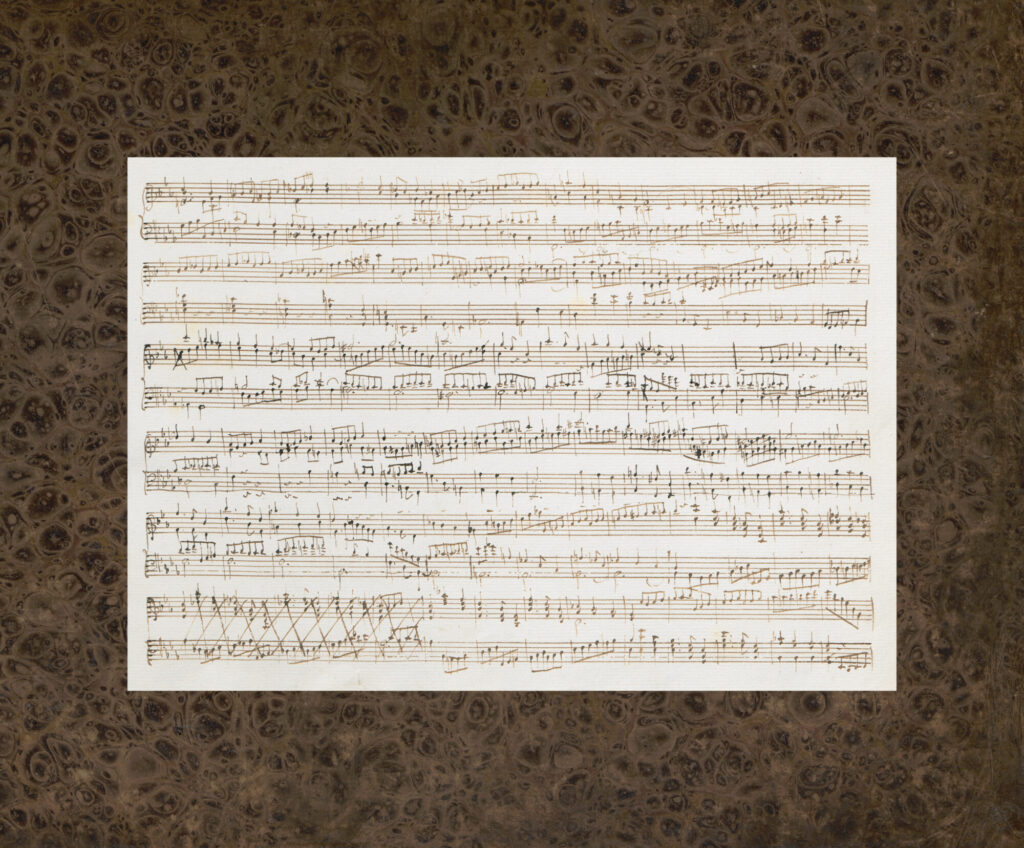
Whew. Okay, yeah, that happened. I mean, Felix was my brother, and I loved him, but the man was still a product of the patriarchy. He published some of my songs in his early collections without even slapping my name on them. At the time, I was like, “Well… at least the music’s out there.” But deep down? I was mad. Like, I wrote that. That melody? That harmony? That emotional gut punch? That was me, Bruh. I didn’t want to be a ghostwriter in my own life. But when you’re raised being told that being seen is dangerous, you start to believe it. That mess takes years to unlearn or, in my case, centuries.
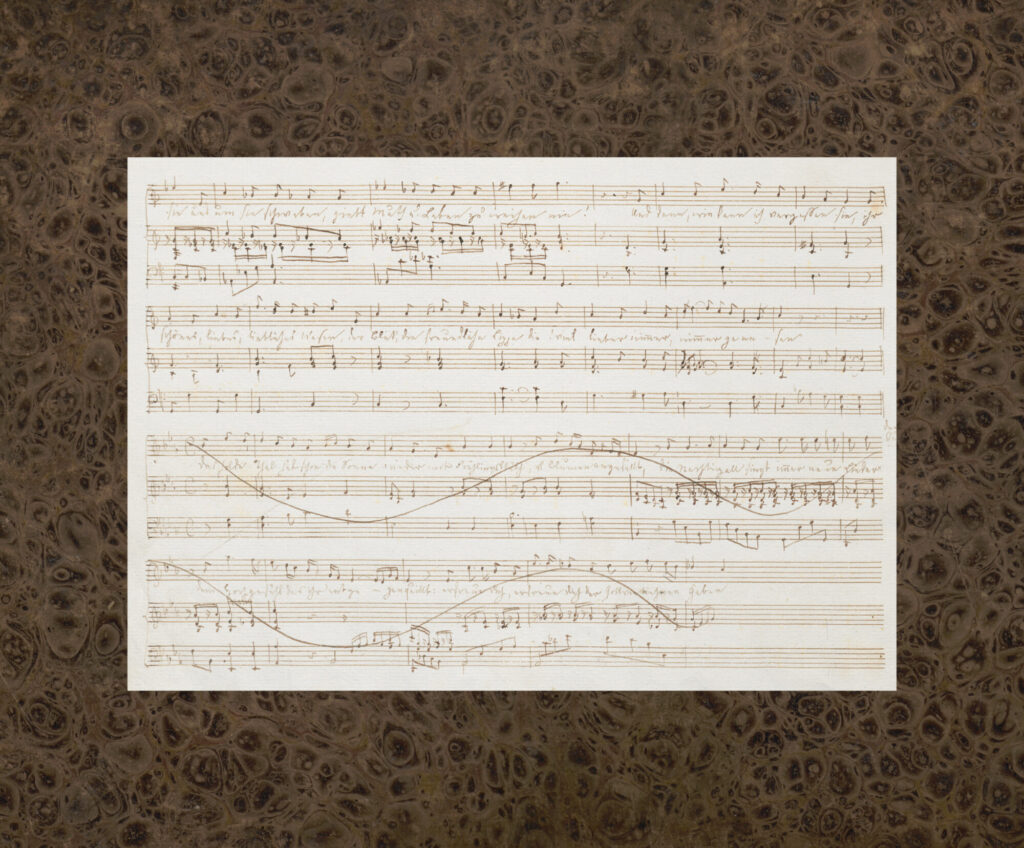
U.S. scholar Angela Mace Christian identified the work as yours by recognizing your “musical voice.” How would you describe that voice?
My music carries both strength and intimacy. It reflects my deep love of Bach and my own spiritual and emotional sensibilities. I wove passion and complexity into my works, though always under the pressure of silence that
society demanded of me.
The rules for women back then were wild. What’s some of the dumbest stuff you couldn’t do just cause you were a woman?
Where do I start? Okay, you couldn’t play the cello. Wanna know why? Because it goes between your knees. Apparently, that was too “suggestive.” Like bruh, I’m just tryna play some Bach, not seduce the audience. Conducting? Too aggressive. Touring? Too scandalous. Publishing? “Improper.” Basically, if it gave you any kind of visibility or power, it was a no-go. Women were expected to sit pretty at the piano, play nice little ditties, and never outshine the men. So yeah, I wrote an orchestral overture just to mess with that idea. In secret, of course. But still. Petty queen energy.
Let’s fast-forward. Your music’s finally being played around the world, centuries later. How does that feel?
Honestly? I wanna cry! Like, where was this energy when I was alive? Where were the standing ovations? The recordings? The critics calling me a genius? But also, I’m so damn proud; proud of myself for writing anyway. Proud of the women who picked up my scores and said, “Wait, why don’t we know her?” Proud that people finally stopped sleeping on me. They tried to keep me in the Parlor. Now my music’s in concert halls. Boom.
What do people still get wrong about you? Like, what’s the biggest misconception?
That I was quiet. Timid. Some little delicate flower writing lullabies in a lace bonnet. Nah, babe. I was a whole storm. I led rehearsals in my living room like a boss. I had opinions. I challenged my husband, my brother, my teachers, all of them. Just ‘cause I didn’t yell in public doesn’t mean I didn’t burn it all down in private. There’s power in the whisper, too,
you know?
What would you say to girls, femmes, and non-binary folks out here tryna make it in music today?
Here’s the tea: Don’t wait for permission. No one’s handing you shit. If the door’s locked, kick it in. If your name’s left off the credits, say it louder. Write what you want. Say what you mean. Take up space. Be “too much.” Be “too ambitious.” That’s where the magic lives.
Imagine you were living in 2025. What would your red flag in a relationship be?
If he says, “I prefer Beethoven.” Immediate block. Don’t get me wrong, Ludwig was brilliant, but if that’s the first thing out of your mouth, you’re not here for me, you’re here for daddy-symphonies. Also, if he claps between movements, I can’t be with someone that chaotic. Imagine sitting through a Mahler symphony with him clapping like a seal every 10 minutes. Instant second-hand embarrassment. Bonus red flag: if he says, “I only listen to vinyl, Spotify ruins the soul of the music.” Babe, I wrote music with a quill and candlelight. Don’t gatekeep formats with me.
What modern job would you absolutely fail at?
Influencer. Hard pass. I’d be like, “Here’s my OOTD,” and it would be the same black gown I wore for five years straight. No wardrobe changes, no brand deals, just “Still wearing this. Still writing fugues.” Plus, I’d forget to
post anything unless it’s sheet music.
The first thing you’d do if you woke up in 2025?
Google myself. Step 1: Sue whoever said I was just “Felix’s sister” on Wikipedia. Step 2: Go full PR tour correcting every textbook that ignored me. Step 3: Binge-watch Bridgerton and complain about the historical inaccuracies in my best Regency gown. (“Nobody would’ve worn that shade of blue to dinner, please.”) After that? Probably hit up Spotify and make a playlist of all my works, finally recorded under my name. I’d cry, rage, and dance all at once.
If you had a podcast, what would it be called?
“Felix Who?” Subtitled: Conversations with Women Who Got Erased, And Came Back Loud. Every episode, I’d drag another forgotten woman out of the footnotes of history and let her spill the tea. Episode 1: Clara Schumann roasting 19th-century critics. Episode 2: Hildegard of Bingen doing guided meditations. Episode 3: Me and Billie Eilish whisper-singing about how exhausting men can be. Spotify exclusive, obviously.
If you could say one thing to your younger self, what would it be?
Stop asking for permission. You already know who you are. Trust that fire in your chest, because it’s not going away, and it’s not meant to. I wasted too much time believing my father, my brother, society, everyone that music was a “decoration” for me. Younger me didn’t realize that those melodies weren’t hobbies; they were survival. If I could whisper one thing to little Fanny scribbling notes at the piano, it’d be: “Write it all down. Don’t hide it. The world will catch up eventually.”
What would your autobiography be titled?
Unladylike and Unapologetic: The Fanny Mendelssohn Story. That’s the glossy hardcover for bookstores. But the paperback? Probably just, Composed While Tired. Because let’s be real, I was always tired — of sexism, of hiding, of rewriting cadences, of smiling politely while men got credit. But I kept writing anyway. That’s the real title of my life: Tired, But Still Composing.
What kind of music is Fanny Mendelssohn dropping in 2025?
Oh, I’d be dangerous. You’d catch me on Spotify with dramatic-ass piano ballads, cinematic string bangers, and maybe a little alt-pop EP just for the vibes. Think Florence + The Machine but with a harpsichord. I’d collab with Lizzo (obviously), drop a flute-and-piano rage duet, and probably have a tiny desk concert that ends with me flipping a table mid-cadenza. And this time? My name would be front and center. No ghost-writing. No hiding.
If you had a Tinder bio, what would it say?
Composer. Piano shredder. Ghost with unfinished business. Honestly, dating back in the 1800s wasn’t even about romance, it was about family alliances, dowries, and who had the biggest garden. So, if I were dating in 2025? I’d finally get to be picky. I’d say something like, “Must tolerate endless piano scales at 2 a.m., must believe women can publish music without divine intervention, and absolutely no Felix stans allowed.” That bio would clear the playing field real quick.
Your most toxic trait?
I rewrite endings of pieces three times because I can’t stop tinkering. It’s like my brain refuses to accept closure. I’ll be like, “Yes, Fanny, this cadence slaps, it’s perfect.” And then at 3 a.m. I hear this tiny Bach-loving gremlin in my head whisper, “But what if you modulate to G minor?” Next thing you know, I’ve scrapped the whole finale and written an entirely new fugue. My family used to beg me to stop overthinking. So yeah, perfectionism, procrastination, and passive-aggressive counterpoint. That’s my trifecta of toxicity.
What’s your hot take on modern classical concerts?
Too many suits. Not enough drama. Look, music is theater. It’s feelings with a soundtrack. But you walk into most classical concerts and it’s a funeral in tails. Where are the capes? The smoke machines? The dramatic spotlight solos where someone storms off stage mid-cadenza? Beethoven would’ve lost his mind with access to strobe lights. Wagner would’ve written a three-hour opera just for fog machines. If I were alive today, every concert would feel like a rock show! costumes, lights, and audience screaming. Because music deserves spectacle, not silence and cough drops.
One thing you’d cancel in 2025?
Metronomes. Those little ticking monsters have haunted musicians for centuries. They stress me out more than society ever did, and that’s saying something. Music is alive, breathing. It’s supposed to stretch, sigh, race ahead, drag behind. A metronome is like that annoying relative who claps on 1 and 3 at family gatherings. Just… wrong. If I catch you practising with one in 2025, I’ll haunt you by knocking it over every time it ticks.
What’s your biggest 1800s-era petty flex?
Writing things I “wasn’t supposed to.” Women weren’t meant to write overtures? Boom. I wrote one, and I made it as bombastic as possible. Women weren’t supposed to conduct? Guess who led her own salon orchestra in Berlin every Sunday? Every forbidden note I wrote was basically me subtweeting society in sheet music. Pettiest move? I sometimes wrote pieces so technically difficult that only a few people could play them, just to prove I could. It’s like leaving a musical booby trap: “Good luck, gentlemen, don’t break your wrists.”
If you could drop one cursed remix in 2025, what would it be?
“Canon in D”, but make it speed metal. Everyone plays Canon in D at weddings like it’s some gentle background music, but no, Pachelbel was trolling us. That chord progression is everywhere in pop. So, I’d just lean in and turn it into pure chaos: double-bass drums, screaming guitars, maybe a choir chanting in Latin for no reason. I’d call it “Canon in Dm (for Demonic)” and dedicate it to every poor bride who thought it was an “original” choice.
Looking back, what do you hope your legacy will be?
That women’s creativity is no less vital, no less profound than men’s. That the silenced voices of the past be restored, and that future generations of women never again have to ask permission to create.
Final words before you vanish into the historical ether again?
Put my name on the program. Play the music loud. And tell Felix I want my publishing royalties, retroactively.
She came, she composed, she conquered, and now she’s haunting music history until every damn syllabus has her name on it.