By Carolina Hernandez
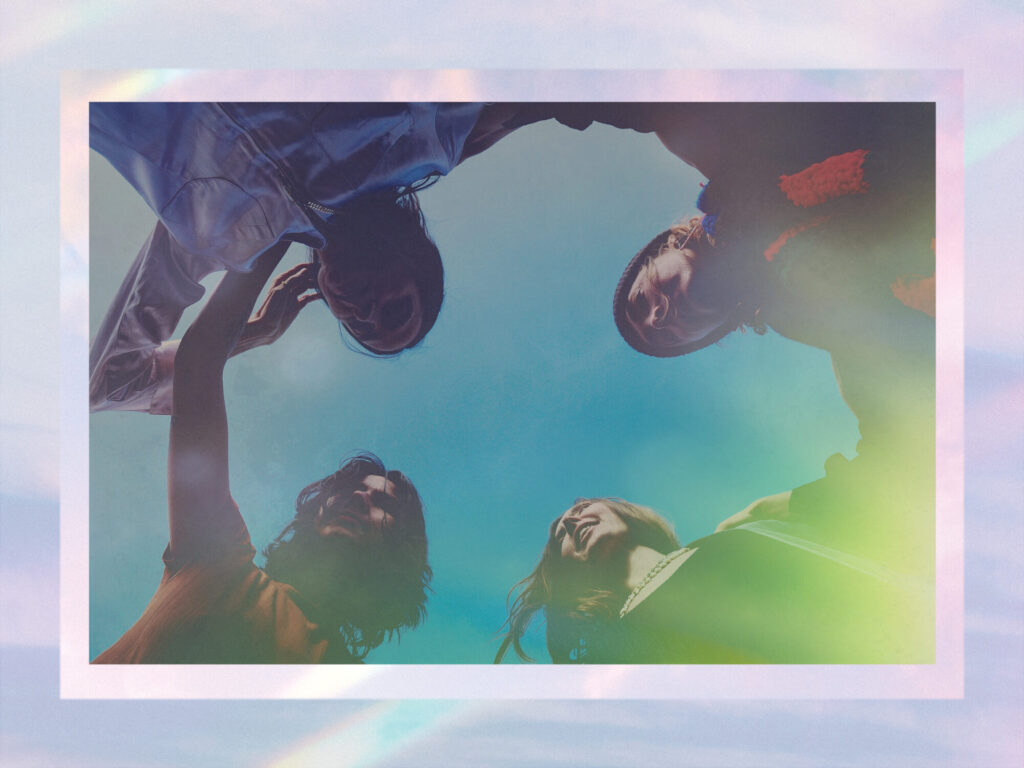
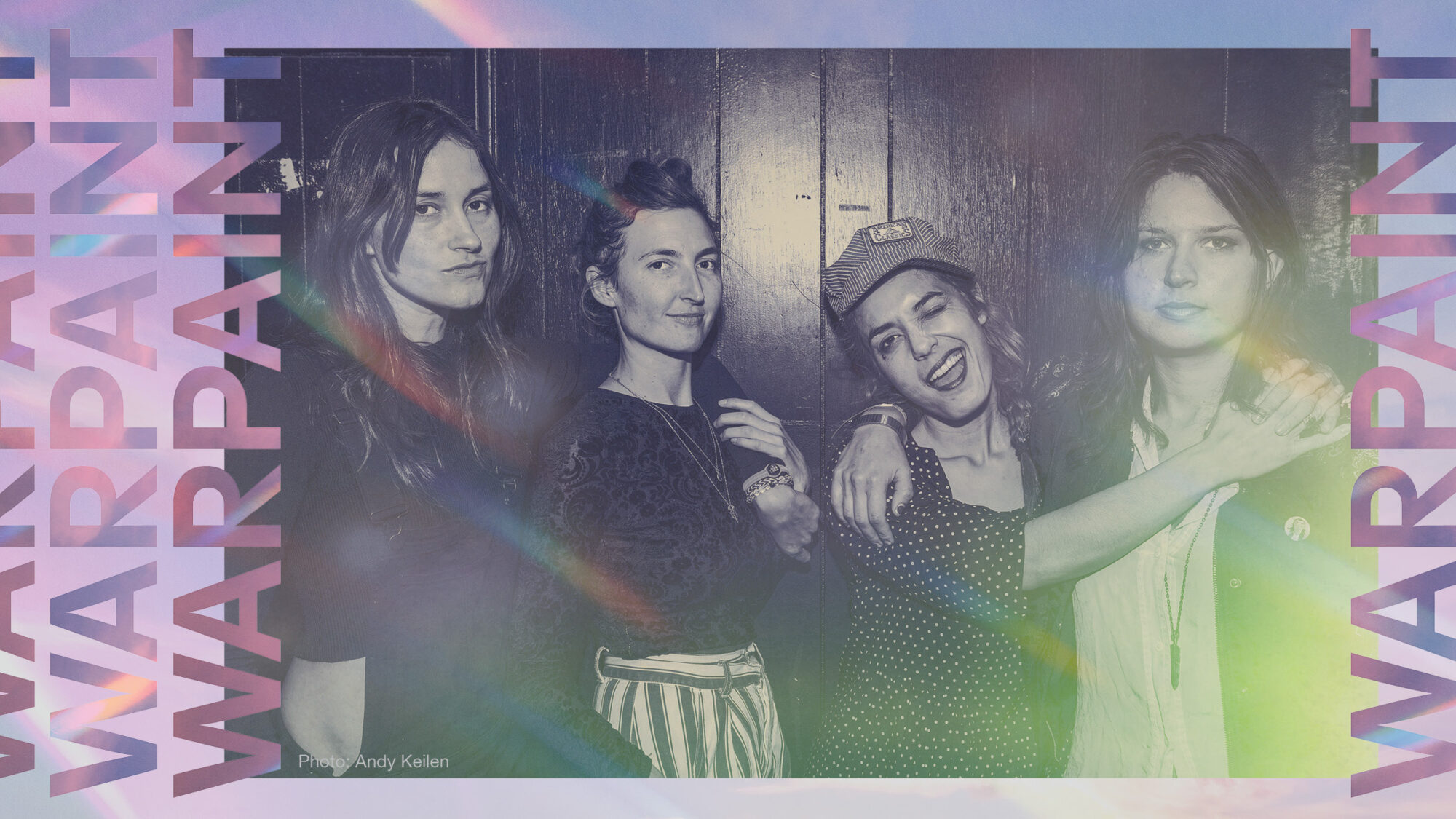
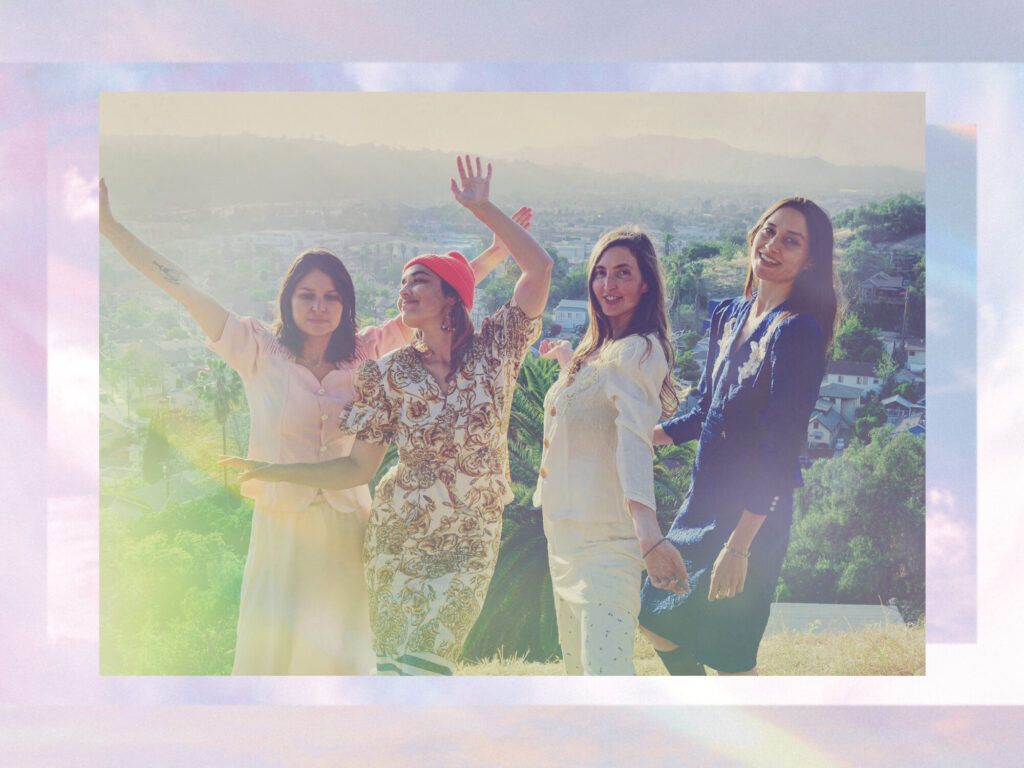
Warpaint emerged from Los Angeles in the mid-2000s, an alchemy of Emily Kokal, Teresa Wayman, Jenny Lee Lindberg, and Stella Mozgawa. Their sound is instantly recognizable with a chemistry that comes from years of playing together. I caught up with Stella (drums) and Jenny (bass, vocals) on a video call to talk about music, skating, art, and some of their wildest fan moments. They shared stories about the early days and the magic behind the chemistry that makes Warpaint unmistakably Warpaint.
Hey, Stella, how’s the weather in LA?
Stella: It’s getting a little chillier. It’s still LA, though. So, it’s like, it’s always sunny and nice. And it just doesn’t really feel seasonal ever, but I’m from Sydney, Australia, which is very similar.
Yeah, I was in Australia recently for a skate tour, so we did Sydney, took the tram to Newcastle and then we drove all the way up to the Gold Coast.
Stella: Oh, wow. So, you were in the car for a long time. It was like nine hours or something?
It was like 10 full days of skating and filming around.
Stella: Wow. How did you like Sydney?
I really liked it. Melbourne is pretty similar to Bogota. It’s colder. Whereas Sydney feels a little more, of course, sunnier. I really like the landscapes there. Big fan of places where you can move around without having a car because I don’t know how to drive. So, in Bogota, for example, you can just take a bicycle and ride everywhere.
Stella: That’s like Melbourne. Melbourne has trams, and it has a bit of a system but LA is the worst.
LA is crazy. Have you ever been to the skatepark or tried any other sport?
Stella: I used to skateboard when I was 13 and 14, and it coincided with the same year that I started playing drums. So, I was in bands in high school, and I wasn’t a great skater. Like, I could kickflip while the board was stationary, not moving. But I figured that out. And all my friends were tomboys and skater boys. And so, it was just kind of something that everyone did. And then I broke my leg when I was 13 or 14. It was the end of the year when I had picked up drumming and skateboarding. And I was definitely better at drumming than skateboarding, and broke my leg in a non-skateboarding-related accident. But then I spent the whole summer holidays playing the kick pedal with my left foot, because I broke my right leg. So, I just remember at that point thinking to myself, I have to make a choice. I can’t do dangerous or extreme sports and play the drums. So, it was a sacrifice I had to make. But I just took up surfing.
Ah, that’s pretty dope.

Stella: Which is also pretty risky, but I think I’m just at the age now where I’m, you know, life’s too short, you have to do things.
Do you surf in Australia or LA?
Stella: Both. It’s a lot easier in Australia because my parents live about 10 minutes from the beach. So, when I go visit them for Christmas, I take advantage of being so close to the water. But in LA I go somewhere that’s about an hour and a half away from LA. The other day I went, and it was like a six-and-a-half-hour affair. It’s something they do every day, and I wish I lived a little bit closer to the ocean. I probably wouldn’t get into it. But, yeah, I do my best. I’m still very much a beginner. Do you skate as well?
Yeah, I am a professional roller skater.
Stella: That’s so cool.
My life revolves around roller skating.
Stella: I’m pretty sure that Jen is a roller skater. Or she has roller skated.
Really? That’s so cool. Music and skating were the two things I grew up with. When I was young, my dad got me into guitar lessons. And I learned the acoustic Colombian traditional music. You know, like, my dad was like, if you’re going to play, you’re going to play what I want you to play.
Stella: Yeah, yeah, yeah. It’s like piano lessons.
But it was lovely. And then I ended up studying sound engineering.
Stella: Oh, cool. Hi, Jenny.
Jenny: Hi, honey. So, my plans changed just a bit, and I’m actually driving at the moment from St. George to Salt Lake.
Hi Jenny, thank you so much for joining us. We were just having this conversation, and you can clear this up for us. Have you ever tried roller skating or skateboarding?
Jenny: I have tried roller skating. I actually love roller skating. I’ve been really skating since I was five. I wish I were better. That’s my goal this year; it might not happen, but I’m aiming for it. I don’t know if you know what the fancier skating looks like, not figure skating, but it’s like street skating. Back in the day, they used to call it rexing. So, it looks like you’re dancing with your skates, and you actually can dance with your skates. It’s the most amazing thing ever. And so, I can kind of do it, but I want to really, really do it. So that’s my goal this year.
Okay. So, I don’t know if you guys know, but Fantom is a magazine that revolves around street roller skating and also features badass women in music. So, it’s pretty cool that you’re into music and also skating.
Jenny: Okay, so you know exactly what I’m talking about then, if you’re a roller skater.
Absolutely. Yeah, that’s amazing.
Stella: Are you drinking some coffee, Jenny?
Jenny: Oh, yes, I am, girl.
Stella: I felt it. I heard the ice.
Jenny: I was in and out of LA. We had to postpone our trip, but we got there. On Monday, we drove all the way, and I had to stop in Barstow to clear up a driver’s license thing. So, the trip was 12 hours. Then we got a U-Haul, and we had to pack the U-Haul on Tuesday, and then we left early in the morning yesterday to drive to St. George. So, it was really intense. I didn’t have any time to hang out, and now I’m driving back to Salt Lake. Just really jam-packed, so that’s kind of where my brain is at the moment. I apologize if I seem a bit frazzled. Life is lifing right now.
It’s doing its thing.
Jenny: Oh, it’s doing its wonderful thing.
Jenny, you recently shared your artwork as an abstract painter. Does your art connect to your music?
Jenny: Oh, that’s interesting. They’re very separate, and I have to compartmentalize. So, if I’m painting, I’m probably not working on a lot of music. I need inspiration to do both. So, I think that they feed off of each other in that way, just more in a general sense of being inspired. I don’t really combine the two. But I did actually for my last solo record—all the cover art was war paintings, and some of the songs were named after paintings. But yeah, they’re two separate mediums. And I would say that painting is a nice reprieve for me from music in a way, because I think that when it comes to music, I’m a bit harder on myself than I am with painting. Sometimes it’s nice to step away, and because it’s more like a stream of consciousness, it’s very childlike, it’s very imaginative. And there are really no rules, there’s nothing to compare it to. Like, I don’t compare myself to other painters because it’s also abstract, so I’m not setting out to paint anything specific; it’s all just based on how I’m feeling in that moment. I just kind of roll with the feelings. And I do that with music a bit as well, but I’m just a little bit harder on myself. Like, it takes me a little longer to get there than painting. I feel like I’m scratching the surface a little bit. I don’t want to keep going because I just got that cold brew, and I might keep going.
You got the zoomies.
Jenny: Yeah, you guys are going to have to intervene.
So, this one’s for Stella. I’ve come across your Instagram, and it’s really fascinating to watch the behind-the-scenes of your recording process. Have you felt like sharing this content might encourage more women to be in similar spaces?
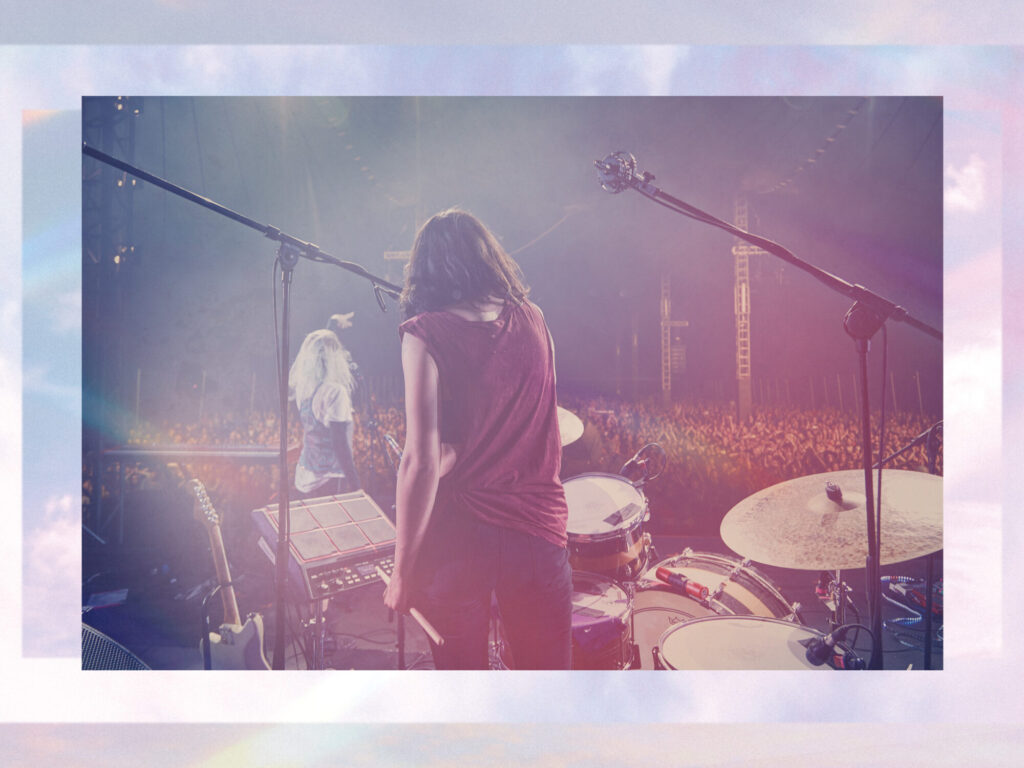
Stella: I’m really bad at Instagram, so I don’t really think about it very much. I often get told that I should post more and that people don’t really know what it is that I’m doing half of the time. So, I can’t say that I’m intentional in any way about Instagram, and sometimes if there’s something like an update, I think about posting it, and then I talk myself out of it, and then I just don’t post anything to my account for weeks, sometimes months at a time. So, I get really anxious on social media because I see a lot of drummers, producers, and people who are kind of talking to the camera and doing this thing, which is really helpful for some people. I think that part of me is really triggered by Instagram and social media because every time I see something, I’m like, well, should I be doing that, or I should be doing more of that, or I should be doing drumming videos, or I should be doing production videos. But really, the stuff that I post is just so random. I hope that it’s encouraging for people to see female producers in general doing different kinds of technical jobs or whatever. But there are definitely people on Instagram and on social media who are just really involved and really good at doing that kind of stuff. I think I’d be more interested in mentoring projects—things where it’s a smaller group of people and not just blasting content out into the world. Firstly, because I don’t have any of that gear, it just would look really bad, so if somebody’s filming me doing something, I’ll often repost it and just be grateful that somebody captured something that happened. But I’m really bad at it and really kind of unintentional and sloppy. So, I can’t take any credit for that.
With social media, we sometimes feel like we must do this or it must look a certain way. But I think the fact that your content is so organic and true to yourself makes it fun to watch. I really enjoy seeing it. It’s like, 95% guys and 5% girls doing it in the world, so occupying these spaces is always pretty inspiring for other women. I love seeing that. Finding like-minded people who are on the same wavelength is so important for creating. How did you find each other?
Stella: It’s a long story.
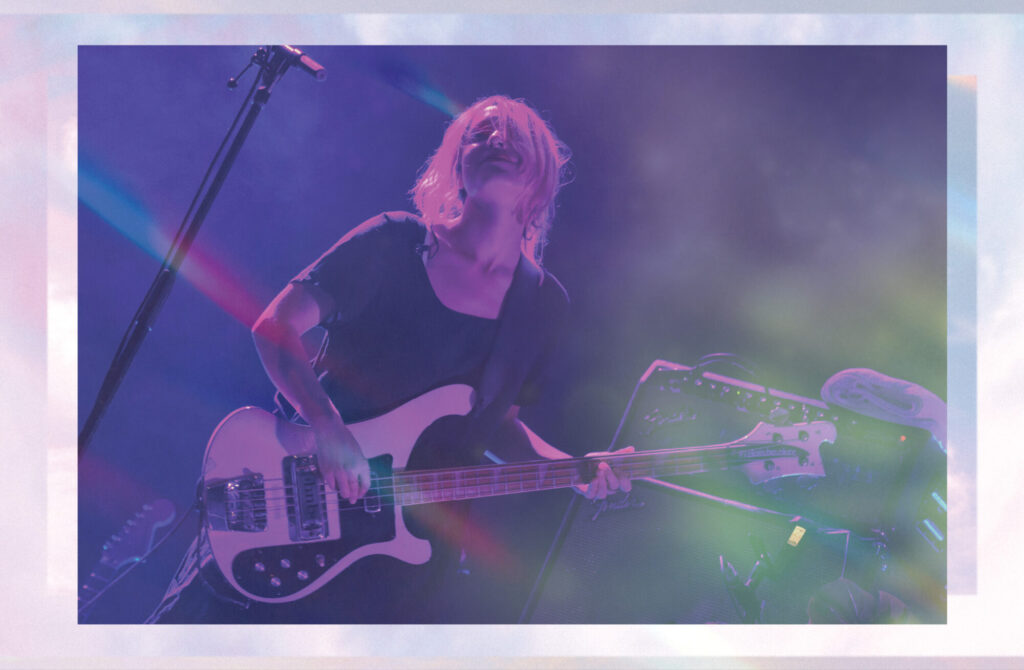
Jenny: It’s a windy story, but I think in short, Emily Kokal and Teresa Wayman grew up together, and then I met Emily and Teresa when I was 19. Emily and I met up to jam one day. I think we were 19 or 20 years old, and it was really fun. It felt really effortless in a way that I hadn’t experienced with other musicians. It was really easy to jam with her. What I mean by jam is that she was playing the guitar, and I was playing the bass. I think we played for a couple of hours; it sounded really nice, and it just felt really natural. So, we decided to start a band. Well, my sister Shannyn Sossamon started the band with us, and she was probably the person who I think rallied everything to make it happen. She was very driven and focused on us being a band, and I really think that had it not been for her, I don’t think it would have happened. So, gratitude to her for that. But then she quit twice, and then we found Stella along the road. It really locked in. Having Stella in the band just elevated it to a new level.
Stella, what would you say are those sound elements that Warpaint still keeps from their beginnings and what’s new in those sounds since you joined?
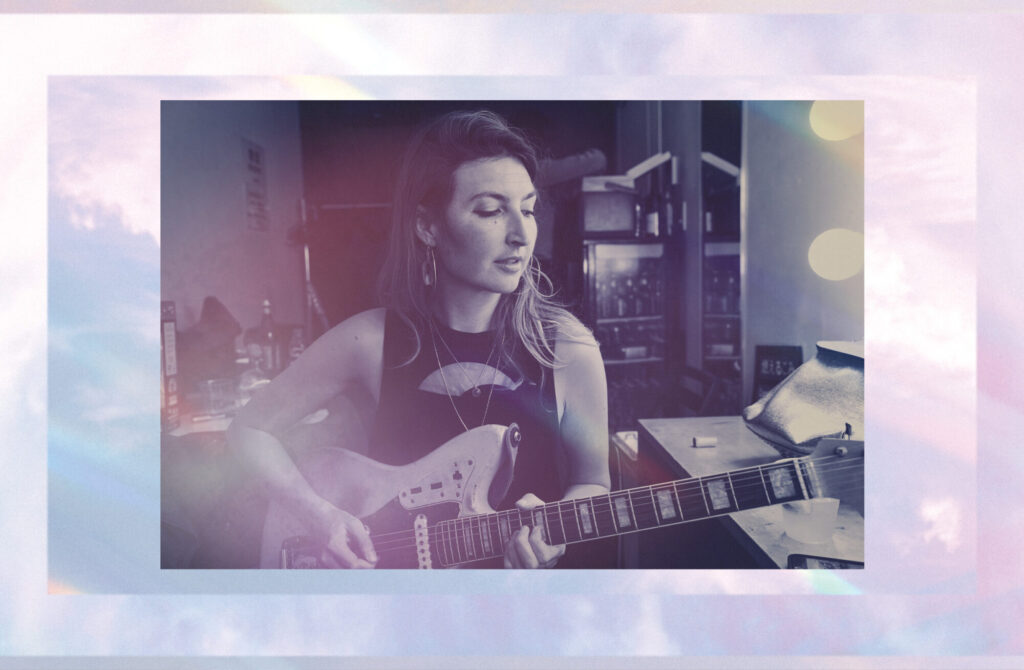
Stella: It’s really about the fact that when Emily, Theresa, and Jenny play together, it produces a certain kind of sound that everyone listening—whether it’s me or anyone watching a show or listening to a record—can identify as the sound of Warpaint. And Shannon obviously had a big part in forming that sound. But the three of them, continuing the band, still carry on that sound. There’s something alchemical that happens that is still there, regardless of how many stylistic or genre changes occur over time, or any other variables. There’s something about everyone playing the same instruments. There’s not a lot of switching around. It’s really stayed consistent, I think, with small variables over time, and I feel like that’s something that’s not too esoteric or anything—people can just hear that in the music.
Through all the processes of creating a song, how do you come to that point where you’re like, Okay, this is it. We got the song.
Stella: That’s really hard for us. I think Jenny would agree.
Jenny: I’ll think the song’s done, but someone won’t think it’s done, or they’ll want to add. I think that we take turns, or we arrive at the finish line at different times.
Stella: Each of us has strong opinions, and we have different criteria for what something should sound like. So, yeah, sometimes we disagree on versions of songs and things like that. It’s generally a vote thing, in a way. Typically, what happens is that the person who’s most passionate about it has the loudest voice in the conversation, and usually everyone either agrees with them, or there’s probably someone who’s just sick of fighting and not as concerned, and maybe that song isn’t their number one passion or favorite thing that they’ve heard, so they kind of defer to the person who’s most passionate about it.
That makes sense. What is the craziest thing a fan has done?
Jenny: Oh, wow. That’s a good question.
Stella: Oh, my god. There are probably so many funny ones.
Jenny: I think the first thing that comes to mind is we got hired to play a private birthday party at Joshua Tree. He paid us really well to play for his 12 friends. And I just thought, Wow, it must be nice to be able to just say, “Oh, I want my band, I want this destination.” I thought that was pretty wild! It wasn’t totally during COVID, but we were still wearing masks outside, and it was outside as well, so I thought that was pretty crazy. It was awesome. Remember that song, Stella?
Stella: I wasn’t there.
Jenny: Oh, shit, you weren’t. Because you were out of town.
Stella: I didn’t go. I was either in Australia or I feel like in my memory, I was on tour then. And I think I had COVID or something, but I remember being in touch with everyone and getting updates about it. I couldn’t make it to that show.
Jenny: I think Emily had COVID.
Stella: Oh, there we go. And do you remember, someone gave Teresa a crazy expensive coat or something? And the next time I saw her, I was like, “What the fuck is this coat you’re wearing?” She’s like, “I got it at that Joshua Tree private festival that we played.”
Jenny: Wow. Yes, that was a private festival. That’s a great way to explain it.
Stella: I feel like anytime somebody draws pictures of us, I think that’s really wild sometimes. I’m definitely not trying to call people out, but sometimes it is crazy. It’s almost like seeing a photo of yourself, and you’re like, “Is that what I look like? Is that me?” Yeah. Sometimes, some people are just unbelievably good portrait artists or sketch artists, and you look at it and it’s just like, “Wow, this should be in a gallery.” Other times, you’re just looking, and you’re like, “Wow, in that person’s brain, I look like this?” I cannot relate to this image at all. It’s like they drew something from a picture or a press photo, where the angle of the head is a bit weird. It’s always just so amazing when people take the time to create something really personal. I think every musician can relate to this—when you get a heartfelt letter from somebody, and they write about how an album, a song, or just existing as a band of women has inspired them and helped them through some kind of difficult period in their life. It’s just crazy that you can be doing your job, unaware of the impact of some things you’re doing. I think that’s really important to keep in mind when making music. Not that, “Oh my god, I’m changing the world, I’m changing these people’s lives,” but just that sometimes it’s hard to keep going because of so many different factors. I think a lot of musicians get into kind of an existential crisis: “This isn’t important, this is stupid, this is so self-absorbed,” or whatever it is. But then you get these beautiful letters from people saying stuff like, “This song changed my life, I was going through a divorce or a family breakup, or my friend died, I think about my friend every time I hear this song,” just the beautiful ways that music can connect to people.
Yeah, that’s really nice. Have you guys discovered any new artists that you really like?
Jenny: New? Damn, I’m kind of the worst. I don’t want to say anything negative, but I’m not really good at keeping up with current music. I used to be, but I’m still listening to a lot of older music. I’m still just rediscovering older music from the ’80s and ’90s, like dance music, and I’m still stuck in that zone. Nothing is really pulling on the heartstrings quite like music used to, or the way that they used to make music. I don’t want to sound negative, but I feel like everything sounds so homogenized and the same. It kind of grates on my ears a bit, like it’s just—I don’t know if you feel this way, Stella.
Stella: There’s definitely a lot of music that sounds very similar.
Jenny: It feels oversaturated with these specific sounds, and they don’t really sound very organic. And it does something to my ear. It kind of hurts. I’m just kind of speaking generally that there’s not really any names or anybody that blows my mind. There is this one band I just got into, maybe a year ago, Fontaines DC.
I love Fontaines DC.
Jenny: Oh my god, yes, and I love that last record they put out. It felt very nostalgic and touched on all the British bands that I love. There’s a little Oasis in there, a little Blur, and sometimes it reminds me of Smashing Pumpkins, which is not from the U.K., but it’s just this ’90s niche. They’re touching on all of it, and I don’t think a lot of people are doing that right now. I’m really happy that they’re blowing up and getting big. That’s the kind of music I like. It’s not like it’s never been done before, but I’m happy that it’s coming around because I feel like, sonically, or at least just for my ears’ sake, I just want something a little deeper.
Nice. What about you, Stella?
Stella: I mean, this is such an obvious answer because everyone’s talking about them at the moment, and I usually hate anything that’s hyped. If anyone’s like, oh my god, this band is amazing, I say, give me five years and I’ll get to it. But right now, I’m not interested at all—don’t play me that music. But I really liked that Cameron Winter record from earlier this year, the solo record, and then I watched the Geese From the Basement video the other day, and I think watching them playing live and then listening to that record, which is called Getting Killed, I was like, I am a disciple of this band. I love them. Winter is amazing. Everyone in that band is so good at their job. They’re all like 22 years old, 22 or 23 years old, and they’re just the sons and daughters of Radiohead. But Radiohead really touched my heart as a teenager, and I would be so excited to be a teenager at this point and discover a band like Geese. It would set me on an amazing path of weird time signatures and really amazing lyrics. I think Cameron Hunt is an amazing lyricist, and I think a lot of people have really taken notice that this is a special musician in the music world right now. You’re going to love the bass player and the drummer. Everyone’s just so sick at their instruments. But definitely watch the From the Basement before you listen to the album, because I think it made a huge impact on me. Warpaint did a From the Basement a couple of years ago for our last record, so we know what it’s like. It’s fun to watch other bands do it and kind of know what they’re going through. We were all just so chatty, and between songs but Geese just don’t say a word to each other. I’m just like, what’s going on? It’s a really different kind of experience—really funny but really amazing.
Jenny: I remember it being a bit nerve-racking because you’re set up in a circle and there are just cameras all up in your face. I remember being really nervous and uncomfortable during that.
Stella: It seems almost like there’s a ghost that’s filming everything, but actually there’s people hiding behind curtains and someone behind the bass cab, and there’s all these people in there, even though it feels like a very intimate setting—just the band, Nigel, some engineers, maybe a couple of crew members. But there’s a lot of people involved; people observed hiding behind pieces of gear.
Jenny: I think it’s a good sign that Fontaine’s DC and Geese are really big bands right now, because neither of them are pop bands and neither of them are really, really generic. They’re both kind of doing their own thing, they’re both universally critically acclaimed, and they’ve got a big fan base. I think that is a really good sign that people still crave really authentic, really challenging, really cool, meaningful music.
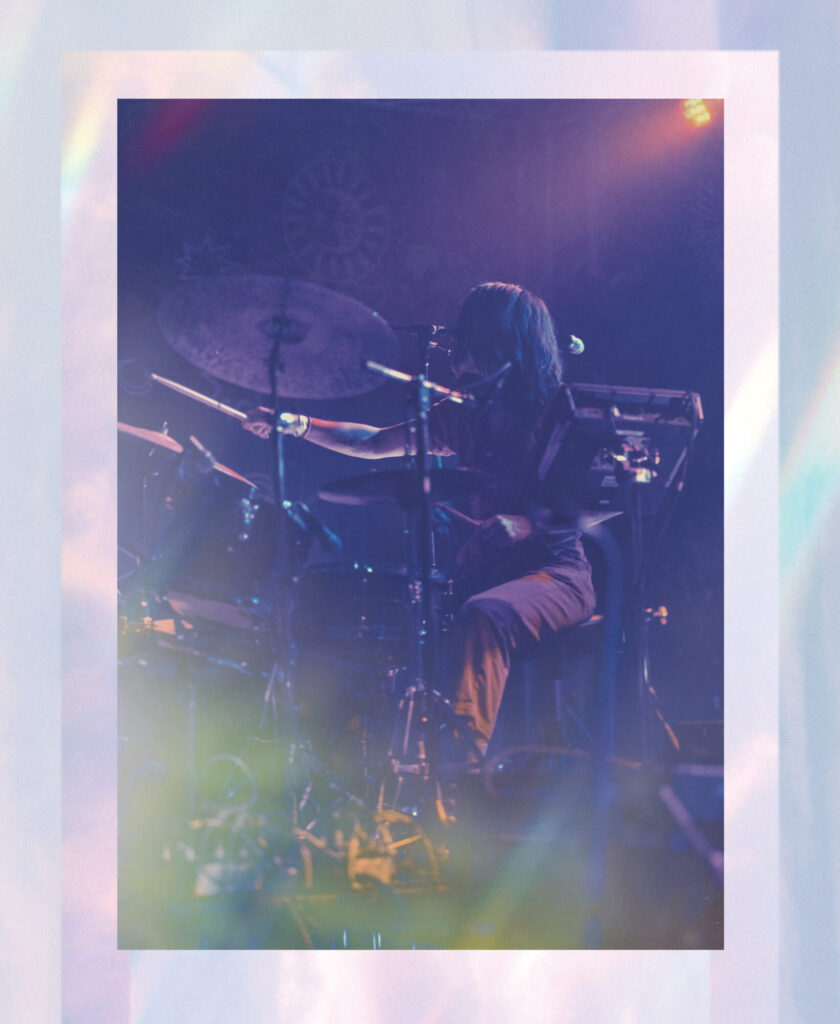
What advice would you give to your younger self once you started this path?
Stella: What would I tell myself? I think Jenny might relate to this. We’ve played in a band together—Jenny has been in the band longer, over 20 years, and I’ve been in it for 16. I think that when you take a break, or things change, it’s really hard to be grateful for what’s happening in the moment. I’d tell myself to take more photos, be more present, write things down, and really be a participant in your story. When you’re touring a lot and making music constantly, it’s easy to go on autopilot because you have to. But it’s getting harder and harder to tour, make music, and make it your living in the current climate. So any time you get to perform for people, go on tour, or make a record with your friends, that’s something that shouldn’t be taken for granted. Sometimes I wish I had been more present and more grateful for those moments.
Jenny: I can relate to that for sure. I’m pretty hard on myself. In a way, I appreciate that because when I started playing bass, I was playing five hours a day. I was very obsessed with it. I really wanted to get really good, you know? I think I would just say to have more fun with it, not take myself too seriously. Being so hard on myself leads to beating myself up if I’m not nailing it, which I also think limits my creativity, limits my possibilities, and limits what I can actually do. I’m creating those limitations for myself, not on purpose, which is the funny thing. But I do it by being so hard on myself. So, I think I’d say: Have more fun and just loosen up a bit.
Stella: I think that people can have fun and be really anxious inside. You know, there’s people who look at people on stage and just, like, oh, my god, they’re making millions of dollars and having the best time of their life, and they’re just, like, a nervous wreck.
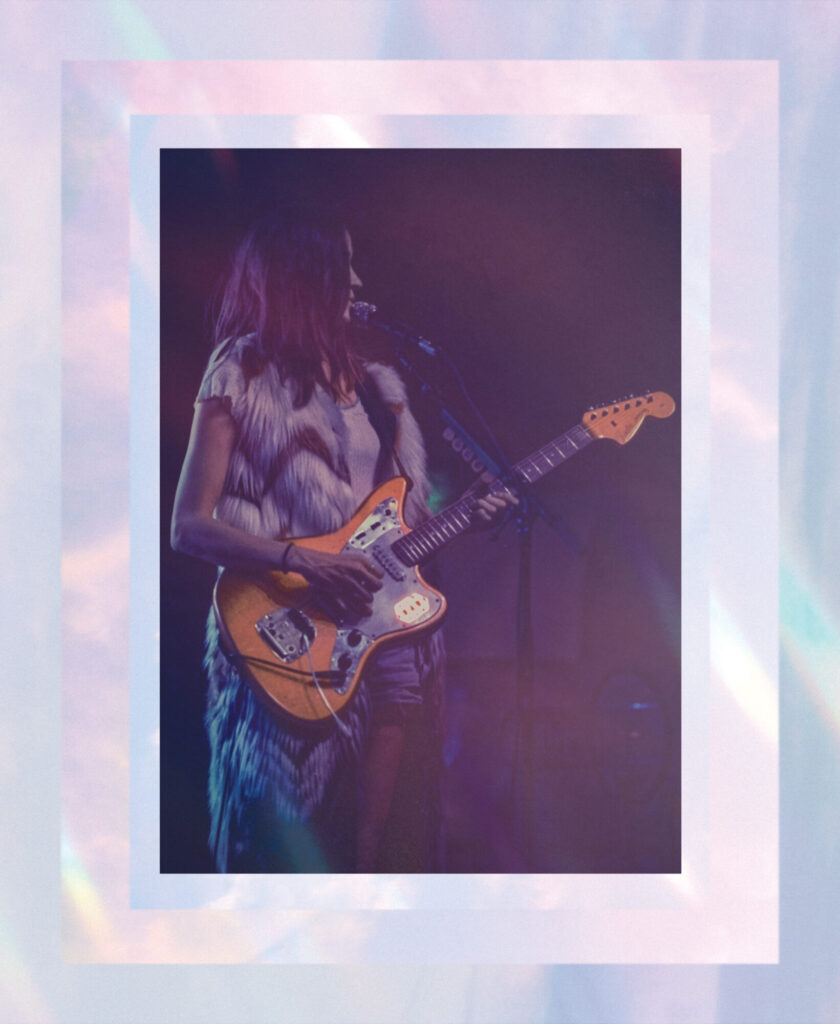
Jenny: Yeah, having a panic attack.
Stella: Yeah, absolutely. Can’t feel my hands.
Jenny: Or shitting their pants.
Does that have a backstory? Has that happened?
Stella: Oh, yeah. We’ll just leave it there. We won’t give you any details.